How Business Process Outsourcing Improves Productivity
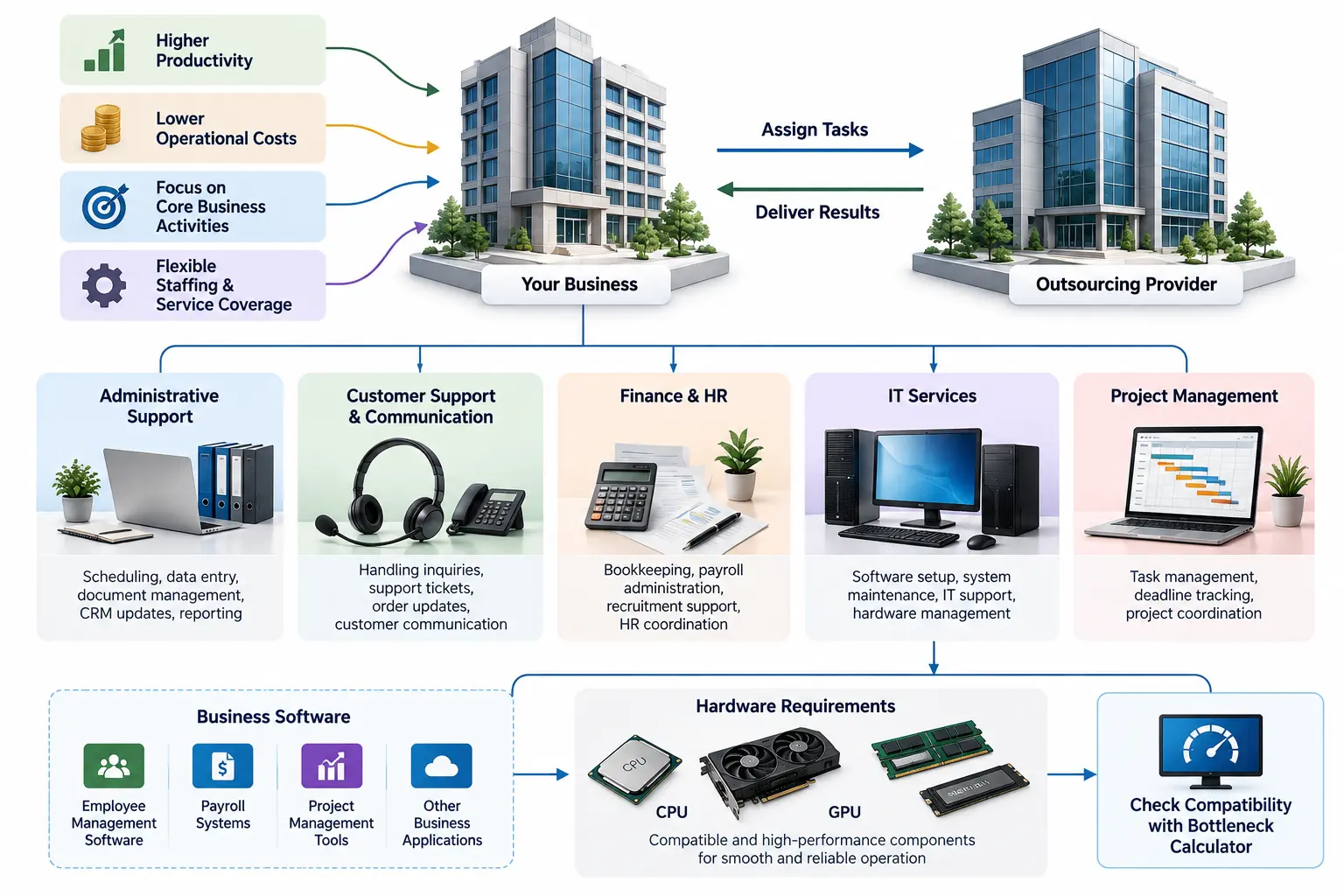
Business process outsourcing (BPO) helps businesses improve productivity by assigning administrative tasks, customer support, IT services, and other business operations to external service providers. Instead of hiring employees for every department, companies can outsource selected tasks to professionals who manage them on their behalf. This saves employees time, reduces operational costs, and allows businesses to focus on sales, customer relationships, and growth.
Outsourcing also helps companies manage increasing workloads without expanding their internal teams. With proper planning and reliable service providers, businesses can complete daily tasks more efficiently and maintain consistent service quality.
What Is Business Process Outsourcing and How Does It Work?
Business process outsourcing involves hiring an external company or service provider to handle specific business activities. These can include customer service, bookkeeping, administrative support, IT services, and other routine operations. Instead of managing every department internally, businesses assign certain responsibilities to an outsourcing provider while maintaining control over quality and business decisions.
For growing businesses, Business task outsourcing can help manage recurring administrative and operational work without hiring additional full-time employees. For example, a company may outsource appointment scheduling, data entry, or customer inquiries so its internal team can focus on sales and business planning. The goal is to complete routine work on time without overloading existing employees.
Understanding Different BPO Models
Businesses can choose offshore, nearshore, or domestic outsourcing depending on their needs. Offshore outsourcing involves hiring providers in distant countries, while nearshore outsourcing involves working with providers in nearby countries. Domestic outsourcing means hiring service providers within the same country.
The right option depends on service costs, working hours, language requirements, data security, and communication needs. Companies should compare these factors before selecting an outsourcing model.
Key Benefits of Business Process Outsourcing
Business process outsourcing can improve productivity by reducing routine workloads, controlling operating expenses, and allowing employees to focus on important responsibilities. It also gives businesses access to additional support when work increases without requiring permanent staff expansion.
Lower Operational Costs
Hiring employees involves recruitment expenses, salaries, benefits, office space, equipment, and training. Outsourcing can reduce some of these costs because service providers already have the staff and systems needed to complete assigned tasks.
However, businesses should compare the total cost of outsourcing, including onboarding, supervision, software, and quality checks. A lower hourly rate does not always mean better value.
Greater Focus on Core Business Activities
Employees can focus on more important responsibilities when routine administrative work is handled by an external team. Tasks such as appointment scheduling, data entry, customer inquiries, and preparing reports can take several hours each week.
By outsourcing these activities, businesses can give their employees more time for sales, product development, customer relationships, and planning. It also reduces the need for managers to spend their working hours on repetitive tasks.
Flexible Staffing and Service Coverage
Outsourcing allows businesses to increase or reduce support based on their workload. For example, an online store may need additional customer support during busy shopping periods but less assistance during slower months.
Instead of hiring permanent employees for temporary increases in work, businesses can use outsourcing providers according to their requirements. Some providers also offer extended working hours to serve customers in different time zones.
Business Functions That Companies Commonly Outsource
Businesses outsource different activities depending on their size, industry, and operational needs. Tasks that follow clear instructions and repeat regularly are often easier to outsource because their performance can be measured and monitored.
Administrative and Back-Office Operations
Administrative outsourcing includes calendar management, appointment scheduling, document organization, CRM updates, expense tracking, and routine reporting. These tasks are necessary for daily operations but can consume time that employees could spend on other responsibilities.
An external administrative team can handle these activities using established procedures. This helps businesses keep records organized, complete routine tasks on schedule, and reduce interruptions during the working day.
Customer Support and Communication
Businesses often outsource customer service to manage inquiries, support tickets, order updates, and routine customer requests. An external support team can respond to customers while internal employees concentrate on other business activities.
However, outsourced customer service teams need clear instructions, approved responses, and procedures for handling complaints or complicated issues. Businesses should also review service quality regularly to maintain customer satisfaction.
Finance, HR, and Technical Support
Companies can outsource bookkeeping, payroll administration, recruitment coordination, and basic IT support. These activities require accuracy and, in some cases, specialized knowledge.
For example, an outsourced bookkeeping team can organize financial records, while an HR support provider can assist with recruitment and payroll processes. The U.S. Small Business Administration also provides guidance on managing employees and payroll responsibilities as businesses grow.
Businesses should select providers with suitable experience and maintain internal oversight, particularly when outsourced work involves financial records or confidential employee information.
How Outsourced IT Services Support Business Software and Hardware Performance
Outsourced IT services help businesses manage the software and computer systems their employees use every day. Many companies hire IT professionals to develop, install, update, and maintain software for employee management, payroll, and project management. For example, employee management software helps maintain staff records, payroll software manages salary calculations, and project management tools help managers assign tasks and monitor deadlines. Applications such as Microsoft Planner allow employees to organize their work, check progress, and manage project schedules.
However, businesses also need computers that can run these applications properly. If employees use several programs at once, a slow PC can delay their work and affect productivity. This is why IT professionals check the CPU, GPU, RAM, and storage before selecting or upgrading office computers. The CPU handles general processing and multitasking, while a powerful GPU is useful for demanding applications such as video editing, graphic design, and 3D rendering. Ordinary payroll and project management software usually does not require a high-end GPU.
When choosing hardware, an IT specialist can use a Bottleneck Calculator to estimate how well a CPU and GPU may work together. It helps compare different hardware combinations and identify whether one component might limit the performance of another. According to Intel’s guide to PC bottlenecks, a balanced combination of components can help a computer perform more efficiently. A bottleneck calculator provides an estimate, so IT professionals should also check software requirements, physical compatibility, and actual performance before making a purchase.
For example, if a company uses computers for software development, video editing, or other demanding tasks, its IT team needs to select suitable hardware to avoid unnecessary slowdowns. For cloud-based business applications, internet speed, network latency, and server performance also affect response times. When office PCs and laptops have suitable components and receive regular maintenance, employees can run their applications more reliably. This allows an outsourced IT team to support daily operations without frequent hardware-related interruptions.
How Outsourcing Helps Streamline Business Operations
Outsourcing can make business operations more efficient by assigning routine tasks to teams responsible for completing them on schedule. However, businesses need clear instructions and organized workflows before transferring work to an external provider.
If a process is already poorly managed, outsourcing alone will not fix it. Companies should identify the problems first and explain how each task should be completed.
Reducing Workflow Bottlenecks
A workflow bottleneck occurs when a task is delayed because an employee is unavailable, information is missing, or approval is pending. These delays can slow down other activities that depend on the unfinished work.
Outsourcing helps by assigning specific responsibilities to a dedicated team. For example, an outsourced assistant can manage appointments and scheduling requests while a sales representative focuses on speaking with customers. This allows both activities to continue without unnecessary interruptions.
Improving Process Standardization
Standard operating procedures explain how employees or service providers should complete specific tasks. They include instructions, deadlines, documentation requirements, and steps for handling problems.
Outsourcing encourages businesses to document these procedures because external teams need clear instructions. When everyone follows the same process, businesses can reduce mistakes, simplify training, and maintain consistent work quality.
Using Automation Alongside Outsourcing
Automation tools can help outsourced teams complete repetitive activities such as sending reminders, routing support tickets, checking data, and preparing routine reports. These tools reduce manual work and help employees manage tasks more efficiently.
However, automation cannot handle every situation. Human employees still need to review unusual cases, correct errors, and make decisions that require judgment.
The National Institute of Standards and Technology’s AI Risk Management Framework guides managing risks associated with AI systems. Businesses using AI in outsourced operations should consider data privacy, accuracy, security, and human oversight.
How to Measure Productivity Improvements From BPO
Businesses should measure outsourcing results to determine whether it is improving productivity. Simply transferring work to an external provider does not guarantee better performance.
The most useful approach is to compare task completion, service quality, and operational costs before and after outsourcing.
Track Meaningful Performance Indicators
Businesses can measure outsourcing performance through task completion time, customer response speed, error rates, pending tasks, customer satisfaction, and cost per completed task.
For example, if customer inquiries previously took several hours to receive a response, the business can compare that response time after outsourcing customer support. Similarly, managers can track whether administrative tasks are being completed more quickly and accurately.
These measurements help determine whether outsourcing is producing useful improvements.
Evaluate Total Business Value
The cheapest outsourcing provider may not always deliver the best results. Businesses should consider service quality, accuracy, management time, onboarding costs, and the expense of correcting mistakes.
A provider that completes tasks correctly and on time may offer better value than one charging lower rates but requiring frequent supervision. Regular performance reviews help businesses understand whether the arrangement is worth continuing.
Common Outsourcing Challenges and How to Avoid Them
Business process outsourcing can create problems when responsibilities, communication methods, or security requirements are unclear. Most of these issues can be reduced through proper planning, written agreements, and regular performance checks.
Data Security and Confidentiality
Outsourcing providers may need access to customer information, financial records, employee details, or internal business systems. Companies should protect this information by using secure authentication, confidentiality agreements, and access permissions.
Service providers should only receive the information required to complete their assigned work. Businesses should also review data handling procedures before sharing sensitive records.
Communication and Time-Zone Differences
Communication problems can occur when businesses and outsourcing providers work in different time zones or follow different schedules. Delayed responses and unclear instructions may affect task completion.
Businesses can reduce these problems by setting response times, using shared calendars, assigning points of contact, and documenting important instructions. Regular meetings also help both teams discuss pending work and resolve problems.
Maintaining Quality and Accountability
Hiring an outsourcing provider does not remove a company’s responsibility for work quality. Managers still need to monitor performance, review completed tasks, and make sure agreed standards are being followed.
Clear service-level agreements can define deadlines, quality expectations, reporting requirements, and responsibilities. Assigning an internal manager to oversee the provider also helps maintain accountability.
How to Choose the Right BPO Partner
Choosing a business process outsourcing provider requires more than comparing service prices. Companies should check the provider’s experience, services, communication methods, security practices, and ability to handle their operational requirements.
A suitable provider should understand the assigned responsibilities and explain how work will be managed, reviewed, and delivered.
Evaluate Experience and Service Fit
Before selecting a provider, businesses should ask about relevant experience, employee training, supervision, quality checks, and reporting procedures. They should also understand how the provider handles mistakes, missed deadlines, and unexpected problems.
Industry experience may be important when outsourcing financial tasks, technical services, or activities involving regulated information. A provider familiar with the required work is generally easier to train and supervise.
Start With a Limited Pilot
Businesses do not need to outsource an entire department immediately. Starting with one clearly defined task or workflow allows them to evaluate the provider before assigning additional responsibilities.
For example, a company can begin by outsourcing appointment scheduling or routine customer inquiries. After reviewing accuracy, response times, communication, and costs, it can decide whether to expand the arrangement.
Conclusion
Business process outsourcing helps companies improve productivity by reducing repetitive workloads, supporting daily operations, and allowing employees to focus on important business activities. It can also help manage staffing costs and provide additional support when workloads increase.
Businesses should begin by identifying tasks that consume unnecessary time, documenting their processes, and choosing providers with suitable experience. By monitoring performance and maintaining clear communication, companies can use outsourcing to improve efficiency and support long-term business growth.