Top 20 Good N64 Games of All Time
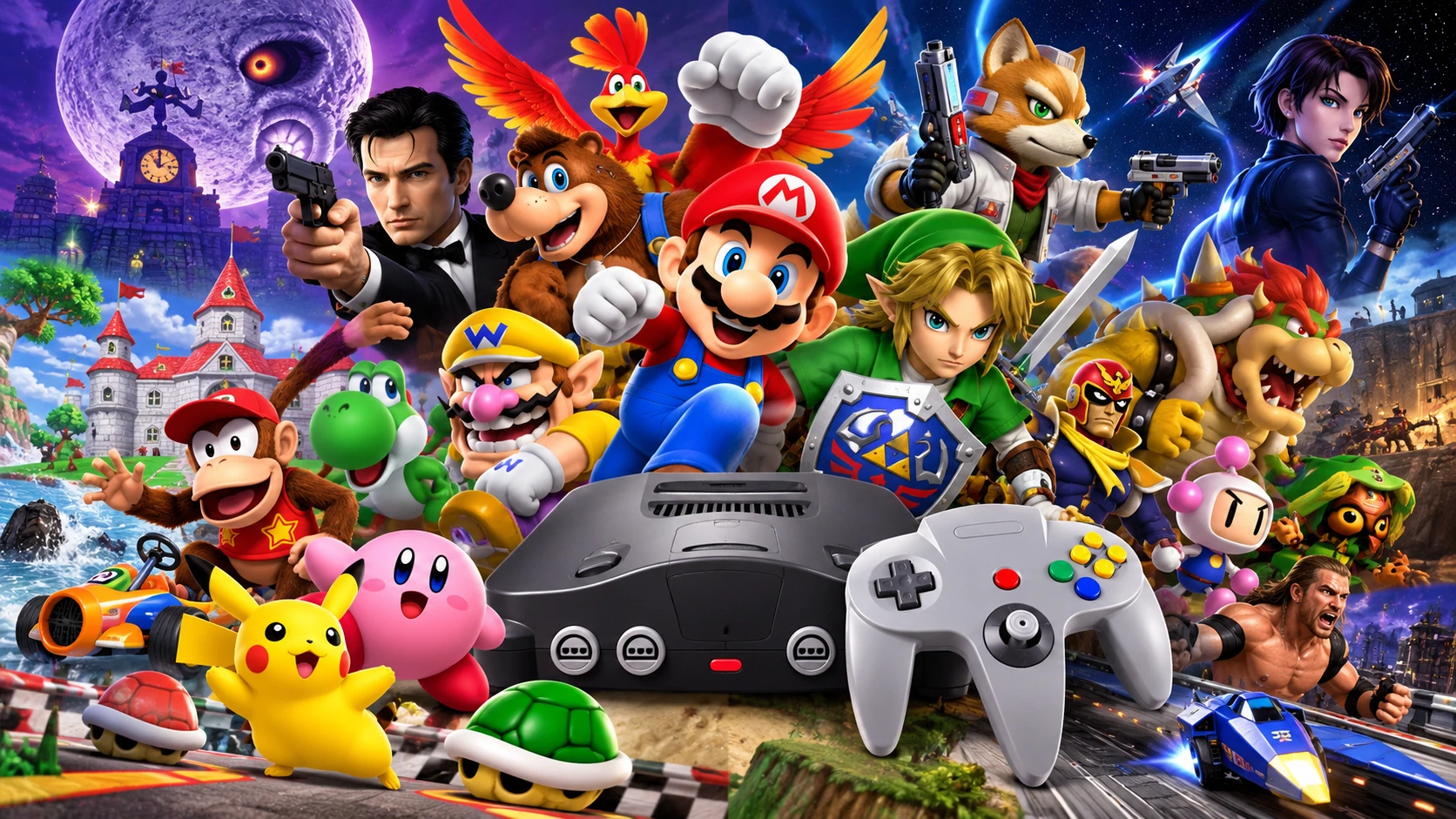
The first thing you’ll probably notice about the Nintendo 64 is its unusual controller. It has three handles, a single analog stick in the middle, and four yellow C buttons that can seem confusing at first. Then you realize how much thought Nintendo put into controlling characters in three-dimensional environments.
The N64 was competing with Sony’s original PlayStation, which had an enormous collection of CD-based games. Nintendo stuck with cartridges, and that decision came with some obvious limitations. Storage space was expensive, full-motion video was harder to accommodate, and many developers had to find clever ways to work within the console’s hardware.
But I don’t think those limitations tell the whole story. Some of the good N64 games from that generation accomplished things that were hard to find elsewhere. You could explore Peach’s Castle in Super Mario 64, fight three friends on the same television in GoldenEye 007, or spend an entire weekend figuring out the Water Temple in Ocarina of Time.
And while nostalgic lists are everywhere online, I wanted to approach this one differently. I’m more interested in what happens when somebody picks up these games today.
1. Are the controls easy to use?
2. Is the game still fun to play today?
3. Do you need any extra hardware to play the game?
These questions can help you choose good N64 games, whether you’re buying your first Nintendo 64 or adding more games to your collection. I’ve picked 20 games and ranked them based on how fun they are to play, their levels, controls, and how well they hold up today. Some are popular classics you may already know, while others are lesser-known games that are also worth trying.
1. The Legend of Zelda – Ocarina of Time
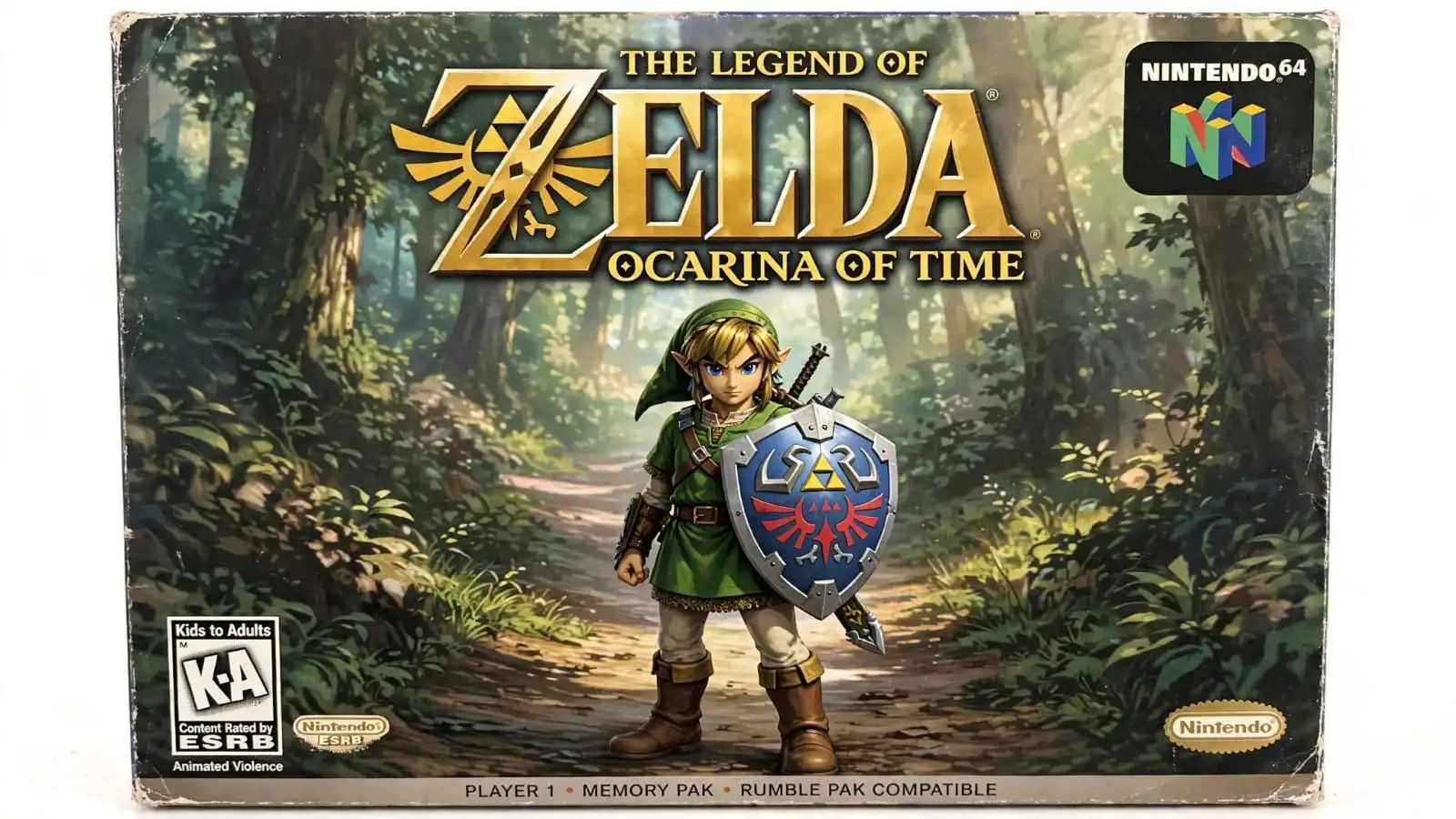
In Ocarina of Time, Link first leaves Kokiri Forest and steps into Hyrule Field. Until then, you’ve been wandering through a relatively small village, learning how to use a sword and dealing with enemies inside the Great Deku Tree. Suddenly, the world opens up. You can see Hyrule Castle in the distance, follow a path toward Lon Lon Ranch, or wander around until the sun goes down and skeletons start appearing. That sense of discovery is what makes Ocarina of Time my number-one choice among good N64 games. Its dungeons are built around learning how new equipment works. The Hookshot, for instance, isn’t simply another weapon; it changes which gaps you can cross and which objects you can reach.
Combat also benefits from Z-targeting, which keeps Link facing a selected enemy and makes sword fighting manageable with the original controller. Some sections aren’t as convenient as they once were. Changing equipment through the pause menu becomes tiresome, and the Water Temple can be confusing without careful observation. Still, the combination of interconnected puzzles, memorable locations, and the transition between young and adult Link gives the adventure remarkable depth. It runs on a standard N64 without an Expansion Pak. If you’re interested in the original design, I’d recommend experiencing the N64 version before comparing it with the improved interface of Ocarina of Time 3D on Nintendo 3DS.
2. Super Mario 64
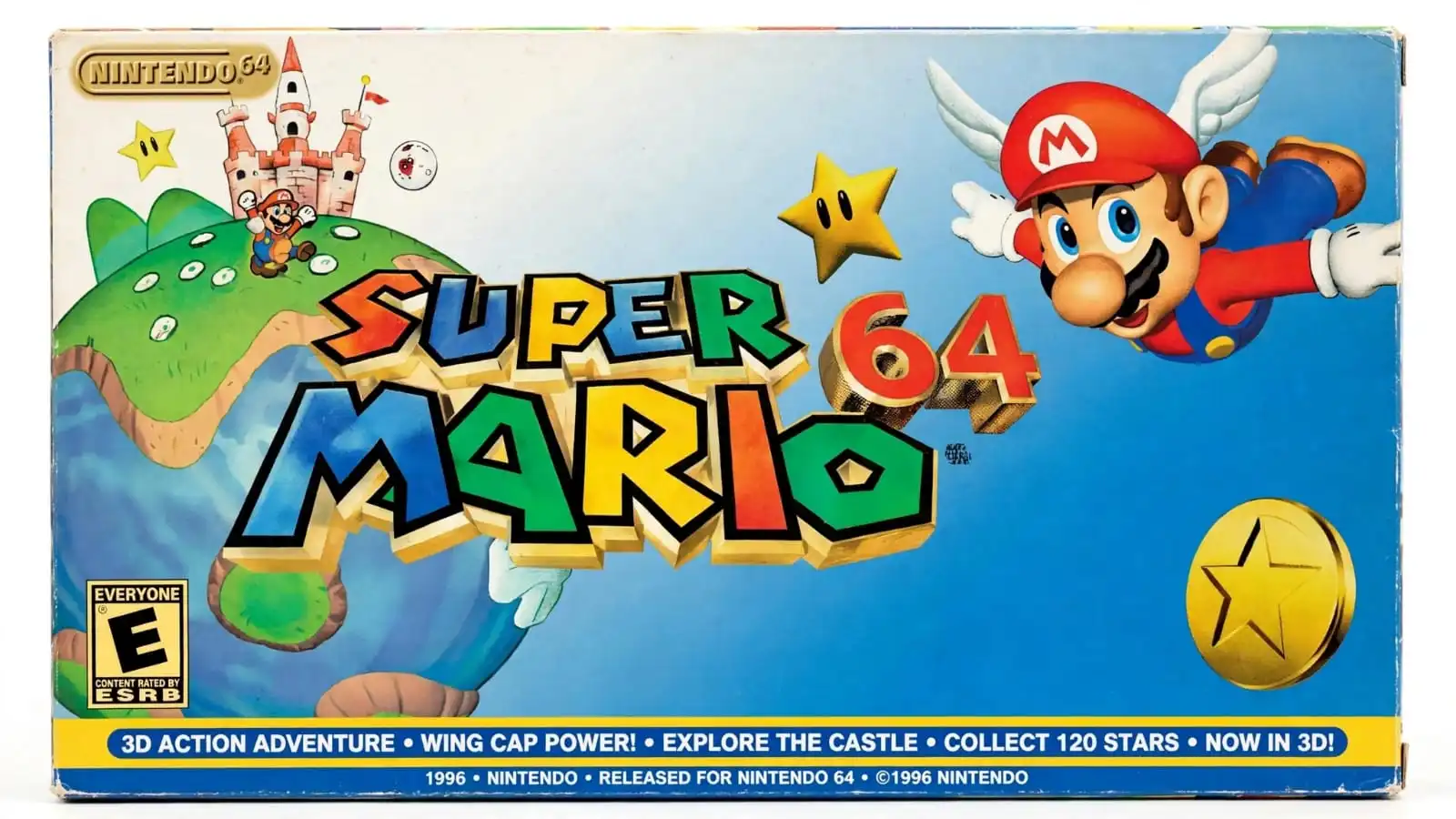
I think the cleverest thing about Super Mario 64 is that Nintendo teaches you the controls before asking you to complete anything difficult. The courtyard outside Peach’s Castle gives you room to run, jump, climb trees, and experiment with the analog stick. Once you enter Bob-omb Battlefield, those basic movements become the tools you need to cross narrow paths, climb a mountain, and reach places that initially seem inaccessible. Mario has a surprisingly large collection of moves, including wall kicks, triple jumps, backflips, and long jumps. Learning when to use each one can turn an awkward climb into a much quicker route.
The game contains 120 Power Stars, although collecting 70 is enough to reach the final Bowser battle. That freedom is part of its appeal: if one challenge becomes frustrating, you can usually search another course for a more manageable star. The camera is the biggest obstacle for modern players, since it doesn’t behave like a modern right-stick camera. Certain narrow platforms can also be unforgiving. Yet when somebody asks me about good N64 games for beginners, this remains one of my first recommendations. It demonstrates how much a platformer can accomplish through movement alone, without complicated equipment systems or lengthy tutorials.
3. Banjo-Kazooie
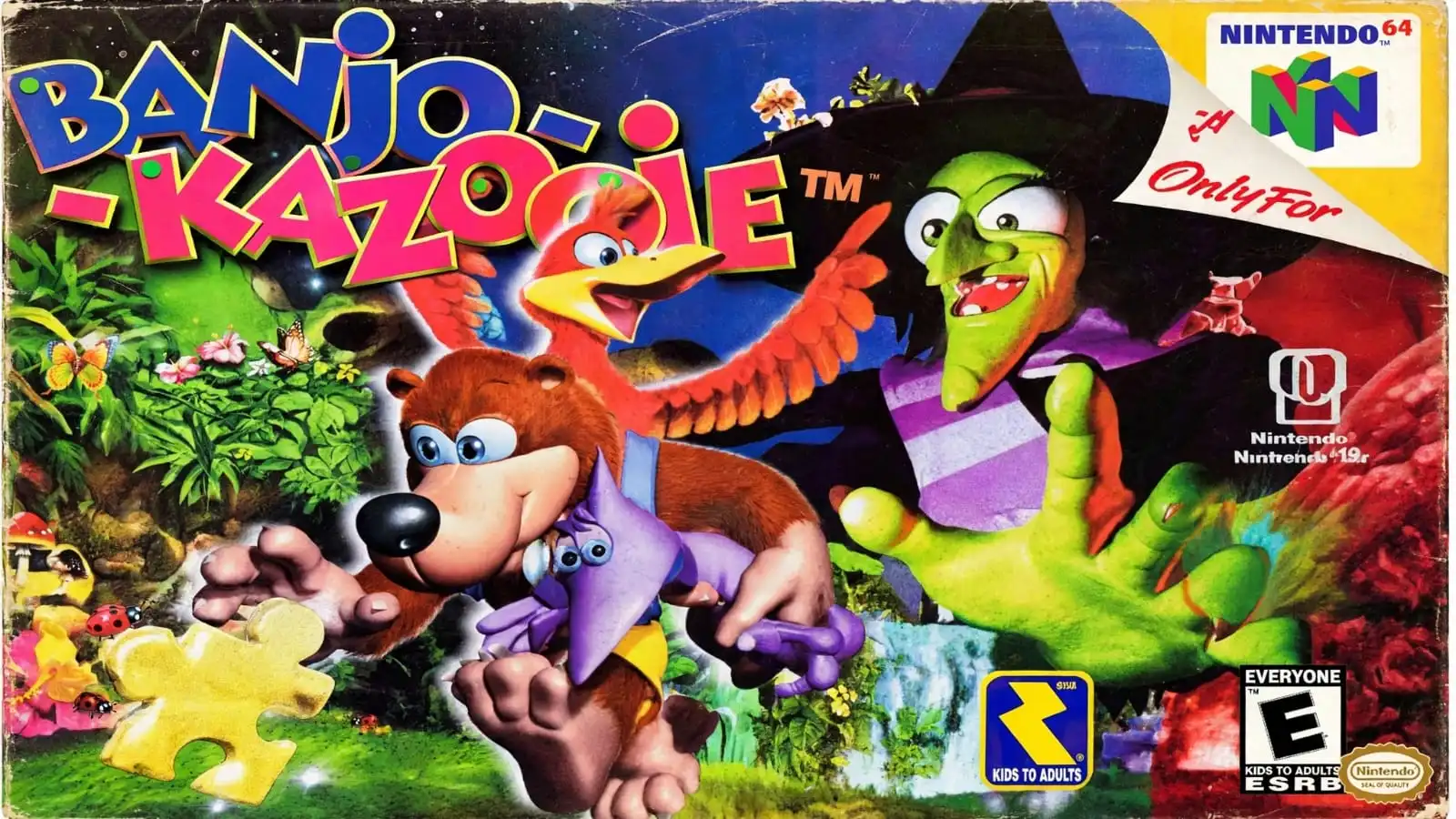
Banjo-Kazooie has a way of making ordinary exploration feel like a treasure hunt. You might enter Treasure Trove Cove expecting to collect a few Jiggies, only to discover a lighthouse, a dangerous shark, and several puzzles hidden around the beach. Almost every world contains small distractions that pull you away from your original objective. Banjo handles the basic movement, while Kazooie provides abilities such as the Talon Trot, which lets the pair move quickly and climb steep slopes. These abilities aren’t all available from the beginning; Bottles the mole teaches you new moves as the adventure progresses. That creates a satisfying reason to return to earlier areas and investigate places you couldn’t access before.
My main criticism concerns the original game’s musical notes. Each world contains 100, but leaving the area or losing a life resets the collected notes, with only your highest total recorded. That’s particularly annoying in Rusty Bucket Bay, where a mistake around the engine room can undo a considerable amount of collecting. The Xbox 360 version saves individual notes permanently, making completion less demanding. If you’re searching for good N64 games with humorous characters and detailed environments, Banjo-Kazooie deserves a place near the top. Its strongest quality isn’t the number of collectibles but how intelligently the worlds encourage you to find them.
4. The Legend of Zelda – Majora’s Mask
Imagine walking into a town where everyone knows something terrible is going to happen, but they continue with their daily routines anyway. Some residents try to leave, others refuse to believe the danger, and a few are too occupied with their own problems to notice the moon getting closer. That’s the atmosphere Majora’s Mask creates in Clock Town. You have three in-game days to prevent disaster, and the Song of Time allows you to return to the beginning of that cycle. Important discoveries and permanent equipment remain with you, but temporary resources and many unfinished activities reset. This changes how you approach side quests. Instead of wandering, you begin learning when characters appear, where they go, and how their actions connect.
The Anju and Kafei storyline is a great example because completing it requires you to follow events across multiple days. One practical tip is to deposit your rupees in the Clock Town bank before resetting time, since banked money remains available. There’s also a hardware requirement that buyers shouldn’t overlook: Majora’s Mask needs the Expansion Pak, which doubles the N64’s RAM from 4 MB to 8 MB. If your idea of good N64 games involves careful observation, unusual stories, and puzzles that extend beyond dungeons, this is an excellent choice. Just don’t approach it expecting another straightforward Ocarina of Time.
5. GoldenEye 007
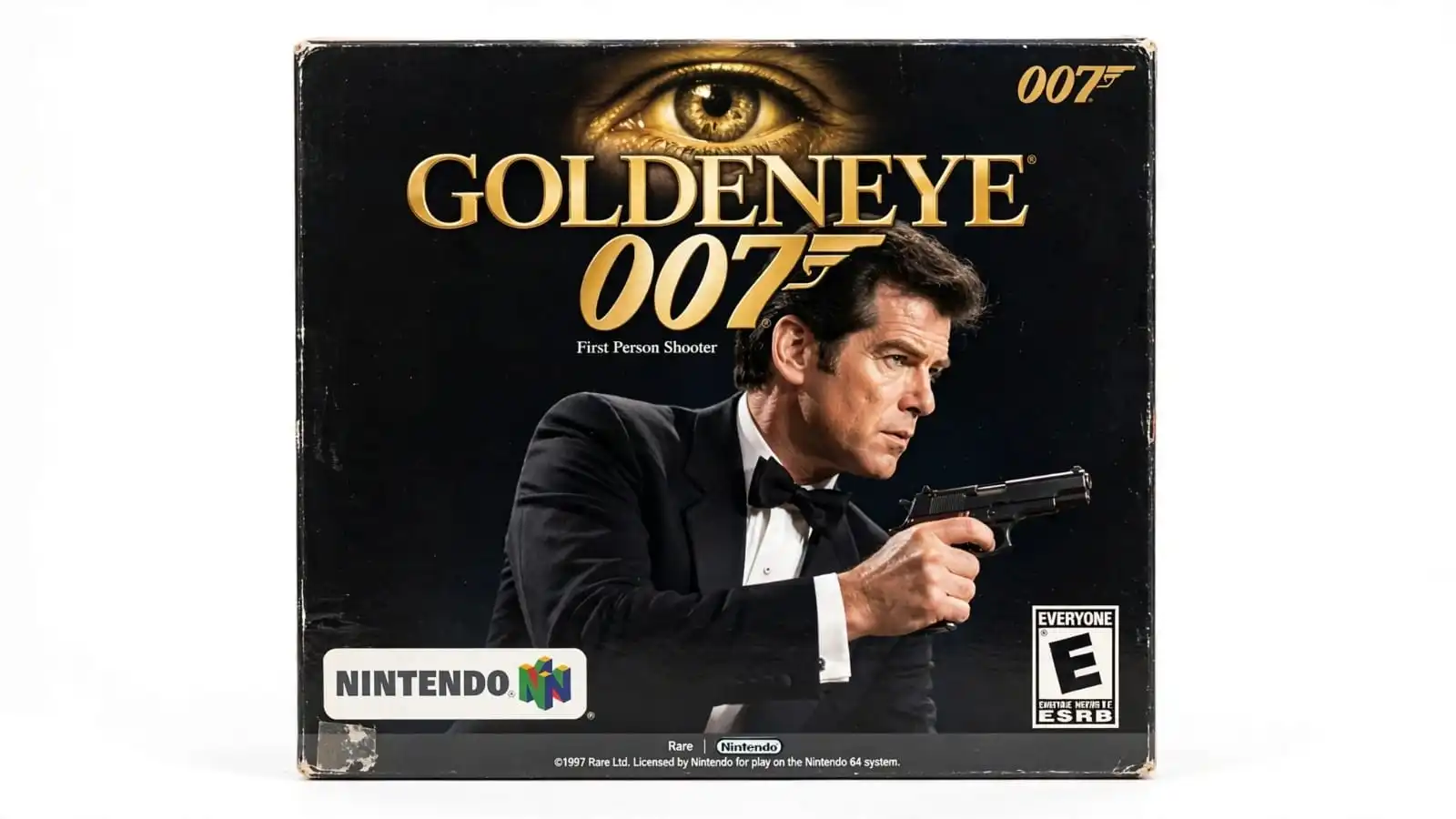
GoldenEye 007 is remembered for four-player matches, but there’s more to it than chasing somebody through a corridor with a rocket launcher. The single-player campaign is designed around mission objectives that change according to difficulty. On Agent, you might only need to reach a destination and complete a basic assignment. On higher settings, you’re expected to locate additional equipment, interact with specific objects, or finish tasks while dealing with tougher enemies. That makes replaying familiar levels more interesting than simply increasing enemy health. Multiplayer is a completely different experience. Four people share one television, and the winner often isn’t the person with the best aim but the one who understands the map.
Knowing where weapons spawn, which corridors offer cover, and where an opponent might be waiting can decide a match. There’s no computer-controlled multiplayer opponent in the original game, so having friends available makes a considerable difference. You also have to learn the N64 control scheme, where the analog stick and C buttons handle movement and aiming differently from modern shooters. Among good N64 games for competitive multiplayer, GoldenEye remains a standout because its maps reward familiarity and positioning. My recommendation is to start with standard weapon sets before moving into Golden Gun matches, where a single successful shot can end the fight.
6. Perfect Dark
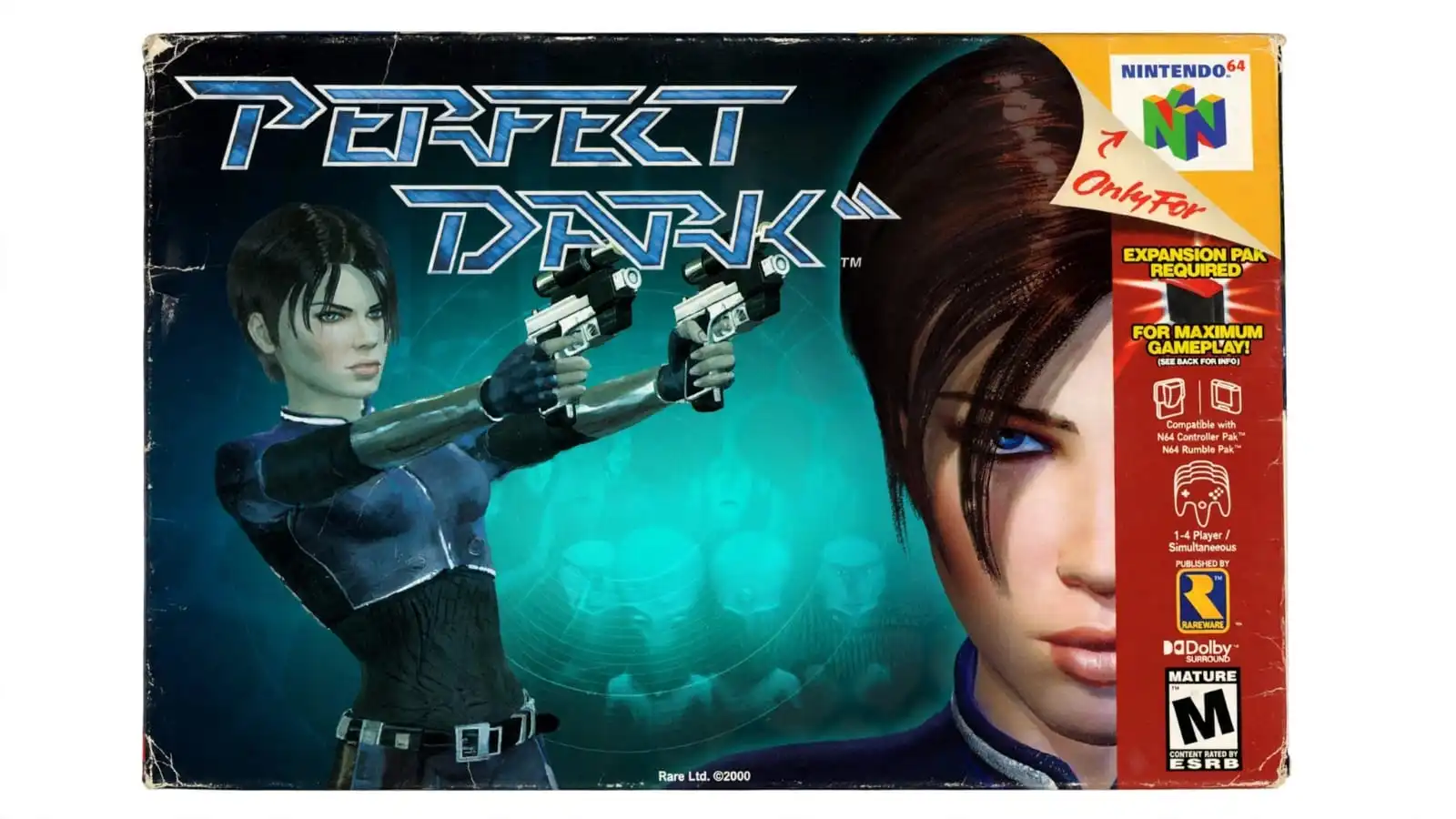
Perfect Dark is the game I’d recommend when somebody has already spent plenty of time with GoldenEye and wants a shooter with more systems to master. Rare didn’t merely add new weapons and a science-fiction storyline. It introduced a Combat Simulator with computer-controlled opponents called Simulants, adjustable match conditions, and team-based scenarios. You can give different Simulants different behavior settings, turning multiplayer into something closer to a customized training exercise. The weapons themselves are unusually creative. The Laptop Gun can be deployed as an automatic sentry, while the Farsight XR-20 can detect and shoot enemies through walls.
During the campaign, greater difficulties also introduce additional objectives, sometimes changing how you move through an entire mission. These features make Perfect Dark one of the most ambitious good N64 games, but they come with a hardware cost. Without the Expansion Pak, the original cartridge only provides restricted multiplayer functionality. The complete solo campaign, three- and four-player multiplayer, cooperative missions, and Counter-Operative mode require the memory upgrade. Performance can also suffer during busy encounters, so enabling optional high-resolution graphics isn’t always worthwhile. If you care more about consistent responsiveness than image sharpness, the standard display setting is a sensible starting point.
7. Mario Kart 64
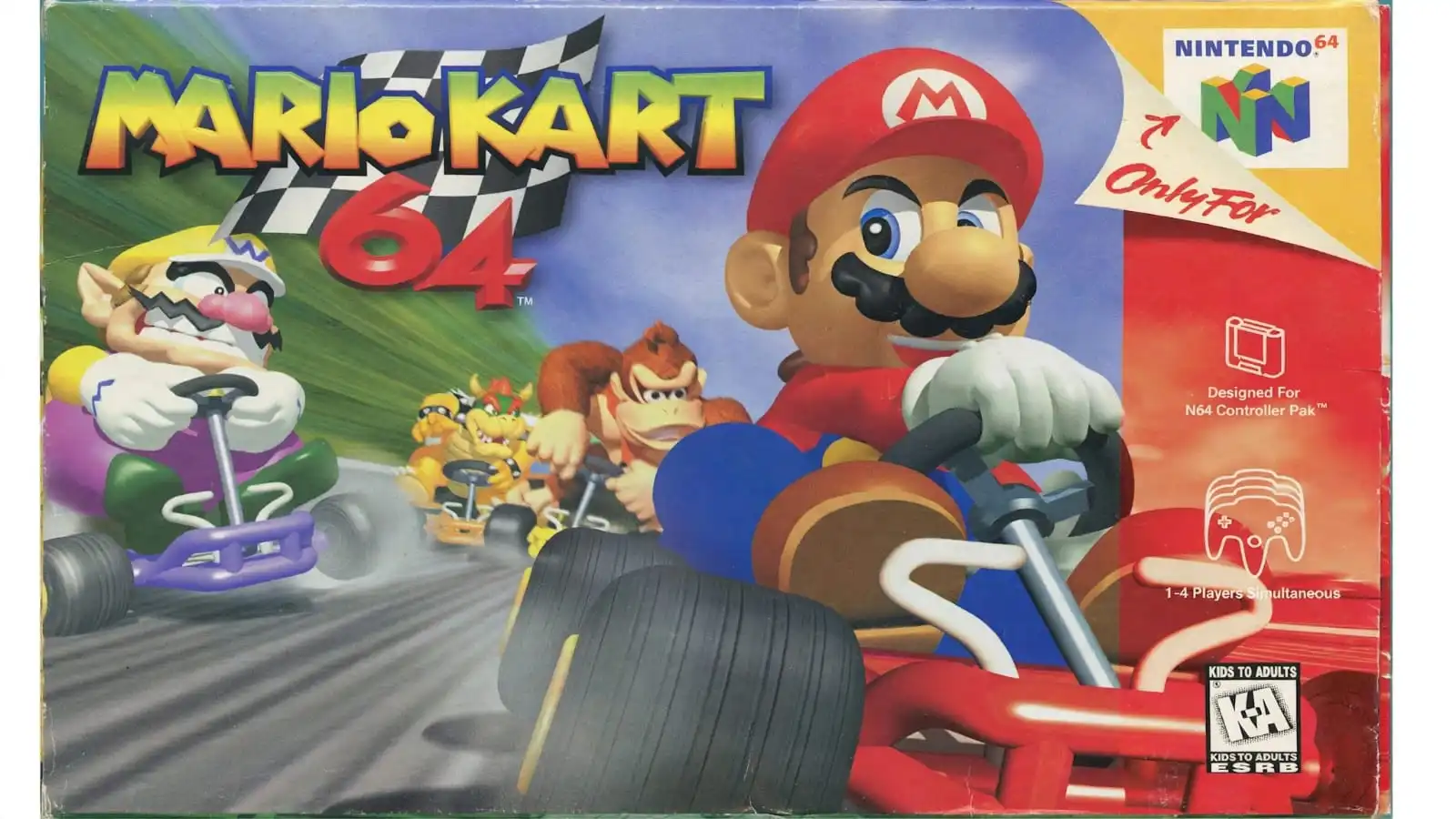
Mario Kart 64 understands something important about multiplayer racing: the person in last place should still have a reason to keep playing. The item system makes that possible, but the tracks are what prevent the races from becoming completely random. On Koopa Troopa Beach, experienced players can attempt the tunnel shortcut. On Yoshi Valley, choosing the wrong path can leave you wondering how far behind you really are. Rainbow Road looks straightforward at first, until its length and occasional hazards make concentration important. There’s also a surprisingly useful handling technique to learn: power-sliding.
Mastering the mini-turbo gives skilled players another way to gain speed instead of relying entirely on items. Mario Kart 64 supports four players, although the available competition changes with the player count. Grand Prix is limited to one or two human racers, while three- and four-player Versus matches don’t include computer opponents. That’s worth knowing if you’re buying the game for family sessions. Battle Mode is where I’d spend most of my time with four controllers, since arenas like Block Fort allow players to use the environment rather than simply drive in circles. It remains among the good N64 games I’d choose for a gathering because beginners can enjoy it immediately, while experienced players have techniques worth practicing.
8. Paper Mario
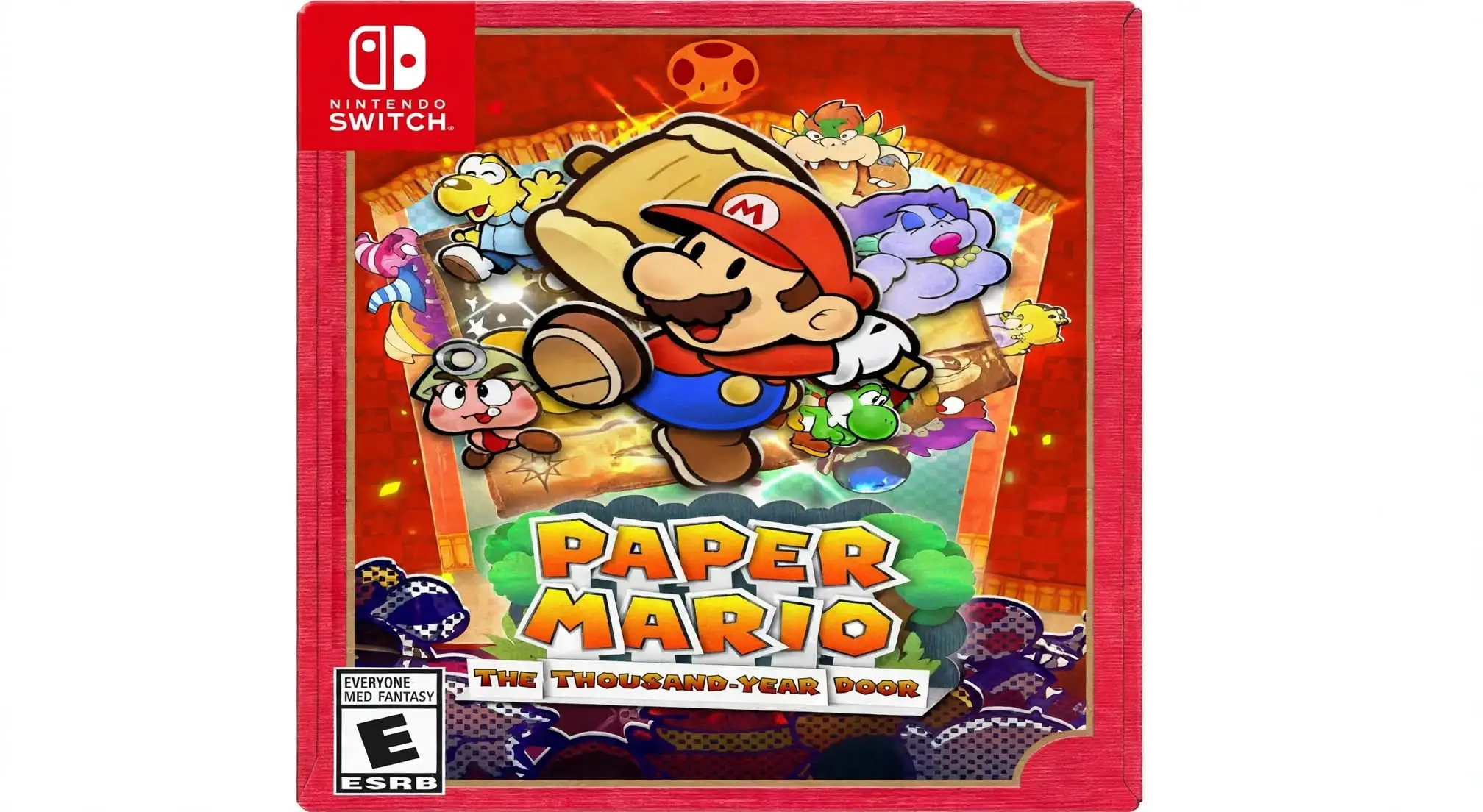
Paper Mario is the kind of RPG that doesn’t overwhelm you with statistics during the opening hour. You control Mario as he travels through the Mushroom Kingdom, meeting new companions and battling Bowser’s followers while trying to recover the Star Spirits. Its combat system looks simple because everyone takes turns, but there’s an important difference from games where you only select an attack and watch it happen. Action Commands reward accurate timing. Pressing the correct button when Mario lands a jump can increase damage, while timing a defensive input can reduce the damage he receives.
The Badge system adds another layer of decision-making. Certain badges improve attacks, change defensive abilities, or provide different combat advantages, but you have a limited number of Badge Points available. Equipping one useful ability may mean removing another. This makes preparation important without requiring hours of character management. Visually, the paper-like characters work well against the backgrounds, and the art doesn’t depend on detailed polygon models. When looking for good N64 games with a slower pace, Paper Mario is an easy recommendation. I’d suggest experimenting with badges rather than keeping the same combination for every boss. Some encounters become much easier when you change your approach instead of spending all your coins on healing items.
9. Star Fox 64
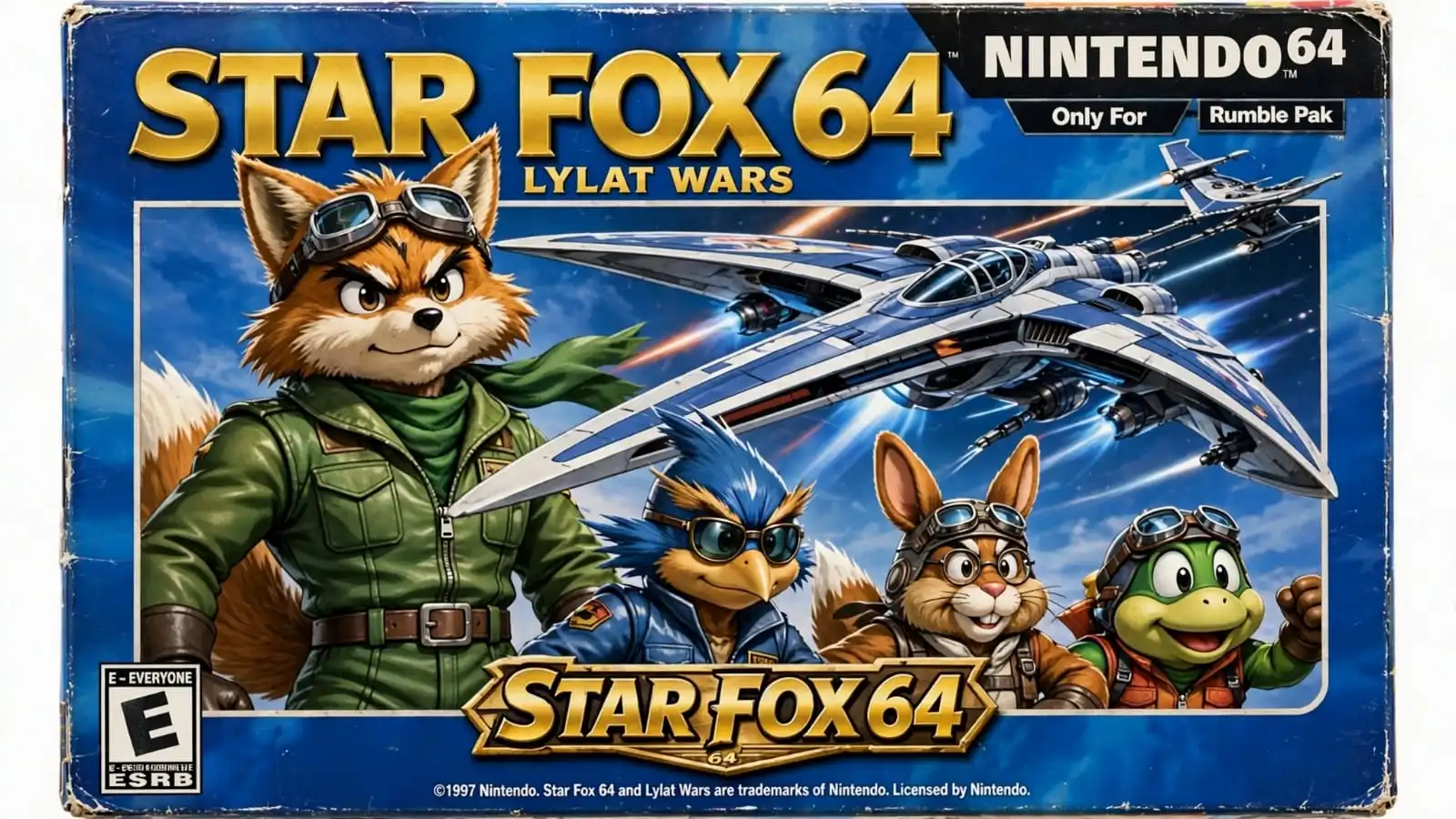
Star Fox 64 is a good choice when you want to play through a complete action campaign without committing to a lengthy adventure. You control Fox McCloud in his Arwing, shooting down enemy ships, avoiding obstacles, and helping teammates survive attacks. What makes the campaign interesting is that your actions can change the route you take through the Lylat System. On Corneria, for example, rescuing Falco and successfully navigating the stone arches opens an alternate route that leads toward a different mission. That gives you a concrete reason to return after finishing the game. The levels also change perspective and vehicle type, with the Landmaster tank introducing a different style of combat.
Star Fox 64 was released with Nintendo’s Rumble Pak in North America, and the controller vibration adds feedback during explosions and collisions. It’s optional hardware, so the game remains fully playable without it. I wouldn’t recommend approaching every mission by holding the fire button and hoping for the best. Learning when to brake, boost, perform a barrel roll, and protect teammates is where the scoring system becomes interesting. The dialogue may sound wonderfully dramatic today, but the responsive shooting and alternate paths are what make this one worth revisiting.
10. Diddy Kong Racing
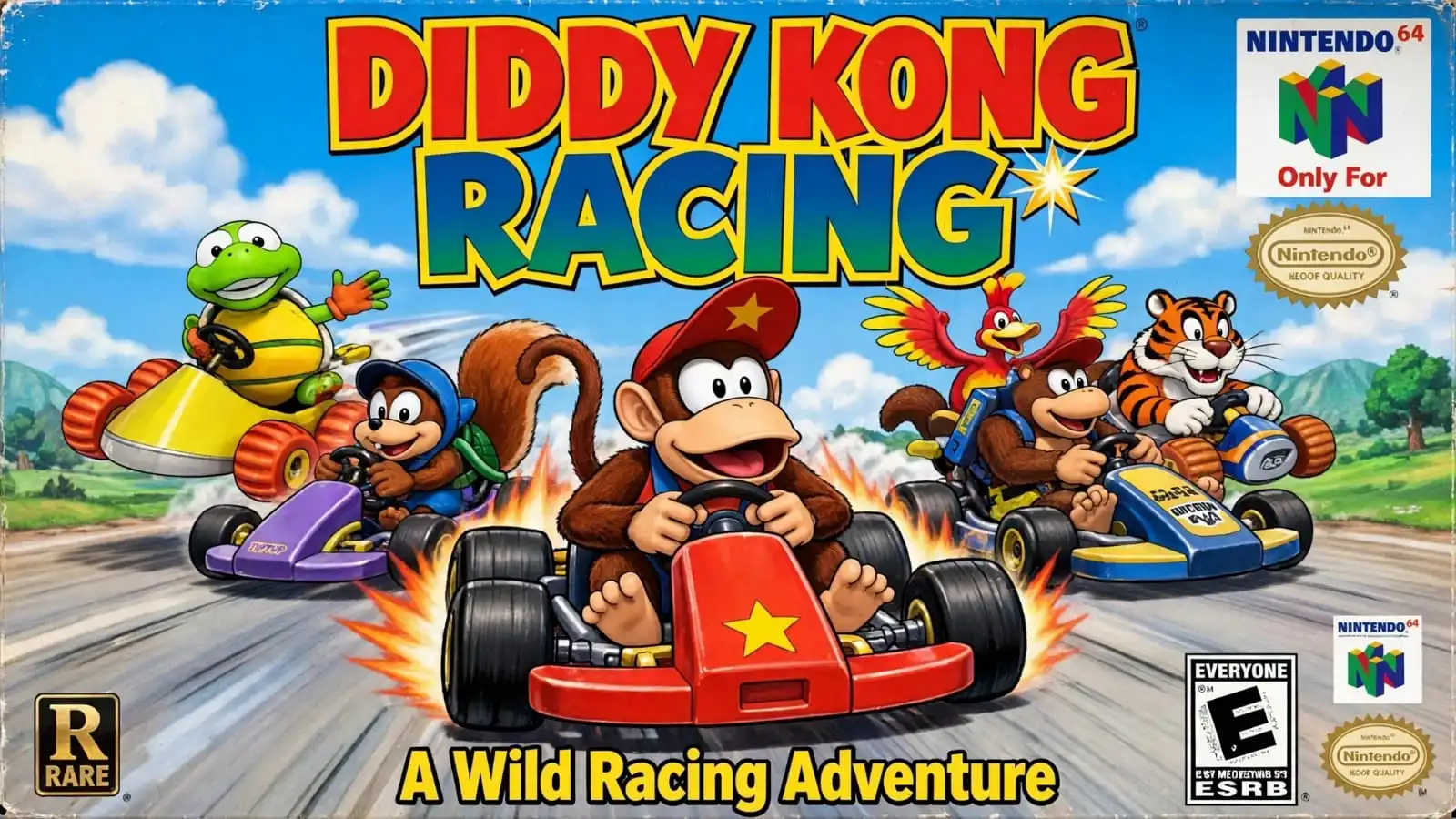
Diddy Kong Racing is the game I’d choose over Mario Kart 64 when nobody else is available to play. Instead of selecting a cup and moving through a straightforward list of races, you explore Timber’s Island, travel between racing worlds, collect Golden Balloons, and challenge bosses. Racing is part of a larger adventure, which gives each victory a purpose beyond finishing first. The vehicle selection makes the game more interesting. Karts handle traditional roads, hovercrafts slide around water and slippery surfaces, and airplanes allow you to move vertically through courses designed around flight.
Some tracks support multiple vehicle choices, changing which shortcuts and hazards matter. The Silver Coin Challenges are where the difficulty becomes noticeable. You must collect eight coins placed around the course while still winning the race, forcing you to take less convenient racing lines. Wizpig’s boss races are another test of precision because small mistakes can cost enough momentum to lose. Diddy Kong Racing is among the good N64 games for players who enjoy mastering racing mechanics, rather than relying on items to recover from mistakes. I’d recommend learning how acceleration and boost pads interact before tackling the harder challenges; maintaining speed is much more important here than it first appears.
11. F-Zero X
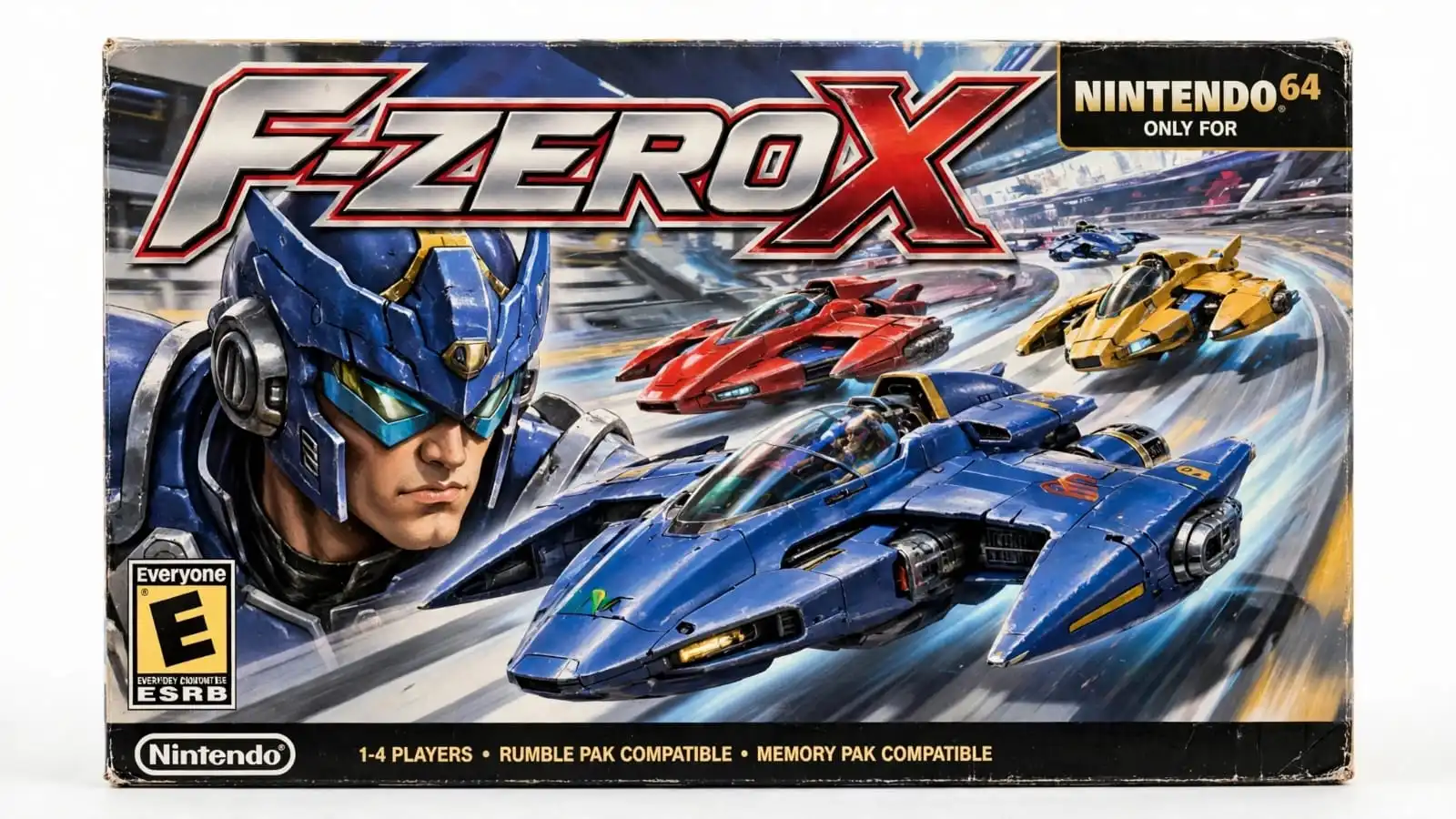
F-Zero X doesn’t spend much time pretending racing is a friendly activity. Your machine moves at extraordinary speeds, the tracks twist into loops and narrow sections, and a single mistake can send you flying into space. What impresses me about its design is the decision to prioritize smooth movement over detailed scenery. In single-player Grand Prix, the game targets 60 frames per second while putting 30 competing machines on the course. The cars and environments look relatively simple, but that visual compromise helps you respond to corners and nearby opponents.
The Boost system adds an interesting trade-off: increasing speed consumes energy from the same meter that represents your machine’s health. Push too hard, and you’ll be vulnerable to destruction before reaching the finish line. Regeneration strips let you restore energy, so knowing the track becomes part of managing your machine. Players can also attack rival vehicles, adding another layer to the competition. Four-player split-screen is supported, although the performance and presentation differ from solo racing. I’d start with Time Attack to learn when to release the accelerator or reduce speed through a difficult corner. The fastest-looking approach isn’t always the one that produces the best lap.
12. Super Smash Bros.
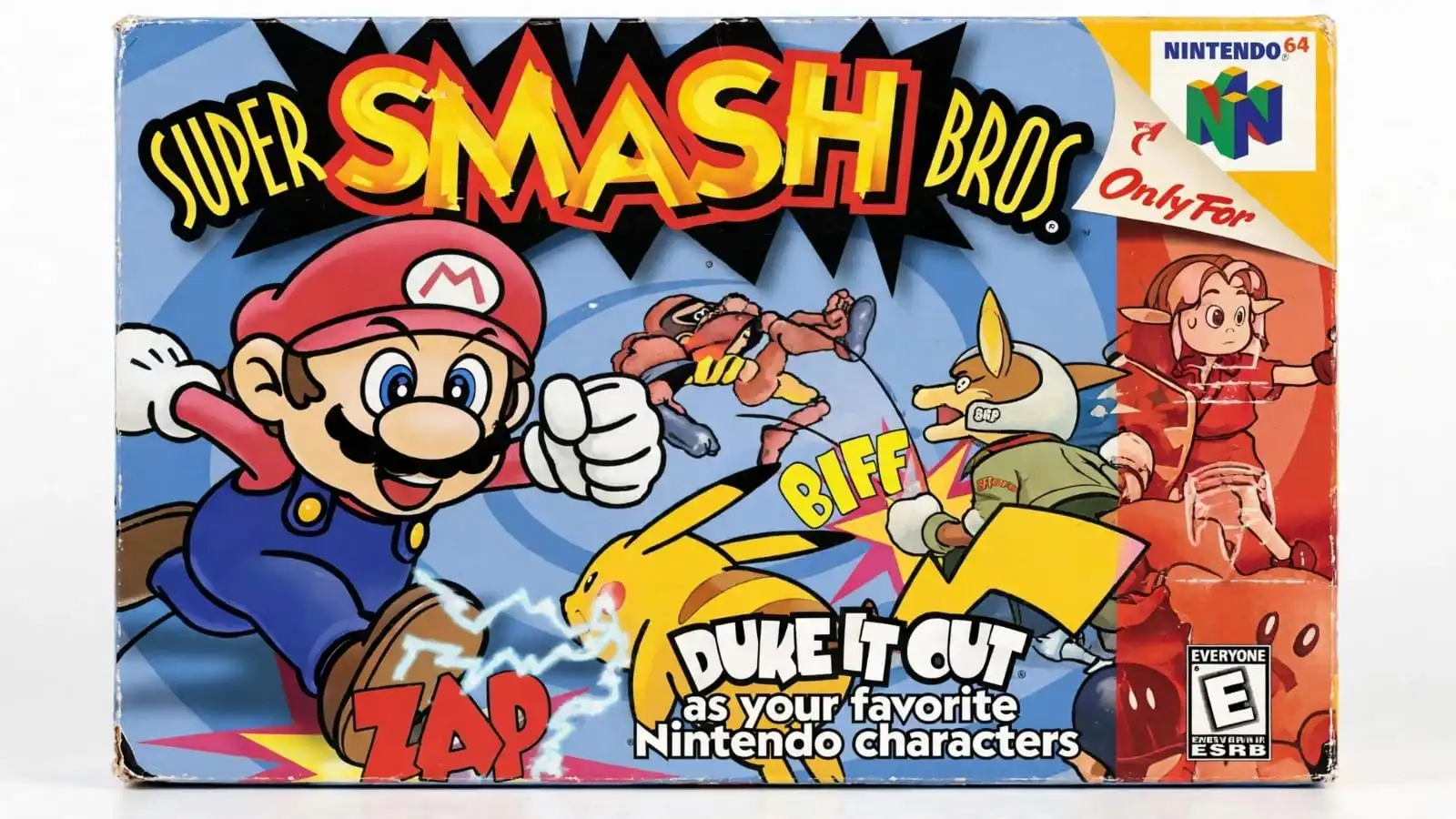
The original Super Smash Bros. feels very different from conventional fighting games built around health bars and long button combinations. Here, your objective is to knock opponents off a floating stage. Damage increases a percentage counter, and characters are launched farther as that percentage rises. This changes the rhythm of every fight. A player who has taken plenty of damage can still win by avoiding a final hit or catching an opponent near the edge. The starting roster contains eight Nintendo characters, with four additional fighters available to unlock. Each has a distinct movement style, so choosing Kirby feels considerably different from controlling Donkey Kong or Fox.
I’d recommend beginners spend time in the one-player mode, since its Target Test and Board the Platforms challenges help develop control over jumping and recovery. Four-player battles can become chaotic once items start appearing, but reducing their frequency makes matches easier to follow. Newer entries offer more characters and refined mechanics, yet the original remains one of the good N64 games for understanding the foundations of platform fighting. Its smaller roster is also useful if you’re introducing the genre to somebody who has never played Smash before.
13. WWF No Mercy
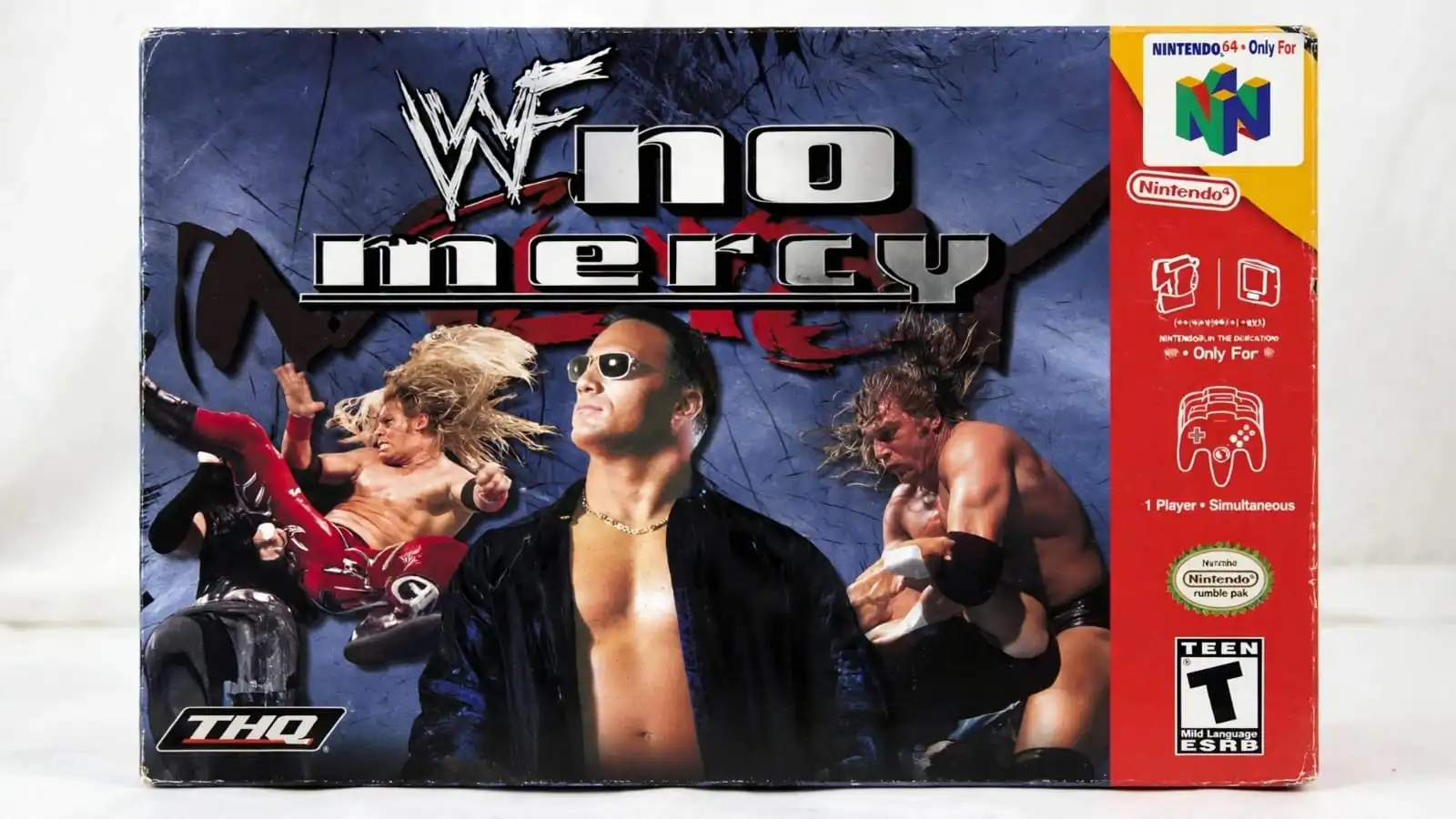
WWF No Mercy does something that many wrestling games struggle with: it makes a match feel like a contest of momentum rather than a sequence of disconnected animations. The AKI-developed grappling system separates lighter and stronger holds, while reversals, strikes, and positioning influence how an encounter develops. You can’t expect to perform a finishing move immediately. Building momentum until your wrestler reaches a special state gives powerful moves a sense of progression. The Championship Mode also branches according to match outcomes, so losing doesn’t always mean simply repeating the same encounter.
Add ladder matches, backstage areas, weapons, and a detailed create-a-wrestler system, and there’s a considerable amount of content to work through. Four-player matches are supported, but having several characters fighting at once can affect the frame rate. Another issue matters more to collectors: some early cartridges are affected by a bug that can erase saved data. Revised copies exist, but I’d still verify that a used cartridge saves reliably before purchasing it. If you’re considering good N64 games for wrestling fans, No Mercy is the one I’d prioritize, largely because learning the grappling system is rewarding long after you’ve seen the available match types.
14. Ogre Battle 64
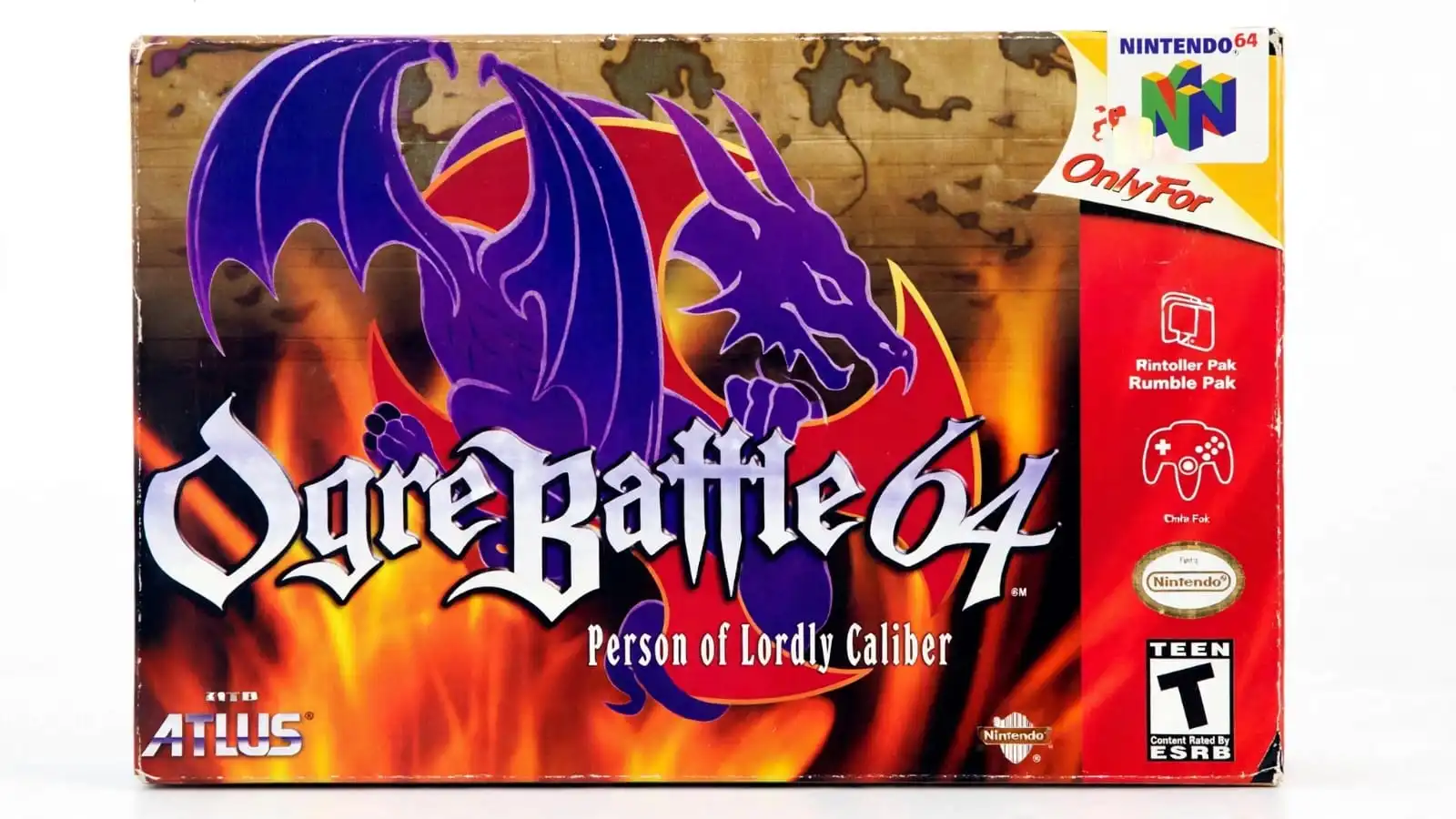
Ogre Battle 64 is one of the titles I would recommend to somebody who normally buys RPGs on PlayStation and assumes the Nintendo 64 has nothing comparable to offer. You play as Magnus Gallant, organizing military units during a conflict that gradually becomes more complicated than a straightforward battle between good and evil. Instead of controlling every sword swing, you arrange characters into squads, assign formations, and direct those groups across a battlefield. Once combat begins, much of the fighting happens automatically according to the characters’ positions, abilities, and orders. This makes planning more important than quick reactions.
There’s also a reputation system called Chaos Frame, which is influenced by your decisions and how your army treats settlements. One useful detail that the game doesn’t explain particularly well is that liberating a town depends partly on matching your occupying unit’s alignment to the town’s morale. Sending a highly lawful squad into every settlement isn’t automatically the right answer. You need units with different alignments to handle different locations. Ogre Battle 64 can be difficult to understand initially because its interface contains plenty of information and some systems aren’t fully explained. However, it’s a worthwhile choice among good N64 games for strategy fans, since army composition and political decisions have consequences beyond an individual battle.
15. Mario Party 2
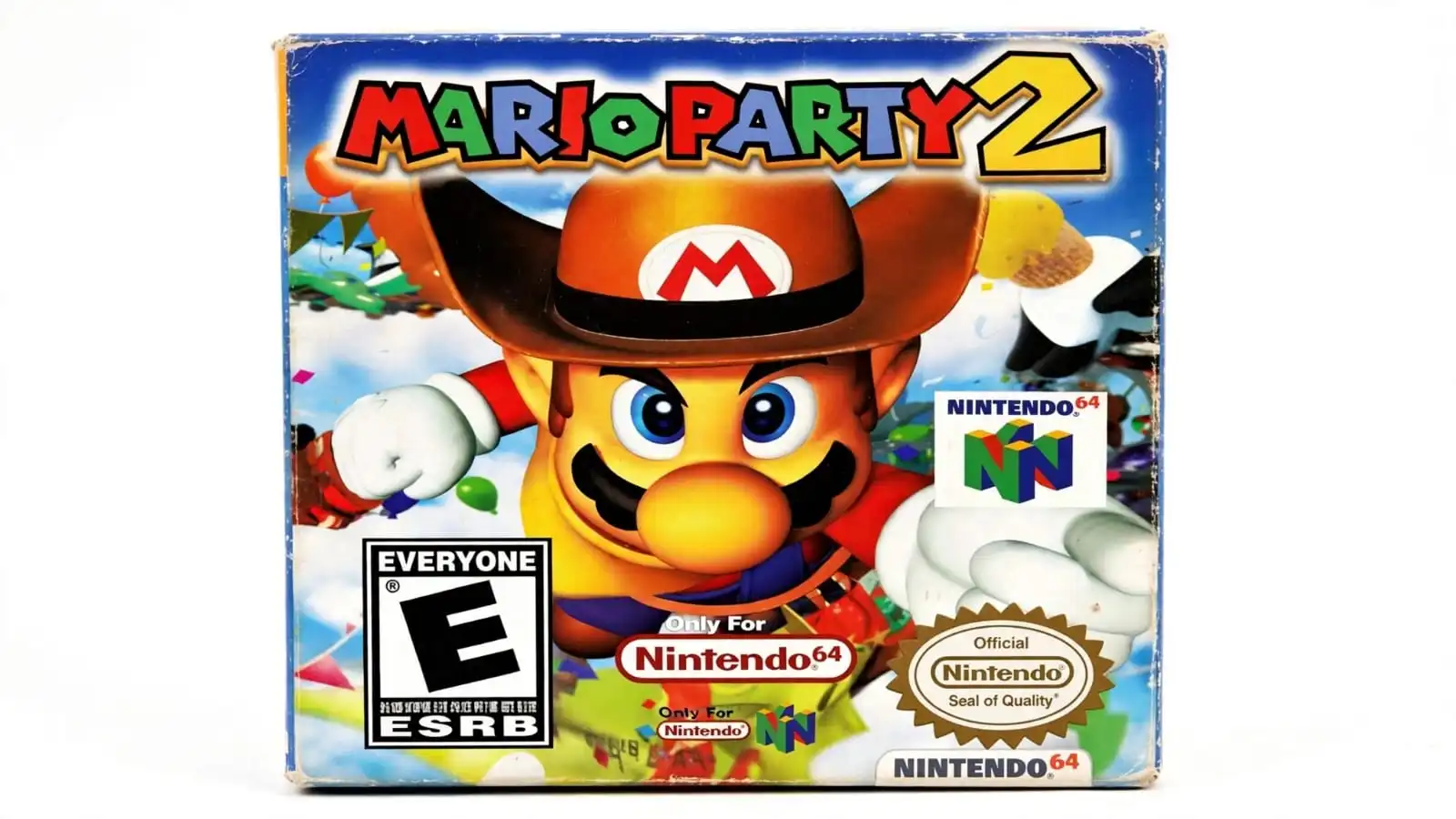
Mario Party 2 succeeds because you can make sensible decisions throughout a match and still find yourself losing in the final few turns. Four characters travel around themed boards, collect coins, buy Stars, and compete in minigames after each round. The board layout matters more than it first appears. You have to decide whether to spend coins on useful items, save them for a Star, or take a longer route toward a location that might offer a better opportunity later. Then someone lands on Chance Time and the entire situation changes. I prefer Mario Party 2 over the original because its boards have more personality and it improves several frustrating elements of the first game. The minigames also cover different skills, so one person might excel at timing challenges while another is better at games involving movement or memory.
There are six main themed boards, and their costumes help distinguish the settings. You can fill unused player positions with computer-controlled characters, making it playable without four people, although the social side is a large part of the appeal. When someone asks for good N64 games that don’t demand gaming experience, this is a practical choice. I’d suggest starting with a shorter match; longer sessions can become tiring when players spend too much time waiting for their next turn.
16. Wave Race 64
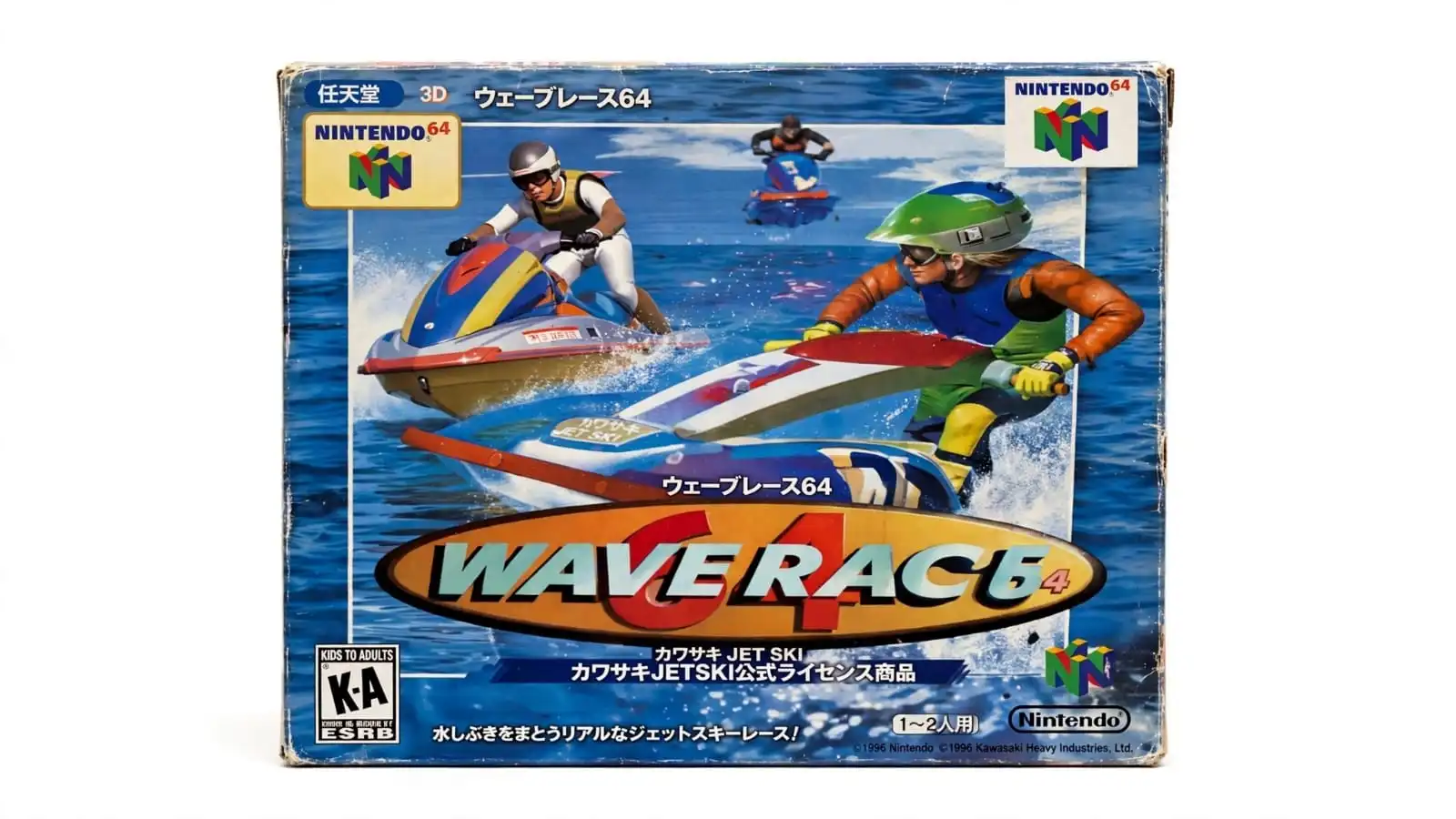
Wave Race 64 is worth trying because water behaves like part of the course rather than a flat surface underneath your vehicle. You race jet skis through environments where waves affect your steering, jumping, and speed. That means taking a corner isn’t always as simple as approaching from the inside and turning at the correct moment. Your machine might lift over a wave or lose its balance, making careful throttle control important. The buoy system adds another challenge. Red and yellow markers must be passed on the correct sides, so ignoring the intended course can result in penalties even if your route looks faster.
As you improve, you’ll start paying attention to wave patterns and the angle of your approach rather than just watching the next corner. Drake Lake is one of the most memorable courses because it begins in heavy fog that gradually clears while you race. The changing visibility makes the course feel different across successive laps. Wave Race 64 supports two-player racing, and its analog controls are well suited to making small corrections on the water. I wouldn’t recommend it to players who want enormous vehicle collections or extensive customization. Its appeal comes from learning a compact selection of courses with convincing water movement.
17. Pokémon Stadium 2
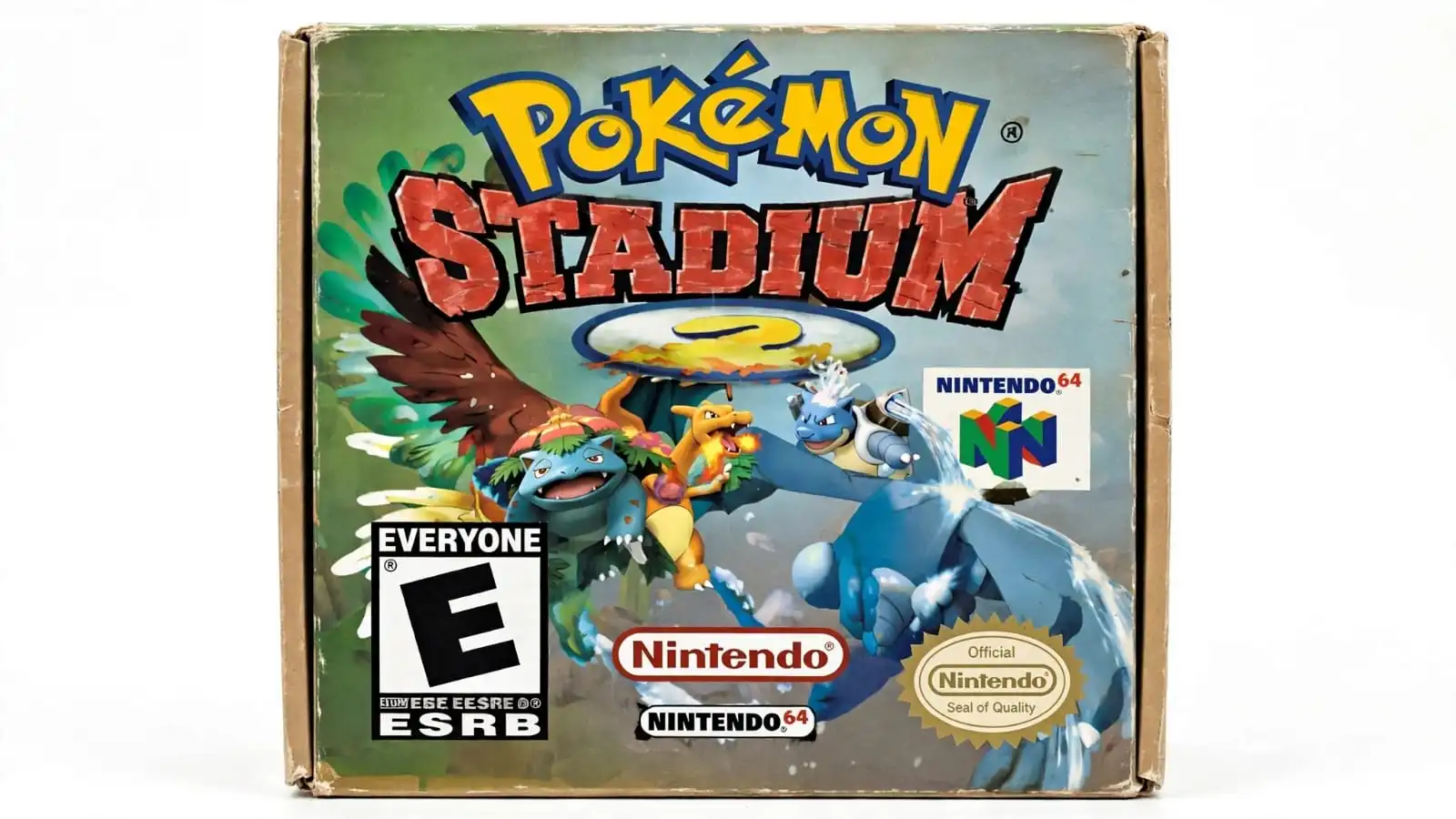
Pokémon Stadium 2 becomes much more interesting once you understand how closely it connects to the Game Boy Pokémon games. The original Nintendo 64 version uses the Transfer Pak, an accessory that attaches to the back of the controller and accepts compatible Game Boy cartridges. This allows players to bring Pokémon from Red, Blue, Yellow, Gold, Silver, and Crystal into Stadium battles. That changes the experience considerably because you can use creatures you’ve trained yourself instead of relying entirely on rental teams.
There’s also the Gym Leader Castle, multiple tournament Cups, and a collection of minigames that work well with people who aren’t interested in competitive Pokémon battling. Pichu’s Power Plant, for example, is built around charging electricity through rapid button presses, which makes it easy to understand during a group session. If you’re collecting good N64 games connected to the Pokémon series, I would favor Stadium 2 over the original for its broader roster and additional features. There’s one important limitation with the Nintendo Switch Online version: it doesn’t support transferring Pokémon from Game Boy cartridges. That means the original hardware remains preferable if using your existing Pokémon teams is the main reason you want to play.
18. Sin & Punishment
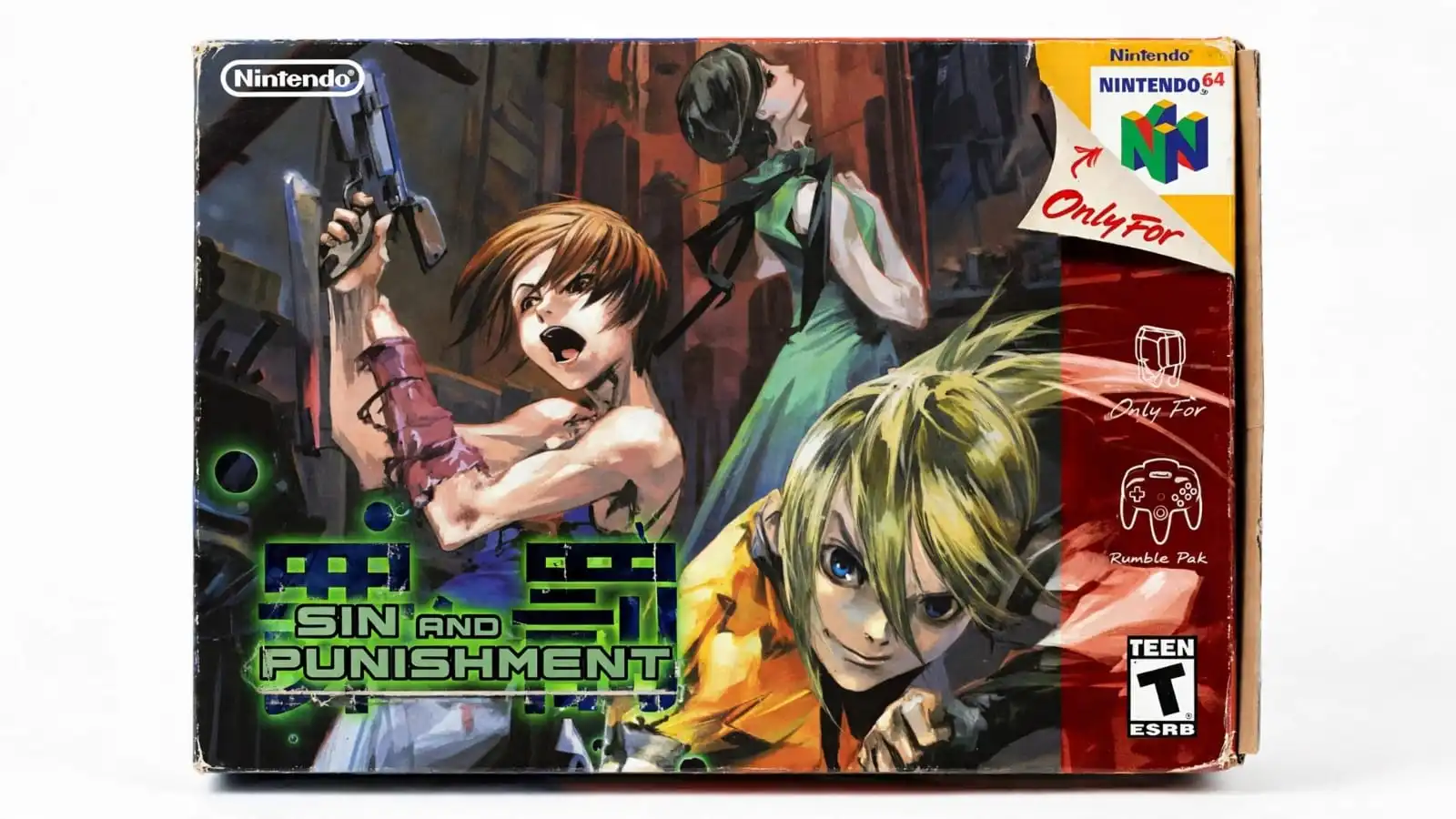
Sin & Punishment is a good example of a game that didn’t need a huge open environment to make the Nintendo 64 feel capable. Developed by Treasure, it combines on-rails shooting with character movement, requiring you to manage two different actions at once. Your character advances through predetermined sequences while you dodge attacks, aim at enemies, and use a sword during close-range encounters. At first, it can feel awkward because you’re trying to move your character and control the targeting reticle independently. Once the control scheme becomes familiar, the game starts rewarding quick decisions about which threats need attention first. It’s particularly satisfying when a dangerous projectile can be dealt with using a correctly timed sword attack rather than simply avoided.
The original N64 cartridge was released only in Japan, although the spoken dialogue is in English. Later digital releases made the interface more accessible to players outside Japan. Sin & Punishment is available through Nintendo’s N64 Classics library in supported regions, making it easier to try without importing a cartridge. Its stages are relatively short, but the difficulty and scoring system give them replay value. I’d recommend this one to players who enjoy learning enemy attack patterns and improving their performance rather than searching for collectibles.
19. Blast Corps
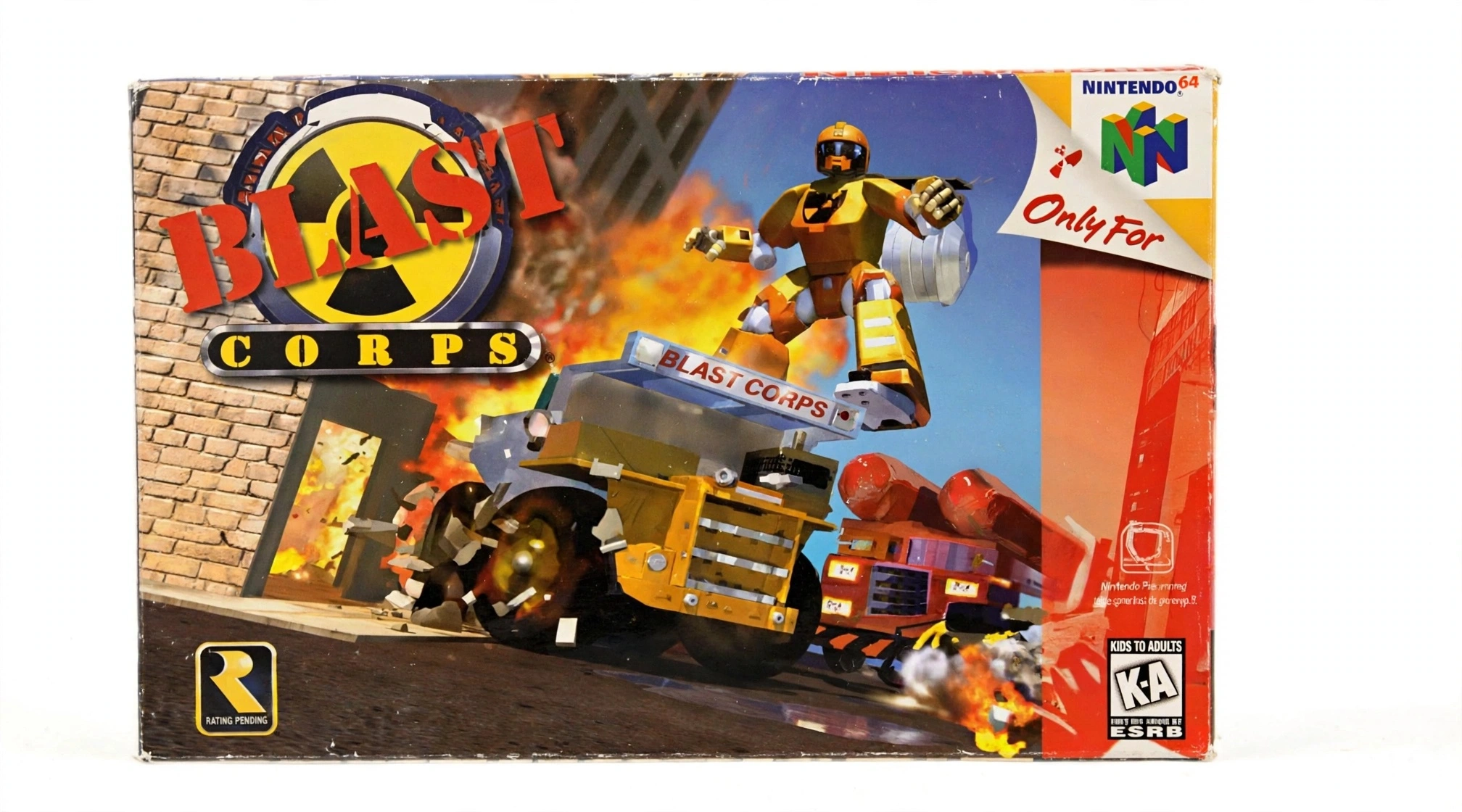
Blast Corps has one of the strangest objectives I’ve seen in an N64 action game. A damaged carrier transporting nuclear missiles is moving along a fixed route, and your job is to destroy anything that might get in its way. If it collides with a building, the mission fails. You begin with relatively simple demolition equipment, but later levels introduce vehicles that require completely different approaches. The Backlash dump truck, for instance, destroys structures most effectively by sliding its rear end into them, which can be difficult to control until you understand how much room it needs.
Other missions involve moving objects, operating machinery, or switching between vehicles to open a safe path. What makes the design clever is that you can’t always solve the problem by destroying the nearest building. Sometimes you need to think about where the carrier will travel next and which obstacles will take the longest to remove. After completing a main mission, you can return without the same immediate pressure to discover secrets and improve your completion record. For players searching for good N64 games with unusual objectives, Blast Corps offers something very different from the standard platformer or shooter. I’d begin by learning how each demolition vehicle works before chasing gold medals; some machines require techniques that aren’t obvious from their appearance.
20. Resident Evil 2
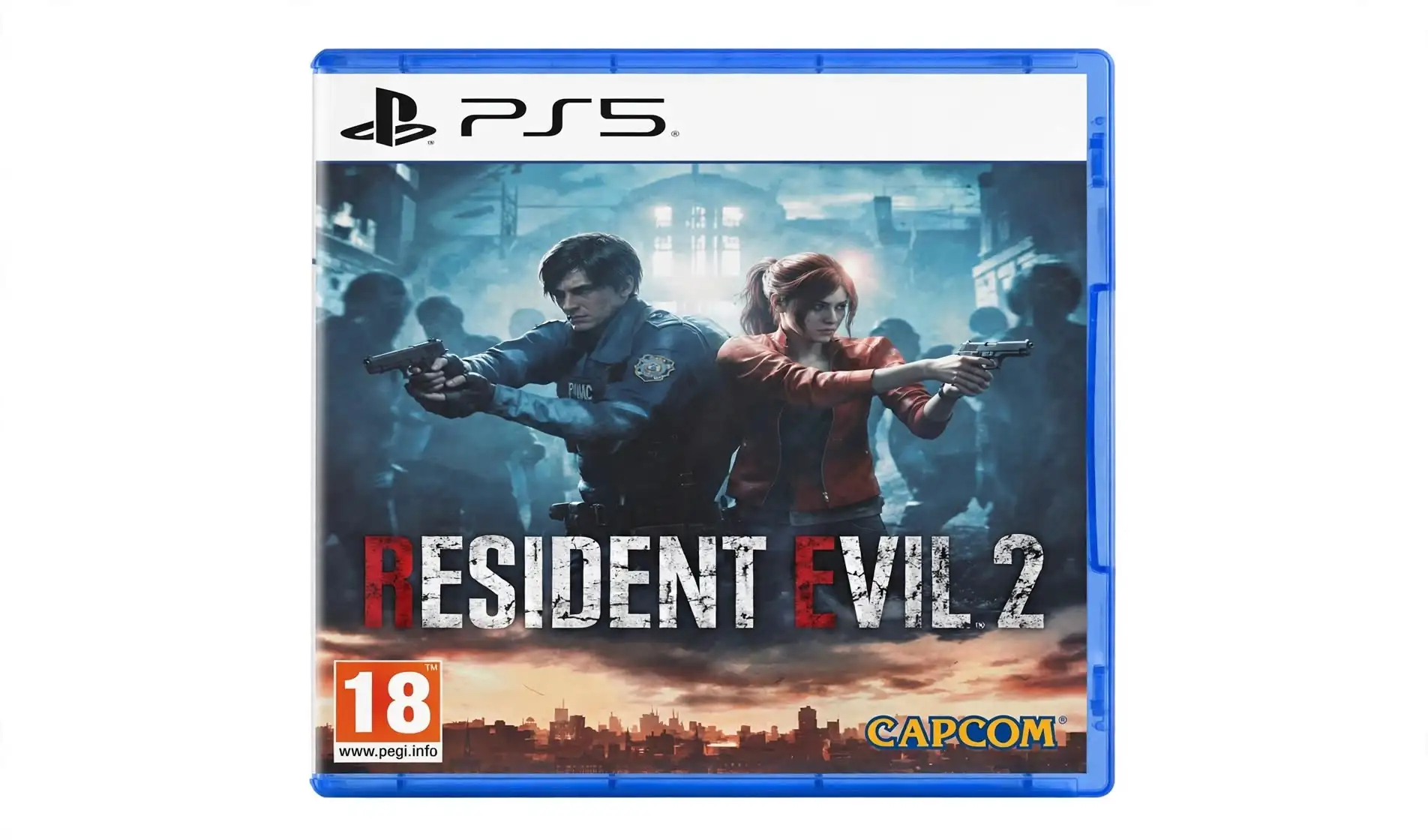
Resident Evil 2 is one of the most interesting examples of developers adapting a PlayStation game for Nintendo’s cartridge-based hardware. The original PlayStation release used two CDs, while the Nintendo 64 conversion managed to fit the adventure onto a single 64 MB cartridge through extensive compression and technical changes. You play through a zombie outbreak in Raccoon City as Leon Kennedy and Claire Redfield, exploring the police station, finding keys, solving environmental puzzles, and managing a limited supply of ammunition. The inventory system creates difficult decisions. Carry too many weapons and you might not have room for a puzzle item; carry too little ammunition and a dangerous room becomes much harder to survive.
The N64 version includes additional EX Files that expand the story and an optional item randomizer that changes the locations of certain supplies. It also supports the Expansion Pak for higher-resolution graphics, although the accessory isn’t required to play. The compressed video scenes are a visible compromise compared with the PlayStation release. You also need patience with the fixed camera angles and older control options. Still, the atmosphere, scenario structure, and resource management make Resident Evil 2 an excellent survival horror game and a technically fascinating N64 conversion.
What Hardware Do You Actually Need for Good N64 Games?
Before spending money on an original Nintendo 64 collection, it’s worth understanding what the console can and cannot do. Unlike a PC game, an N64 cartridge doesn’t come with separate minimum processor, graphics card, and RAM requirements. The console has fixed hardware, and developers designed their games around it.
The Nintendo 64 uses a 64-bit MIPS-based CPU running at approximately 93.75 MHz and comes with 4 MB of Rambus memory. Those specifications sound tiny compared with a modern computer, but raw numbers aren’t particularly useful when you’re dealing with software designed for one specific system.
The more important questions concern accessories, controllers, and display compatibility.
| Accessory | What it actually does | When you need it |
|---|---|---|
| Expansion Pak | Adds 4 MB of RAM, bringing total system memory to 8 MB | Required for Majora’s Mask and the complete Perfect Dark experience |
| Rumble Pak | Adds vibration feedback to compatible controllers and games | Optional for Star Fox 64 and other supported titles |
| Controller Pak | Stores save data for games that use controller memory | Required by certain titles; check the cartridge’s requirements |
| Transfer Pak | Connects compatible Game Boy cartridges through the N64 controller | Useful for importing Pokémon teams into Pokémon Stadium 2 |
| Additional N64 controllers | Allows local multiplayer with more people | Needed for two-, three-, or four-player matches |
There’s one mistake I’d avoid when buying an Expansion Pak: assuming it improves every game’s graphics or frame rate. It doesn’t. Software must be designed to use the additional memory, and high-resolution modes can sometimes make performance less consistent rather than improve it.
For good N64 games that already operate with the standard memory configuration, an Expansion Pak generally provides no automatic benefit.
Should You Connect an N64 to a CRT or Modern Television?
The Nintendo 64 was designed during an era when most households used CRT televisions. Many of its games output low-resolution signals, often around 240p, and the console’s video processing contributes to the soft image people associate with the system.
A CRT displays these signals differently from a modern flat-screen television, which has to scale them to fit its panel. Cheap composite-to-HDMI adapters can make the image look worse by treating the signal incorrectly or introducing additional delay.
If I were assembling an original N64 setup, I’d consider three options: a good CRT television, a suitable gaming upscaler such as a RetroTINK device, or an appropriately installed HDMI modification. The right choice depends on the console’s video output, your display, and how much you’re willing to spend.
A higher-quality connection won’t magically turn N64 graphics into modern HD artwork. It can, however, improve signal handling, reduce unnecessary display processing, and make text or moving objects easier to see.
Are Modern N64-Compatible Systems Better Than Original Hardware?
Modern FPGA-based systems, including the Analogue 3D, offer another approach to playing original cartridges on contemporary displays. These products aim to reproduce the console’s hardware behavior without requiring a standard software emulator.
That doesn’t automatically make every game behave identically to an untouched original N64. Compatibility, controller handling, display settings, and firmware versions can affect the experience.
I would also distinguish hardware reproduction from software emulation. Emulators on a computer can offer higher rendering resolutions, controller remapping, and save states, but different programs and graphics plugins have different compatibility characteristics.
There is no single meaningful PC specification that guarantees perfect performance for every N64 game across every emulator.
Which Popular N64 Games Didn’t Make the Top 20?
A few well-known titles narrowly missed the ranking. That doesn’t mean they’re poor games; I wanted to include a wider selection of genres rather than fill the entire article with similar platformers.
Conker’s Bad Fur Day is a remarkable technical achievement with fully voiced characters, elaborate set pieces, and adult comedy. However, its uneven controls and occasional performance problems make it harder to recommend ahead of more consistently enjoyable games.
Donkey Kong 64 contains an enormous amount of content and five playable Kongs, but frequent character switching and repeated collection tasks can make progression slower than it needs to be. It also requires the Expansion Pak.
Kirby 64: The Crystal Shards is a good choice for younger players and anyone who enjoys experimenting with combined abilities. I left it outside the main ranking because its relatively gentle difficulty provides less challenge for experienced platforming fans.
1080° Snowboarding has a demanding trick system and a satisfying sense of momentum, but I’d personally choose Wave Race 64 for its more distinctive course conditions and vehicle behavior.
Banjo-Tooie considerably expands on the first Banjo adventure, although the larger environments and more complicated objectives sometimes make it harder to keep track of what you should be doing next.
These are still good N64 games worth investigating once you’ve explored the main ranking.
Conclusion
What I appreciate about the Nintendo 64 is how much variety its developers managed to get out of one machine. Super Mario 64 built an adventure around movement. GoldenEye turned one television into a competitive multiplayer arena. Perfect Dark pushed the system with customization and artificial opponents, while games like Blast Corps found entirely different uses for vehicles and environmental puzzles.
Not all of these games have aged equally well. Some ask you to tolerate cameras that don’t cooperate, frame rates that dip during busy scenes, or control schemes that were designed before modern conventions existed. I think it’s better to understand those shortcomings beforehand than discover them after buying an expensive cartridge.
If I had to start a collection from scratch, Ocarina of Time would be my first purchase, followed by Super Mario 64 and Mario Kart 64. Together, they cover three of the console’s strongest experiences without requiring unusual accessories.
The rest depends on what you enjoy. A player who loves strategy might spend more time with Ogre Battle 64 than with any of the top-ranked platformers, while someone who enjoys score-based action could get far more replay value from Star Fox 64 or Sin & Punishment.
That’s why I think searching for good N64 games should be about finding the titles that match how you like to play, rather than simply buying whatever appears at number one on somebody else’s list.
FAQs
Which Nintendo 64 game would you put at the top of your own ranking?