Humanoid Robot Buying Guide 2026 — Cost & Key Features
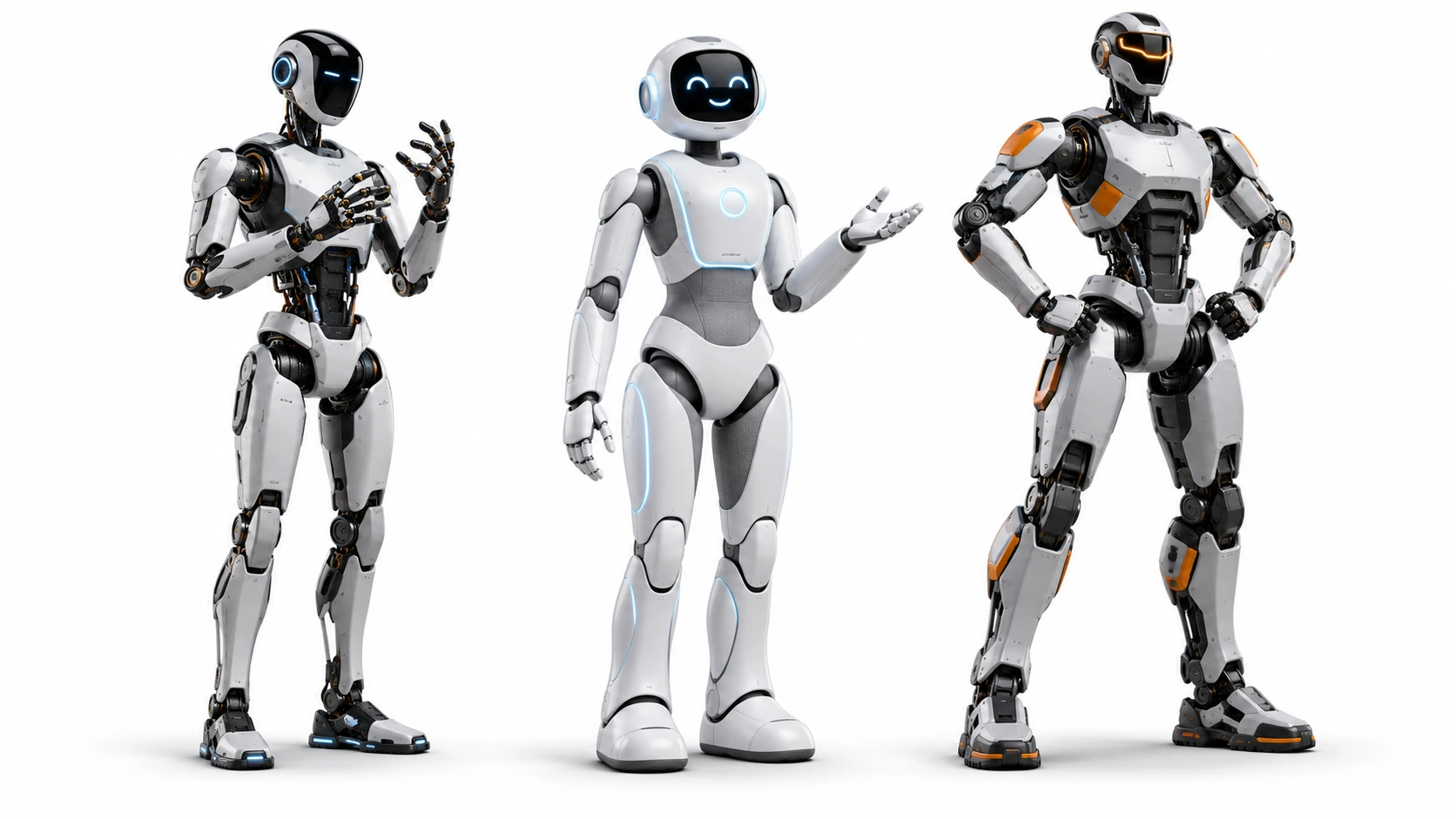
Before buying a humanoid robot in 2026, you should evaluate five things: what tasks it can perform, how independently it operates, its mechanical capabilities, safety features, and total ownership cost. A robot that walks smoothly or follows voice commands may look impressive, but those abilities alone don’t mean it can handle useful work reliably.
Prices also vary considerably. Some entry-level humanoid robots now start below $5,000, while advanced research and industrial models can cost tens of thousands of dollars. The difference isn’t simply about size or appearance. Software access, sensors, robotic hands, and technical support all influence what you’re actually buying.
What Should You Consider Before Buying a Humanoid Robot?
The first thing I would consider is what the robot needs to accomplish. Buying a robot for university research is different from purchasing one for customer interaction or warehouse operations. Each application requires its own combination of movement, software, and operating capabilities.
Define Your Intended Tasks and Applications
Start by identifying the activities you want the robot to perform. A research laboratory may need a programmable platform for developing control algorithms, while a business may want a robot to greet visitors or assist with demonstrations. Industrial applications may require accurate object handling, navigation, and consistent operation over longer periods.
For example, a humanoid robot designed for interactive performances may be suitable for exhibitions and visitor engagement, but that doesn’t automatically make it suitable for moving heavy inventory. Those applications require different capabilities, even though both involve human-shaped machines.
I would narrow the requirements to a few tasks the robot must complete successfully. That makes it easier to compare models and identify features that justify their additional cost.
Choose Between Research and Commercial Models
Research humanoid robots generally prioritize flexibility. Developers may need access to software development kits, control interfaces, sensor data, and simulation models to experiment with AI and robotic movements.
Commercial robots are usually designed around more specific tasks. They may include predefined functions and simpler operating controls, although the amount of customization available depends on the manufacturer.
Before purchasing a research model, confirm which development tools are included. Some manufacturers offer separate standard and developer editions, and the cheaper configuration may not provide the software access your project requires.
Assess Your Operating Environment
A robot that performs well on a smooth laboratory floor may behave differently in a crowded office or industrial workspace. Floor surfaces, obstacles, narrow passages, lighting, and available space can influence movement and navigation.
Consider an office where the robot must move between desks and interact with visitors. You would need to examine its width, turning ability, obstacle detection, and whether it can safely operate around people.
Environmental restrictions also matter. Check the manufacturer’s supported temperature range, protection against dust and moisture, and connectivity requirements before deciding where the robot will operate.
Key Humanoid Robot Features Worth Evaluating
Humanoid robots combine mechanical joints, motors, sensors, processors, and software. However, impressive specifications don’t always translate into better performance. The most useful features are those that directly affect the tasks you want the robot to perform.
Mobility, Balance, and Object Manipulation
Walking speed is worth checking, but I would pay equal attention to stability and movement control. A robot should be able to turn, stop, avoid obstacles, and maintain balance under the conditions in which it will operate.
Degrees of freedom (DOF) describe how many independently controlled movements its joints support. More DOF can provide greater movement flexibility, although the mechanical design and control software ultimately determine how effectively those movements are used.
For object manipulation, examine the robot’s arm reach, gripping mechanisms, payload capacity, and positioning accuracy. A robot that can carry a container may not have the dexterity needed to pick up small tools or fragile components.
The National Institute of Standards and Technology has proposed a performance benchmark for evaluating humanoid locomotion and manipulation through measurable tasks. Although the benchmark is still being developed, its approach highlights why repeatable performance matters more than promotional demonstrations.
AI Capabilities and Autonomous Operation
Artificial intelligence helps humanoid robots interpret visual information, recognize objects, respond to instructions, and plan movements. Some models also use vision-language-action systems to connect visual observations and language instructions with physical actions.
However, there is an important difference between recognizing an object and successfully manipulating it. A robot might identify a bottle on a table but still need operator assistance to pick it up without dropping it.
You should ask whether the robot performs tasks independently, follows predefined routines, or relies on teleoperation. Also check how it handles unexpected situations. If an object changes position or an obstacle blocks its path, can the robot adapt, or does a person need to restart the task?
For research applications, software customization and access to control interfaces may be more valuable than a long list of built-in AI features.
Battery Life, Charging, and Connectivity
Battery specifications deserve attention because a robot’s runtime can change depending on its workload. Standing, talking, walking, and lifting objects consume different amounts of energy.
For example, a manufacturer might advertise several hours of operation, but that figure may reflect relatively light activity. If your application requires continuous walking or repeated lifting, ask for battery test results under comparable conditions.
Check charging time, battery replacement options, and the availability of spare batteries. For software integration, confirm supported communication interfaces, networking options, and whether critical functions require an internet connection.
How Much Does a Humanoid Robot Cost in 2026?
Humanoid robot prices range from a few thousand dollars for entry-level models to substantially higher amounts for advanced research and industrial systems. However, the advertised starting price is only one part of the purchasing decision.
Purchase Price and Hardware Configuration
As of November 2026, Unitree’s official listed prices include the R1 starting at $4,900 and the G1 starting at $13,500. Higher-end models cost considerably more, depending on their hardware and configuration.
These figures provide a useful pricing reference, but they shouldn’t be treated as the cost of a complete commercial deployment. A basic model may lack the robotic hands, accessories, or development features needed for your application.
Before ordering, request a complete quotation. Confirm whether the price includes the battery, charger, controller, end effectors, software permissions, shipping, and technical support. Taxes, import duties, and configuration upgrades may add further costs.
Software, Maintenance, and Repair Costs
Humanoid robots contain multiple motors, joints, sensors, and electronic components. Regular operation can create wear, while accidental falls or mechanical faults may require repairs.
Maintenance costs depend on the robot’s design, operating conditions, and replacement part availability. Ask the manufacturer which components require routine servicing and whether repairs can be handled locally.
Software costs should also be considered. Some robots include basic operating software but charge separately for advanced development tools, cloud services, or additional functions.
Calculate the Total Cost of Ownership
I would calculate the expected cost of ownership over at least the first year rather than comparing purchase prices alone.
Suppose a robot costs $25,000. If installation and integration require another $5,000, while maintenance, training, and support add $4,000, the first-year expense reaches $34,000. These are illustrative figures, but they show how quickly costs can increase beyond the advertised price.
Businesses should also account for electricity, human supervision, downtime, and any workplace modifications. A lower-priced robot that requires constant assistance may ultimately cost more to operate than a better-supported alternative.
How to Evaluate a Humanoid Robot Before Purchase
One of the biggest mistakes buyers can make is judging a robot entirely from a demonstration video. A successful movement in a controlled environment doesn’t establish whether the machine will perform the same task consistently in your workplace.
Request Repeated Performance Demonstrations
Ask the manufacturer to demonstrate activities similar to those you expect the robot to perform. If you’re purchasing it for object handling, request tests using objects of comparable sizes and weights.
I would also ask for repeated trials instead of a single demonstration. For example, if the robot attempts the same task 20 times and succeeds 16 times, its observed completion rate is 80%. That is more informative than watching one successful attempt, although a short test cannot establish long-term reliability.
Record the time required for each attempt, the number of failures, and how often an operator intervenes. If possible, arrange a supervised pilot in the intended environment before committing to a larger purchase.
Review Safety Features and Operating Requirements
Humanoid robots can create safety risks through unexpected movements, loss of balance, or physical contact with nearby objects and people. These risks become more important in public spaces and workplaces where employees operate close to moving equipment.
Check for emergency stop controls, movement restrictions, collision detection, and safe shutdown procedures. Ask how the robot behaves after losing power or communication and what happens when a mechanical or software fault occurs.
The Occupational Safety and Health Administration provides safety guidance covering industrial robotic hazards, risk assessments, and protective measures. Buyers should use it alongside the requirements applicable to their own country and application.
Relevant robotics standards also deserve attention. For instance, ISO 10218 addresses industrial robot safety, while ISO 13482 covers specified categories of personal care robots. The appropriate standard depends on the robot’s intended use; no single standard covers every humanoid application.
Check Warranty, Technical Support, and Upgrades
Warranty coverage is another area where two similarly priced robots can differ significantly. A manufacturer may provide a limited warranty but exclude accidental damage, certain consumable parts, or repair shipping costs.
Before purchasing, ask how replacement parts are supplied, how repairs are arranged, and whether technical assistance is available in your region. A robot that must be shipped internationally for every mechanical issue could remain unavailable for a considerable period.
Software support also matters. Confirm whether the manufacturer provides security patches, operating system updates, and compatibility improvements. For research platforms, check whether sensors, end effectors, and software components can be upgraded as your project develops.
Is Buying a Humanoid Robot Worth It in 2026?
A humanoid robot can be worth buying when its capabilities match a clearly defined requirement, and the expected benefits justify its ownership costs. For universities, the return may come from research, experimentation, and developing new robotics applications rather than immediate financial savings.
Businesses need a different approach. They should evaluate whether the robot can perform useful tasks consistently, how much supervision it requires, and whether its performance provides measurable value.
Consider a warehouse that needs equipment to transport boxes along a fixed route. A conventional mobile robot or conveyor system may complete that job more economically than a humanoid machine. On the other hand, an application involving several different manipulation tasks in an environment designed for people may provide a stronger reason to consider humanoid hardware.
I would start with a limited pilot project and measure its results before expanding. If the robot cannot demonstrate adequate reliability, safety, and cost efficiency during testing, purchasing additional units would be difficult to justify.
Conclusion
Buying a humanoid robot in 2026 requires looking beyond appearance, walking speed, and advertised AI capabilities. The right decision depends on whether the machine can perform your intended tasks safely, consistently, and within your budget.
Research buyers should focus on programmability, development access, and mechanical capabilities. Businesses should place greater weight on task completion, operating costs, reliability, and after-sales support.
Before making a final decision, request repeated demonstrations, confirm the complete hardware and software package, and calculate the total cost of ownership. A humanoid robot is a worthwhile investment when its demonstrated performance provides enough value to justify the purchase and ongoing expenses.