
The Modern Smartwatch Evolution — Combining Style, Health Tracking, and Active Living
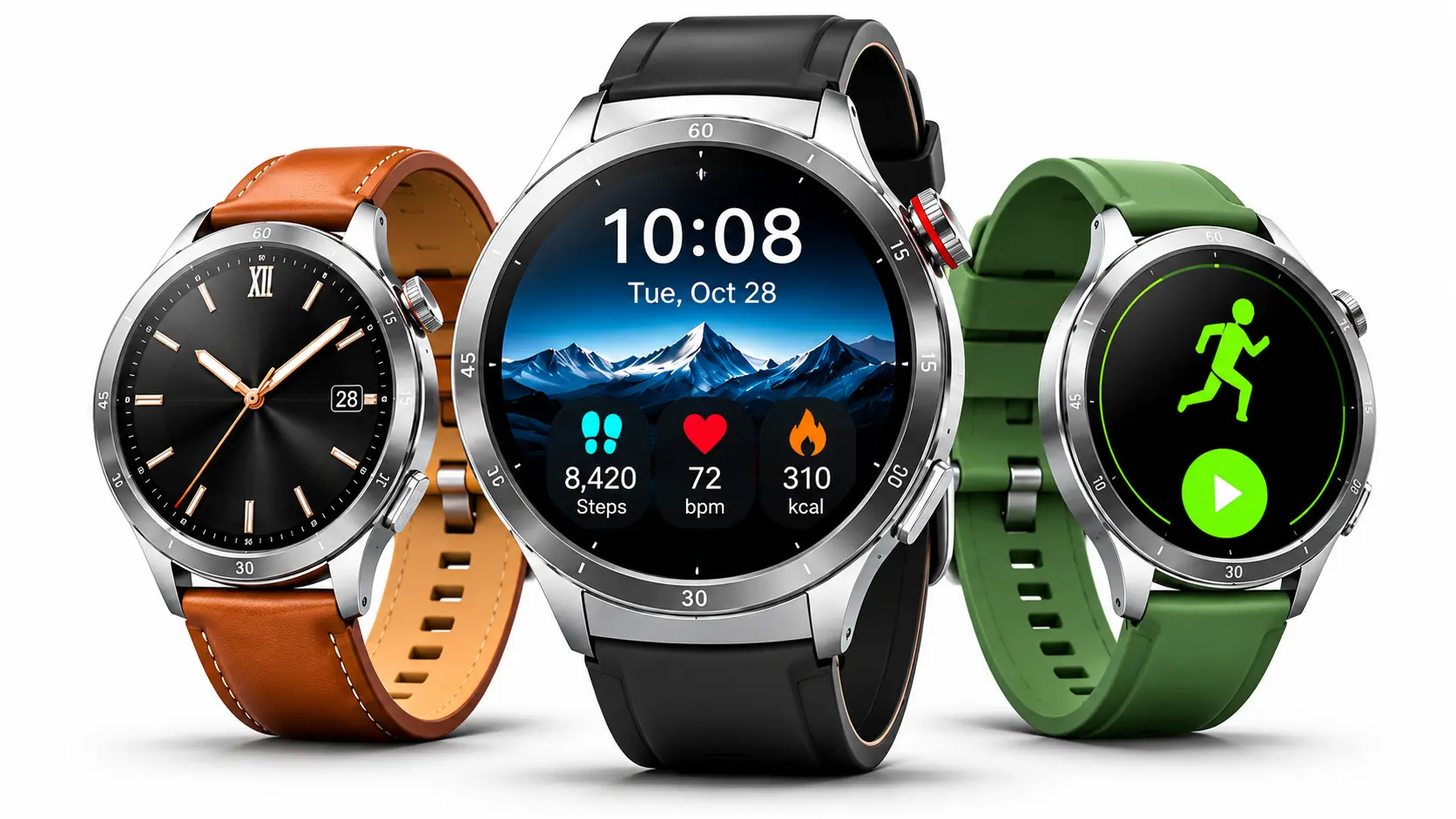
Modern smartwatches have evolved by combining traditional watch design with advanced health monitoring, fitness tracking, digital connectivity, and longer battery life. They allow users to monitor their heart rate, understand their sleep patterns, track outdoor activities, and manage everyday tasks without frequently checking their smartphones.
For example, someone working in an office can use a smartwatch to check meeting reminders during the day, monitor their performance during an evening workout, and track their sleep at night. Having all these features in a single device makes modern smartwatches useful for both professional and personal routines.
The improvement in build quality has also played an important role in this evolution. Materials such as lightweight titanium, scratch-resistant sapphire glass, and ceramic provide durability without making the watch unnecessarily heavy or uncomfortable.
Elevating Aesthetics with Purposeful Design
A smartwatch is something you may wear throughout the day, so its appearance, weight, and comfort are just as important as its technical features. Modern manufacturers combine traditional watch designs with digital displays to create devices suitable for business meetings, casual outings, and outdoor activities.
High-quality AMOLED displays provide sharp visuals, vibrant colors, and good visibility in bright outdoor conditions. Whether you are checking an incoming message or monitoring your running pace, a bright and responsive display makes information easier to read.
Customizable watch faces give users greater control over the information displayed on their wrists. You can select a simple clock face for office hours or switch to a fitness-focused layout showing your heart rate, daily steps, and calories burned.
Interchangeable straps further improve everyday usability. A leather strap may complement formal clothing, while a silicone or fluoroelastomer strap is generally more practical for exercise because it handles sweat and moisture better.
Holistic Health Intelligence and Daily Wellness
Health monitoring is one of the most useful features of modern smartwatches. Built-in optical sensors measure changes in blood flow beneath the skin, helping the device estimate heart rate and other physiological indicators.
By reviewing your resting heart rate over several weeks, you can better understand how exercise, stress, and daily habits may affect your body. Some advanced smartwatches also provide blood oxygen monitoring, heart rate variability measurements, and estimated stress levels.
However, smartwatch health readings should be treated as wellness information rather than medical diagnoses. The FDA explains that pulse oximeters can produce inaccurate readings due to factors such as skin pigmentation, temperature, and poor blood circulation.
Understanding Sleep Quality and Recovery
Getting enough sleep does not always mean getting good-quality sleep. Modern smartwatches estimate sleep duration, nighttime awakenings, and different sleep stages by analyzing movement and physiological signals.
According to the National Institutes of Health, different sleep stages occur throughout the night, including deep sleep and rapid eye movement (REM) sleep. Each forms part of the body’s natural sleep cycle.
For instance, if your watch consistently records irregular sleeping hours, you may benefit from establishing a more consistent bedtime. Reviewing weekly sleep trends can help you identify habits that may be affecting your energy and recovery, although wearable sleep estimates are not as definitive as clinical sleep studies.
Managing Stress Throughout the Day
Many advanced smartwatches estimate stress levels by analyzing heart rate variability and other physiological signals. These measurements can help users recognize changes in their physical state during demanding work schedules.
Some devices also provide guided breathing exercises and relaxation reminders. Taking a short break between meetings or during a busy afternoon can help you slow your breathing and refocus on your work.
Precision Sports Tracking and Outdoor Navigation
Modern smartwatches have become increasingly useful for beginners, professional athletes, and outdoor enthusiasts. Many premium models support more than 100 workout modes, including running, swimming, cycling, hiking, skiing, and strength training.
Instead of simply counting steps and calories, advanced wearables can measure running pace, distance, elevation, cadence, training load, and estimated recovery time. These measurements help users compare their performance and make gradual improvements to their exercise routines.
The Centers for Disease Control and Prevention explains that exercise intensity can be assessed through changes in heart rate, breathing, and perceived effort. Smartwatch heart rate monitoring can therefore help users understand how hard they are exercising.
For someone who runs regularly, comparing pace and heart rate over the same route can provide useful insight into changes in endurance. Devices such as the WATCH GT7 demonstrate how modern wearable technology combines activity tracking, health monitoring, and performance analysis within a single wrist-worn device.
Improved GPS Accuracy for Outdoor Activities
Dual-frequency satellite positioning has improved the navigation capabilities of advanced smartwatches. By receiving signals across multiple frequencies, compatible devices can reduce certain positioning errors and provide more consistent route tracking.
However, GPS accuracy can still be affected by tall buildings, dense trees, atmospheric conditions, and the quality of the receiver. Even premium smartwatches may experience occasional positioning errors in challenging environments.
Features such as route importing, elevation tracking, and backtrack navigation are useful for hikers and trail runners. These tools help users follow planned routes, monitor climbing progress, and retrace their paths when necessary. A backup navigation method remains advisable when exploring remote areas.
Seamless Digital Connectivity and Wrist-Based Convenience
Smartwatches are no longer limited to health and fitness monitoring. They also act as an extension of a smartphone, allowing users to manage communication and daily responsibilities directly from their wrists.
Bluetooth calling enables users to answer incoming calls on compatible devices when their smartphones are nearby. This feature can be useful while preparing meals, working at a desk, or walking outdoors without needing to take the phone out of a pocket.
Notification management is another practical benefit. Users can receive important messages, calendar reminders, and application alerts while filtering out unnecessary notifications.
Depending on the model and smartphone compatibility, additional features may include music playback controls, remote camera operation, weather updates, alarms, timers, and contactless payments. These small conveniences can reduce unnecessary phone usage throughout the day.
Extended Battery Life for Uninterrupted Daily Use
Battery life has always been an important consideration when purchasing a smartwatch. A device that requires frequent charging can interrupt overnight sleep monitoring, long workouts, and outdoor activities.
Modern manufacturers address this problem through energy-efficient processors, optimized operating systems, improved battery technology, and intelligent power management. Some premium smartwatches can operate for several days or even weeks under lighter usage conditions.
Actual battery performance depends on how the device is used. Features such as continuous GPS tracking, always-on displays, Bluetooth calling, and frequent health measurements can increase power consumption considerably.
Fast wireless charging is another useful development. Users can recharge compatible watches during breakfast or while getting ready for work, reducing the need to leave the device charging overnight.
What Should You Consider When Choosing a Modern Smartwatch?
Choosing the right smartwatch depends on your lifestyle rather than simply selecting the device with the highest number of features.
If you spend most of your day working in an office, display quality, comfortable straps, notification management, and battery life may be your main priorities. For outdoor enthusiasts, GPS performance, water resistance, durability, and workout tracking capabilities may be more valuable.
Smartphone compatibility is equally important. Certain smartwatch features may work differently on Android and iOS devices. Checking compatibility before purchasing helps ensure that the features you need are available with your existing smartphone.
You should also consider the watch’s size, weight, water resistance rating, sensor capabilities, and software support. A smartwatch that fits comfortably and meets your daily requirements is often more valuable than an expensive model containing features you rarely use.
Conclusion
Modern smartwatches have successfully combined traditional watch craftsmanship with advanced digital technology. Premium materials, health monitoring, accurate activity tracking, smartphone connectivity, and improved battery efficiency have expanded their role in everyday life.
Whether you want to understand your sleeping habits, improve your running performance, manage work notifications, or reduce your dependence on a smartphone, a suitable smartwatch can make these tasks more convenient.
The best smartwatch is not necessarily the most expensive or feature-rich model. It is the one that fits your lifestyle, provides useful information, and stays comfortable enough to wear all day.