Best Intel CPU for Gaming in 2026 — 10 CPUs Compared
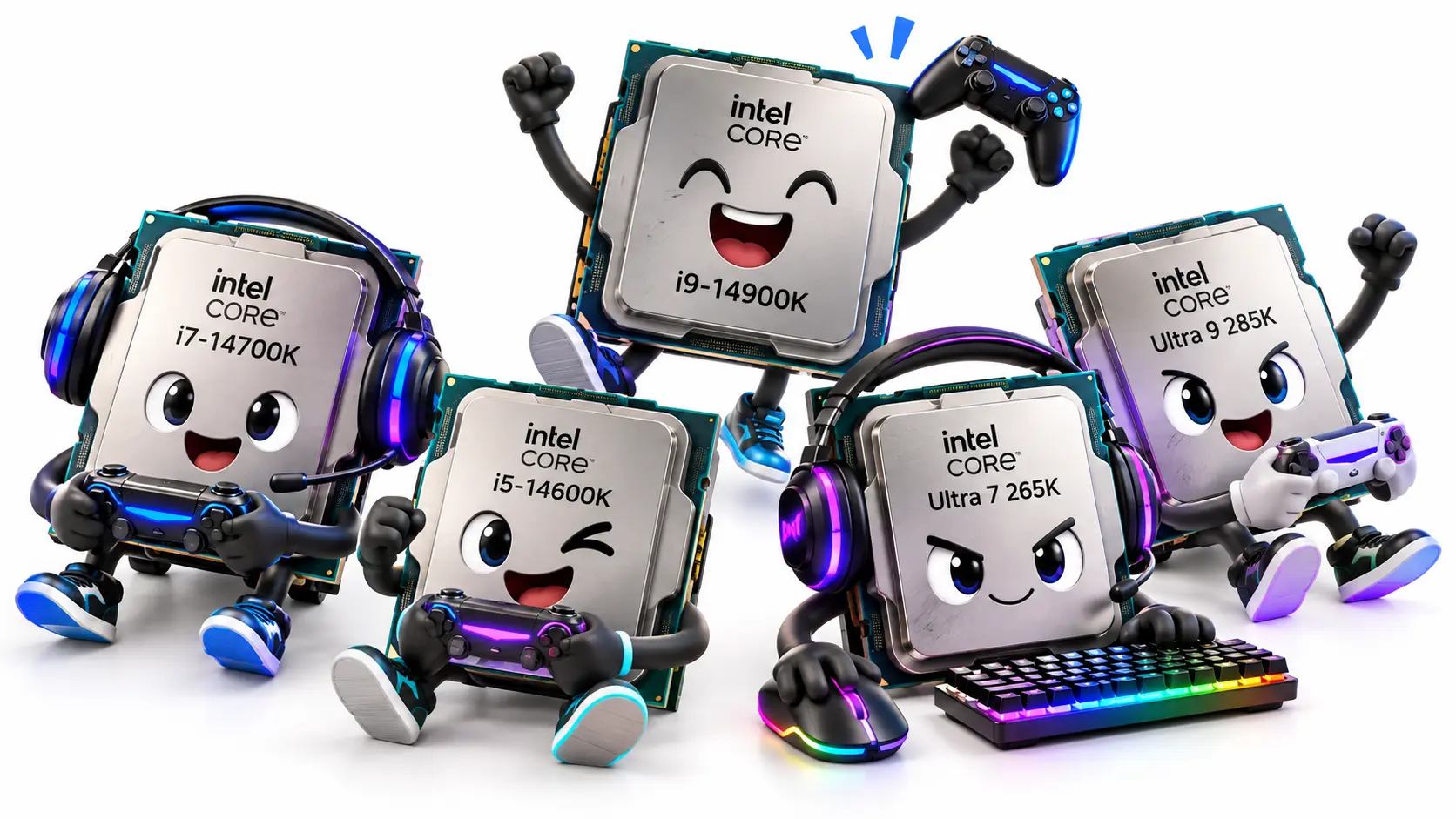
The best Intel CPU for gaming in a new, high-performance PC is the Core Ultra 7 270K Plus if you also stream, edit, or run demanding applications. The Core Ultra 5 250K Plus is the more sensible value pick for many new builds. If you already own an LGA1700 motherboard and DDR4 memory, a discounted Core i5-14600K or Core i7-14700K may cost less overall than replacing your platform. The right choice depends on your motherboard, graphics card, target frame rate, cooling, and the actual price you can buy the processor for.
Best Intel CPUs for Gaming at a Glance
Our criteria for choosing the best Intel CPU for gaming
The first question is whether you are building from scratch or keeping a motherboard. LGA1851 Core Ultra desktop processors need a compatible 800-series board and DDR5. The 14th-generation Core chips here use LGA1700 and can use DDR4 or DDR5 depending on the motherboard. A processor discount is useful only after the cost of the board, memory, cooler, and any BIOS update is counted.
For gaming, we favor CPUs that make sense at their total platform cost, then consider demanding work outside games. Extra E-cores help with concurrent tasks, but core count alone cannot establish gaming speed. Independent reviewers have found the 270K Plus and 250K Plus much more competitive than the first Arrow Lake desktop models; AMD’s current X3D chips can still lead in games. This list therefore ranks Intel buying options, not the fastest processors from every brand. See the Core Ultra 200S Plus announcement from Intel and published tests from GamersNexus for the basis of that assessment.
Reviews of 10 Intel gaming CPUs
These recommendations compare desktop processors using Intel’s published specifications and independent gaming reviews. They are editorial buying assessments, not claims of hands-on testing. Gaming results vary by title, GPU, resolution, memory, BIOS, and power settings.
1. Intel Core Ultra 7 270K Plus
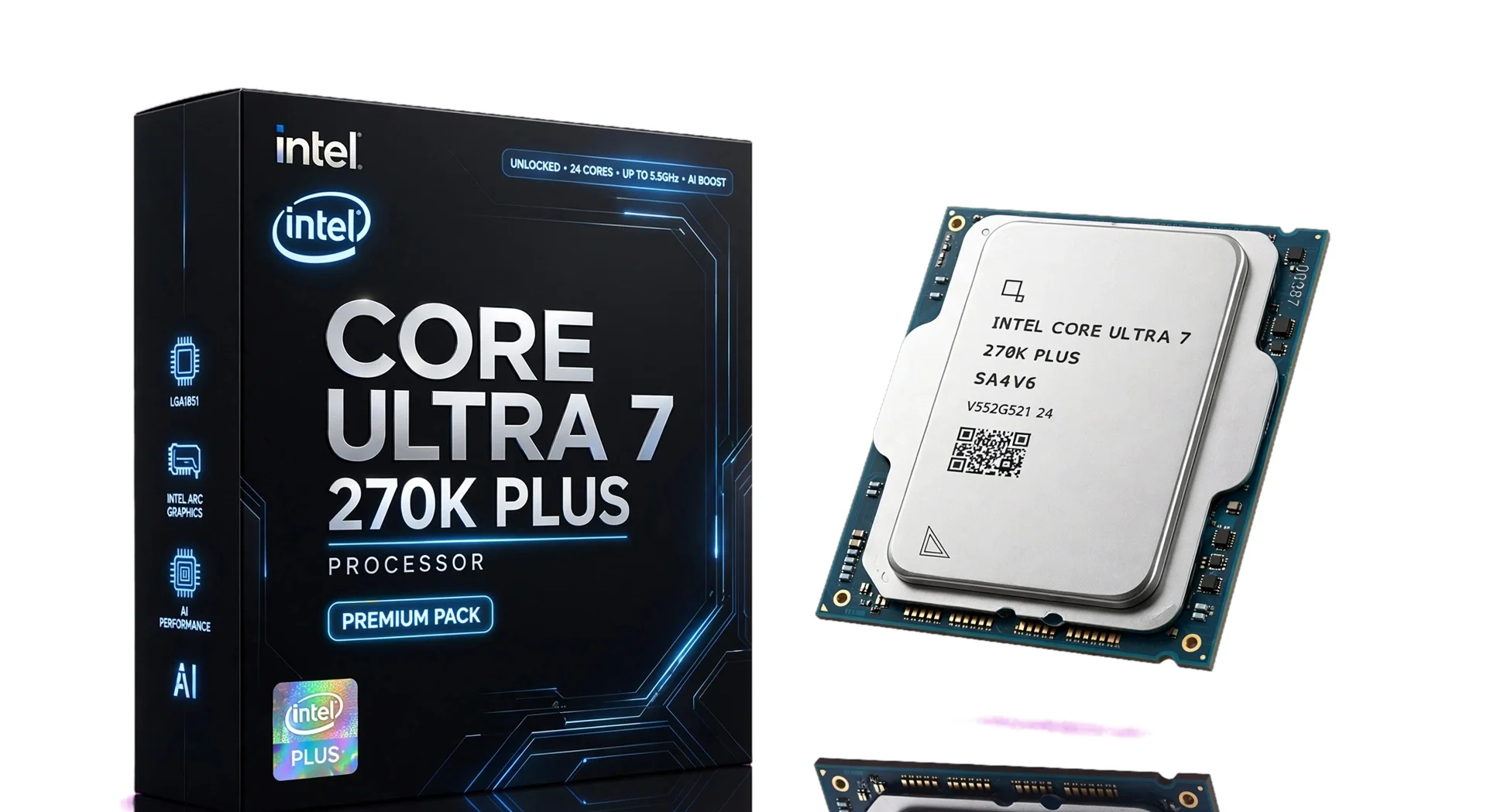
Official specifications
| Total cores | 24 |
| Performance / efficient cores | 8 P-cores / 16 E-cores |
| Total threads | 24 |
| Maximum turbo frequency | Up to 5.5 GHz |
| L3 cache | 36 MB Intel Smart Cache |
| Processor base power | 125 W |
| Maximum turbo power | 250 W |
| Socket | LGA1851 |
| Official memory support | Up to DDR5-7200 |
| Integrated graphics | Intel Graphics |
Core Ultra 7 270K Plus gaming results
| Game | Resolution | Preset | Average FPS | P99 FPS | Test memory |
|---|---|---|---|---|---|
| Anno 117: Pax Romana | 1920 × 1080 | Medium | 165.6 | 76.6 | 32 GB DDR5-7200 |
| Battlefield 6 | 1920 × 1080 | Medium | 282.9 | 220.0 | 32 GB DDR5-7200 |
| Cyberpunk 2077 | 1920 × 1080 | Medium | 235.0 | 179.4 | 32 GB DDR5-7200 |
| DOOM: The Dark Ages | 1920 × 1080 | Medium | 199.6 | 164.7 | 32 GB DDR5-7200 |
| F1 25 | 1920 × 1080 | Medium | 323.0 | 221.2 | 32 GB DDR5-7200 |
The 270K Plus combines eight performance cores and 16 efficient cores with a 5.5 GHz maximum turbo frequency. It is a strong fit when the same machine must run games, encode streams, and finish large creative workloads. The 36 MB L3 cache and updated memory support make it a more compelling gaming option than the older 265K, although gains vary by game.
It doesn’t make a 285K owner need an immediate replacement: the total upgrade cost and existing performance matter more than the model name. For a fresh build, compare its price with the 250K Plus before paying for cores that your daily tasks may not use.
Reasons to buy: Strong Intel gaming and multi-core balance; integrated graphics for display or troubleshooting; suitable for a new DDR5 platform.
Consider first: A capable cooler and LGA1851 motherboard add to the budget; AMD X3D alternatives may deliver higher frame rates in some games.
2. Intel Core Ultra 5 250K Plus
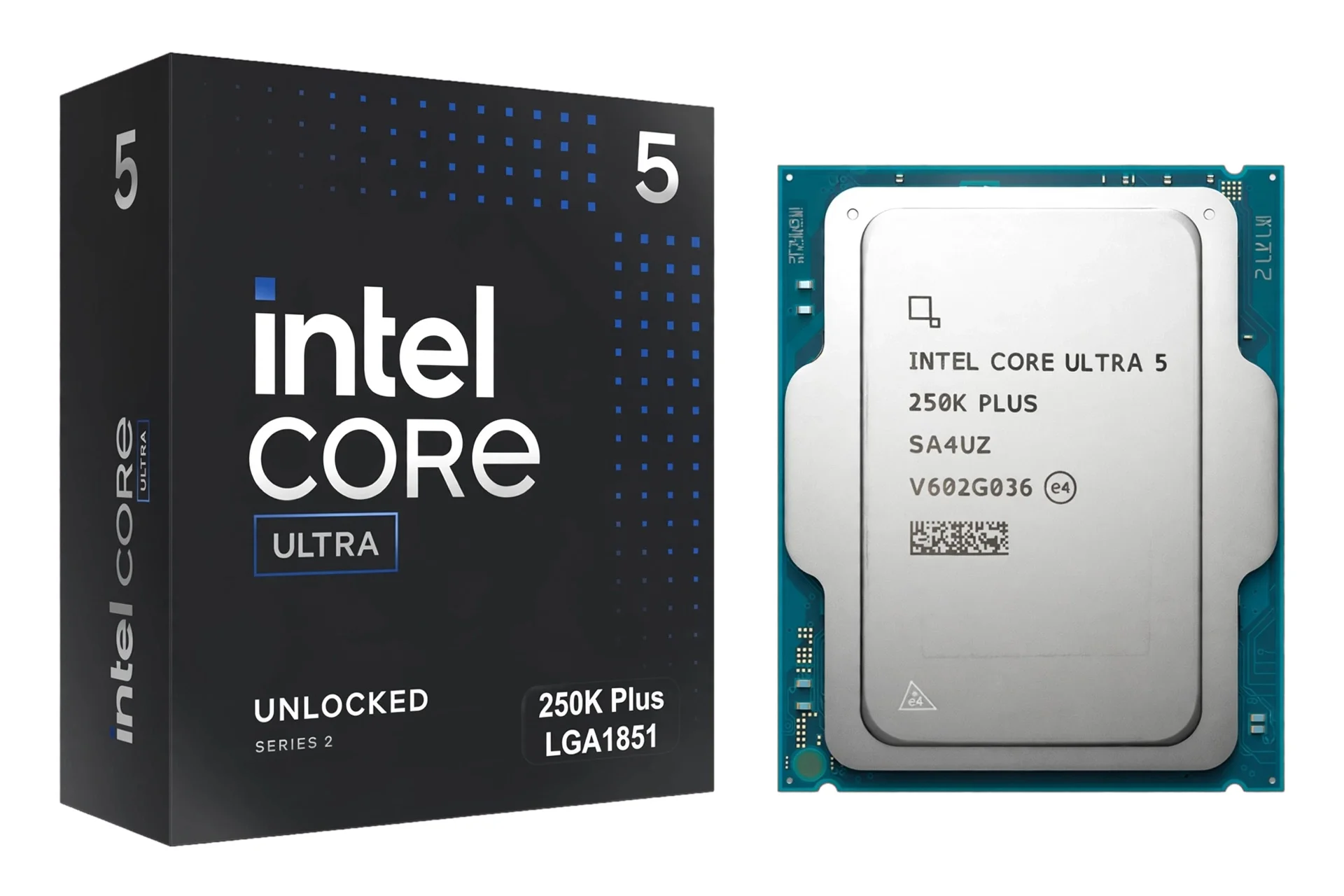
Official specifications
| Total cores | 18 |
| Performance / efficient cores | 6 P-cores / 12 E-cores |
| Total threads | 18 |
| Maximum turbo frequency | Up to 5.3 GHz |
| L3 cache | 30 MB Intel Smart Cache |
| Processor base power | 125 W |
| Maximum turbo power | 159 W |
| Socket | LGA1851 |
| Official memory support | Up to DDR5-7200 |
| Integrated graphics | Intel Graphics |
Core Ultra 5 250K Plus gaming results
| Game | Resolution | Preset | Average FPS | P99 FPS | Test memory |
|---|---|---|---|---|---|
| Anno 117: Pax Romana | 1920 × 1080 | Medium | 162.0 | 76.4 | 32 GB DDR5-7200 |
| Battlefield 6 | 1920 × 1080 | Medium | 287.0 | 224.2 | 32 GB DDR5-7200 |
| Cyberpunk 2077 | 1920 × 1080 | Medium | 226.0 | 167.1 | 32 GB DDR5-7200 |
| DOOM: The Dark Ages | 1920 × 1080 | Medium | 196.8 | 164.6 | 32 GB DDR5-7200 |
| F1 25 | 1920 × 1080 | Medium | 297.7 | 204.0 | 32 GB DDR5-7200 |
Six performance cores and 12 efficient cores give the 250K Plus 18 cores and 18 threads. Its 5.3 GHz maximum turbo and 159 W maximum turbo power position it below the 270K Plus without turning it into a basic processor.
For a buyer who mainly games and occasionally edits or streams, money saved on the CPU can buy a better graphics card or more storage. It also has integrated graphics, which can help diagnose a discrete GPU problem. Check the combined cost of an LGA1851 board and DDR5 against an LGA1700 upgrade before calling either option cheaper.
For a new build with a fixed budget, the best Intel CPU for gaming may be this Core Ultra 5 once the GPU cost is included.
Reasons to buy: Good balance of price class and capability; lower published turbo-power ceiling than the 270K Plus; integrated graphics.
Consider first: The platform requires DDR5, and the 270K Plus is more suitable for frequent heavy multi-core work.
3. Intel Core i5-14600K
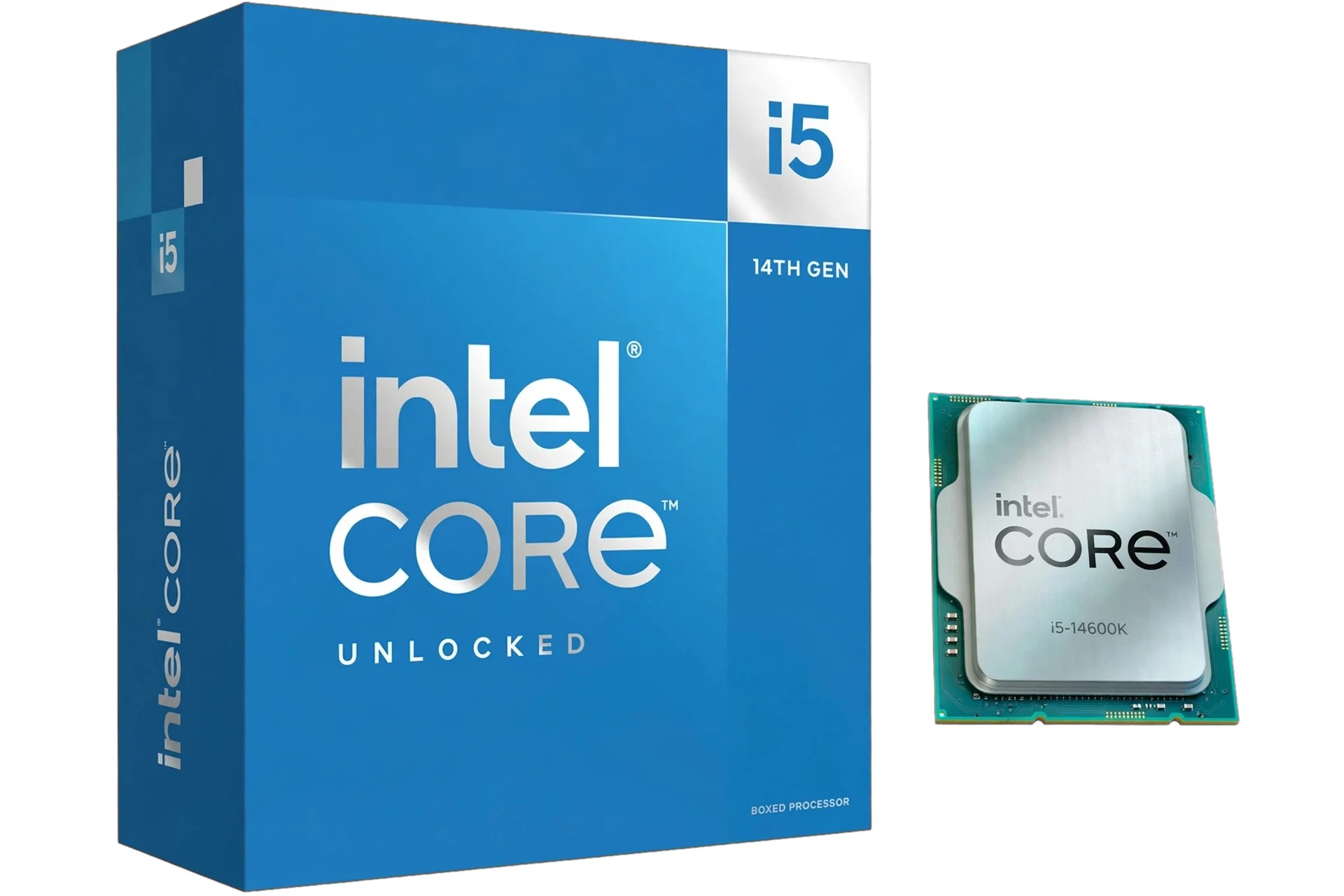
Official specifications
| Total cores | 14 |
| Performance / efficient cores | 6 P-cores / 8 E-cores |
| Total threads | 20 |
| Maximum turbo frequency | Up to 5.3 GHz |
| L3 cache | 24 MB Intel Smart Cache |
| Processor base power | 125 W |
| Maximum turbo power | 181 W |
| Socket | LGA1700 |
| Official memory support | Up to DDR5-5600 or DDR4-3200, depending on motherboard |
| Integrated graphics | Intel UHD Graphics 770 |
Core i5-14600K gaming results
| Game | Resolution | Preset | Average FPS | P99 FPS | Test memory |
|---|---|---|---|---|---|
| Anno 117: Pax Romana | 1920 × 1080 | Medium | 162.6 | 77.0 | 32 GB DDR5-5600 |
| Battlefield 6 | 1920 × 1080 | Medium | 279.7 | 208.4 | 32 GB DDR5-5600 |
| Cyberpunk 2077 | 1920 × 1080 | Medium | 191.9 | 144.0 | 32 GB DDR5-5600 |
| DOOM: The Dark Ages | 1920 × 1080 | Medium | 165.6 | 140.3 | 32 GB DDR5-5600 |
| F1 25 | 1920 × 1080 | Medium | 261.3 | 174.9 | 32 GB DDR5-5600 |
The 14600K has six performance cores, eight efficient cores, and 20 threads, which is ample for gaming with a discrete GPU and background applications. Its main appeal in 2026 is practical: an owner of a compatible LGA1700 board may reuse both the board and DDR4 memory. A new build should compare the full package with the 250K Plus instead of comparing CPU prices alone.
The 14600K can draw up to 181 W under Intel’s turbo specification, so confirm cooler capacity and motherboard power delivery. Update the BIOS to the latest relevant Intel microcode before relying on a 14th-generation system.
Reasons to buy: Strong choice when existing parts reduce upgrade cost; unlocked multiplier; 24 MB L3 cache.
Consider first: LGA1700 has limited later CPU upgrade room, and affected 13th/14th-generation desktop systems require BIOS attention.
4. Intel Core i7-14700K
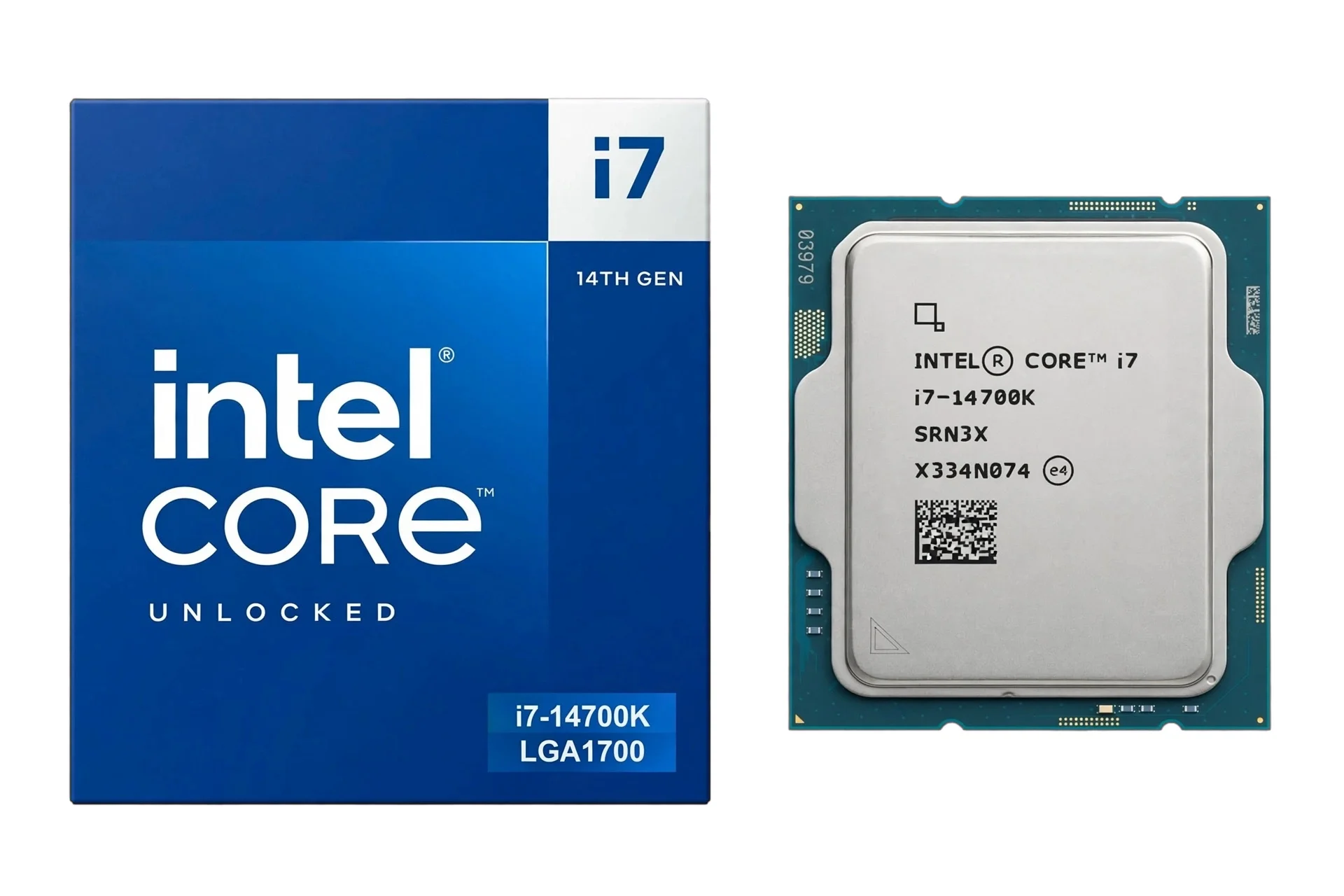
Official specifications
| Total cores | 20 |
| Performance / efficient cores | 8 P-cores / 12 E-cores |
| Total threads | 28 |
| Maximum turbo frequency | Up to 5.6 GHz |
| L3 cache | 33 MB Intel Smart Cache |
| Processor base power | 125 W |
| Maximum turbo power | 253 W |
| Socket | LGA1700 |
| Official memory support | Up to DDR5-5600 or DDR4-3200, depending on motherboard |
| Integrated graphics | Intel UHD Graphics 770 |
Core i7-14700K gaming results
| Game | Resolution | Preset | Average FPS | P99 FPS | Test memory |
|---|---|---|---|---|---|
| Anno 117: Pax Romana | 1920 × 1080 | Medium | 169.6 | 76.9 | 32 GB DDR5-5600 |
| Battlefield 6 | 1920 × 1080 | Medium | 280.4 | 209.3 | 32 GB DDR5-5600 |
| Cyberpunk 2077 | 1920 × 1080 | Medium | 197.2 | 151.8 | 32 GB DDR5-5600 |
| DOOM: The Dark Ages | 1920 × 1080 | Medium | 180.9 | 150.3 | 32 GB DDR5-5600 |
| F1 25 | 1920 × 1080 | Medium | 289.4 | 194.2 | 32 GB DDR5-5600 |
With eight performance cores, 12 efficient cores, and 28 threads, the 14700K makes more sense than the i5 when a gaming PC also handles substantial editing, compiling, or streaming workloads. Those extra cores do not guarantee a meaningful frame-rate gain in every game. Its 253 W maximum turbo power calls for a serious cooler and a board that can sustain the intended power settings.
It can be a cost-effective upgrade if you already own suitable DDR4 or DDR5 hardware, but a whole new LGA1700 build should be compared against the 270K Plus. Verify the seller’s warranty and install the current BIOS.
For an LGA1700 owner who works between gaming sessions, the best Intel CPU for gaming can be the 14700K if its extra threads are used.
Reasons to buy: Useful multi-thread capacity; keeps a compatible LGA1700 system in service; integrated graphics.
Consider first: Cooling and platform cost; the 14600K can be better value for gaming alone.
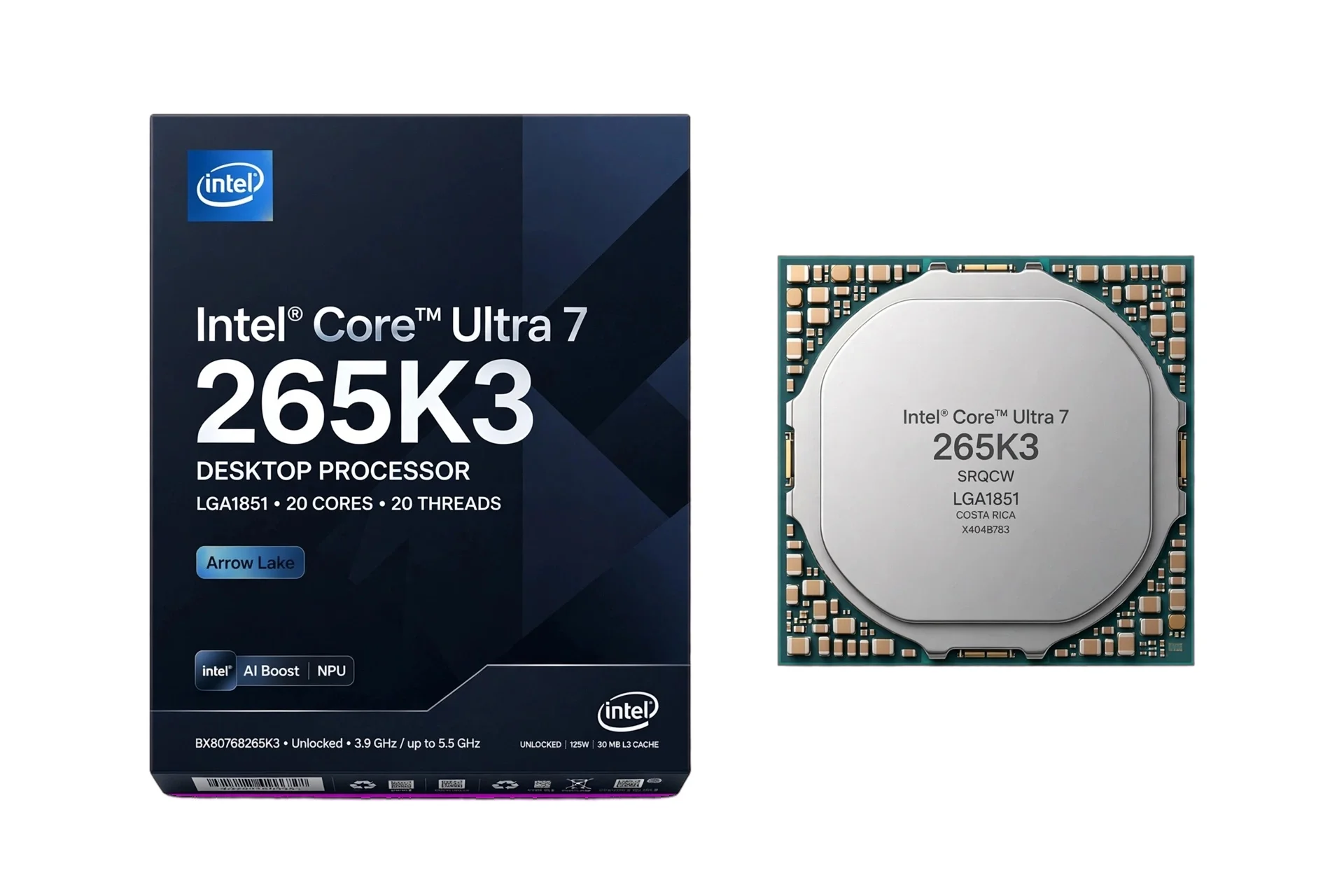
5. Intel Core Ultra 7 265K
Official specifications
| Total cores | 20 |
| Performance / efficient cores | 8 P-cores / 12 E-cores |
| Total threads | 20 |
| Maximum turbo frequency | Up to 5.5 GHz |
| L3 cache | 30 MB Intel Smart Cache |
| Processor base power | 125 W |
| Maximum turbo power | 250 W |
| Socket | LGA1851 |
| Official memory support | Up to DDR5-6400 |
| Integrated graphics | Intel Graphics |
Core Ultra 7 265K gaming results
| Game | Resolution | Preset | Average FPS | P99 FPS | Test memory |
|---|---|---|---|---|---|
| Anno 117: Pax Romana | 1920 × 1080 | Medium | 159.5 | 79.0 | 32 GB DDR5-6400 |
| Battlefield 6 | 1920 × 1080 | Medium | 283.0 | 219.7 | 32 GB DDR5-6400 |
| Cyberpunk 2077 | 1920 × 1080 | Medium | 217.3 | 161.5 | 32 GB DDR5-6400 |
| DOOM: The Dark Ages | 1920 × 1080 | Medium | 190.3 | 160.2 | 32 GB DDR5-6400 |
| F1 25 | 1920 × 1080 | Medium | 288.8 | 198.3 | 32 GB DDR5-6400 |
The 265K has eight performance cores and 12 efficient cores for a total of 20 cores and 20 threads. It is still capable of driving a high-end gaming PC, while its additional cores serve production work better than a modest chip would. Its place in this list depends heavily on pricing because the newer 270K Plus offers four more E-cores and improved gaming competitiveness.
The 265K uses the same LGA1851/DDR5 class of platform, so an older chip does not avoid those costs. Buy it when the discount is large enough to fund a meaningful GPU, memory, or storage improvement. A sale can change which model is the best Intel CPU for gaming within a fixed total budget.
Reasons to buy: Good mixed-workload capacity at a favorable sale price; integrated graphics.
Consider first: The 270K Plus may offer a better total deal when priced close.
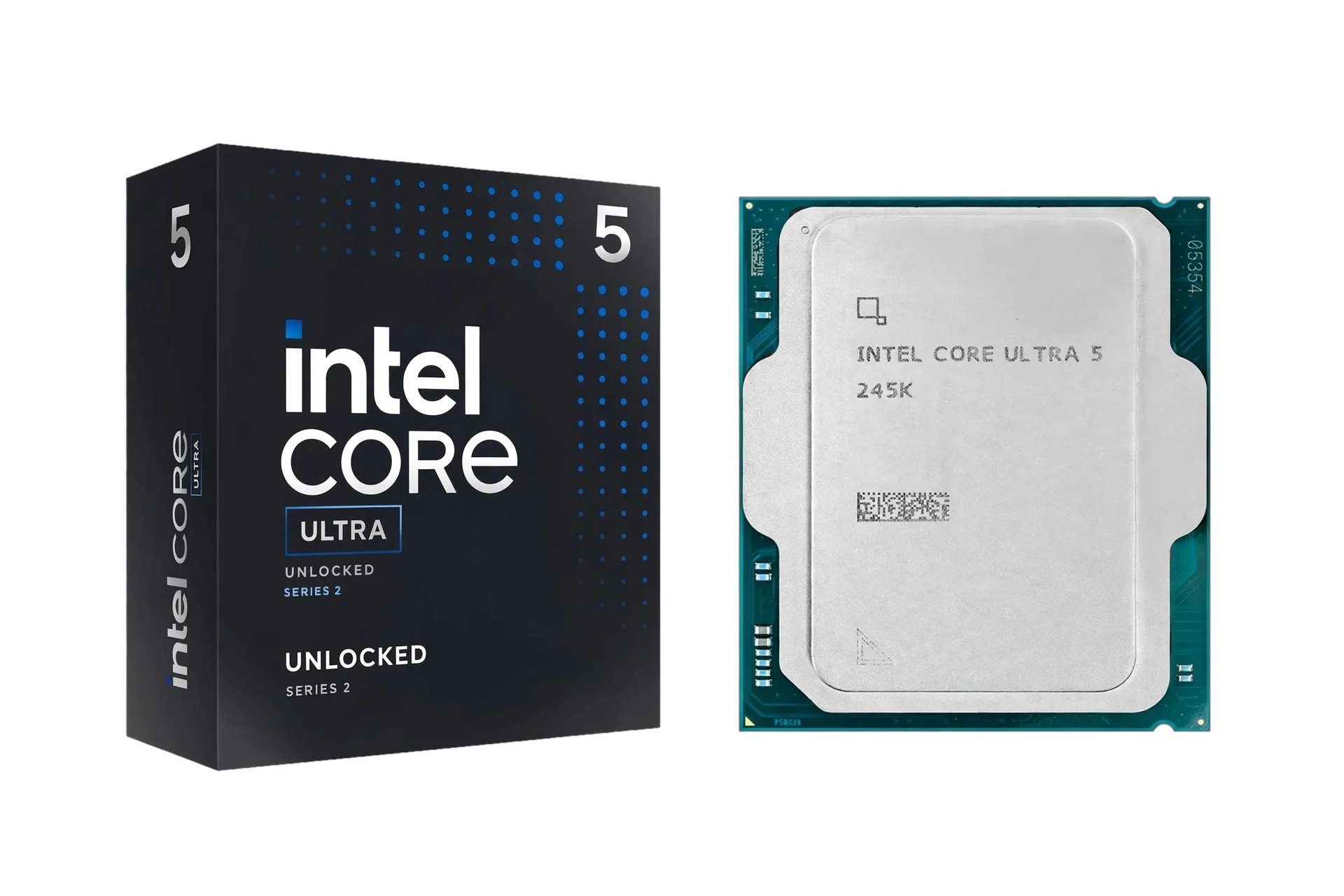
6. Intel Core Ultra 5 245K
Official specifications
| Total cores | 14 |
| Performance / efficient cores | 6 P-cores / 8 E-cores |
| Total threads | 14 |
| Maximum turbo frequency | Up to 5.2 GHz |
| L3 cache | 24 MB Intel Smart Cache |
| Processor base power | 125 W |
| Maximum turbo power | 159 W |
| Socket | LGA1851 |
| Official memory support | Up to DDR5-6400 |
| Integrated graphics | Intel Graphics |
Core Ultra 5 245K gaming results
| Game | Resolution | Preset | Average FPS | P99 FPS | Test memory |
|---|---|---|---|---|---|
| Anno 117: Pax Romana | 1920 × 1080 | Medium | 152.3 | 79.5 | 32 GB DDR5-6400 |
| Battlefield 6 | 1920 × 1080 | Medium | 279.6 | 207.9 | 32 GB DDR5-6400 |
| Cyberpunk 2077 | 1920 × 1080 | Medium | 209.3 | 153.6 | 32 GB DDR5-6400 |
| DOOM: The Dark Ages | 1920 × 1080 | Medium | 175.4 | 149.6 | 32 GB DDR5-6400 |
| F1 25 | 1920 × 1080 | Medium | 262.5 | 180.8 | 32 GB DDR5-6400 |
The 245K provides six performance cores, eight efficient cores, 14 threads, and a maximum 5.2 GHz turbo frequency. It can support a modern gaming system without paying for the largest Core Ultra processor. Its problem is relative value: the 250K Plus adds E-cores and has a stronger case for buyers who keep their PCs for several years.
If the two CPUs cost nearly the same locally, choose the 250K Plus. If the 245K has a substantial discount, compare the money saved with the actual GPU or storage improvement it can purchase. The best Intel CPU for gaming at this tier can therefore switch between the 245K and 250K Plus as local prices move.
Reasons to buy: Capable Intel desktop chip when discounted; integrated graphics; same DDR5 platform class as the newer Plus models.
Consider first: The 250K Plus is the better default at a small price gap.
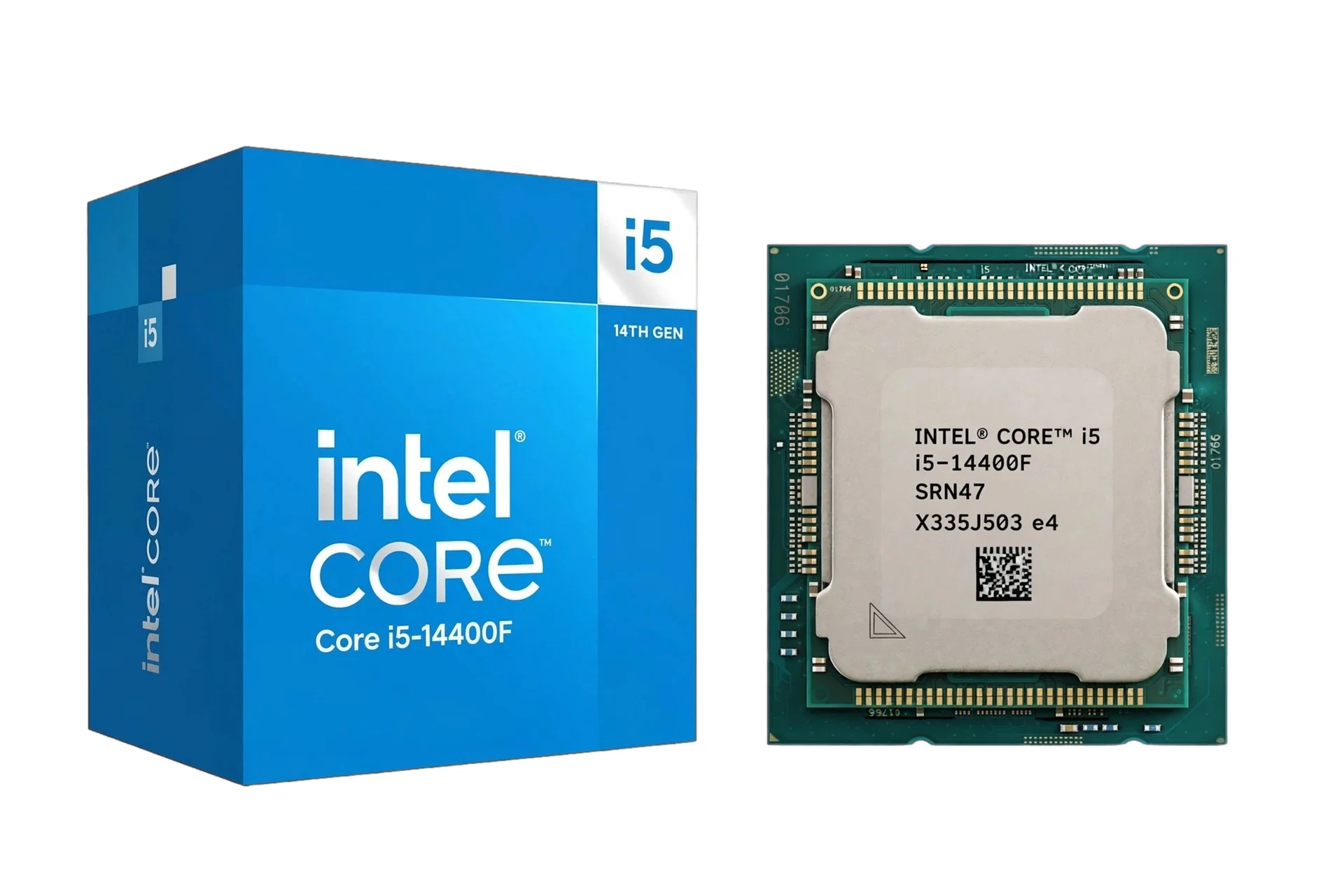
7. Intel Core i5-14400F
Official specifications
| Total cores | 10 |
| Performance / efficient cores | 6 P-cores / 4 E-cores |
| Total threads | 16 |
| Maximum turbo frequency | Up to 4.7 GHz |
| L3 cache | 20 MB Intel Smart Cache |
| Processor base power | 65 W |
| Maximum turbo power | 148 W |
| Socket | LGA1700 |
| Official memory support | Up to DDR5-4800 or DDR4-3200, depending on motherboard |
Intel Core i5-14400F Gaming Results
| Game | Resolution | Graphics settings | Upscaling | Average FPS | 1% percentile FPS |
|---|---|---|---|---|---|
| Anno 1800 | 720p | Ultra; 4× MSAA | FSR Ultra Performance | 57.4 | 47.4 |
| Counter-Strike 2 | 720p | Very High; MSAA off; Reflex on | FSR Performance | 455.3 | 318.3 |
| Cyberpunk 2077: Phantom Liberty | 720p | RT Low; Reflex off | DLSS Ultra Performance | 100.6 | 75.7 |
| Ratchet & Clank | 720p | Maximum; RT Very High; Reflex off | DLSS Ultra Performance | 189.2 | 137.7 |
| Resident Evil 4 Remake | 720p | Maximum; RT enabled | FSR Ultra Performance | 135.2 | 117.5 |
The 14400F has six performance cores, four efficient cores, and 16 threads. It is a reasonable choice for a lower-cost gaming PC when the savings leave room for a faster graphics card. The F suffix means it has no integrated graphics, so a separate GPU is required even for display output. It is locked for CPU multiplier overclocking, and high-refresh competitive gaming with a powerful GPU may favor a faster processor.
Compare a new 14400F system with current platform bundles, since low CPU cost alone can hide expensive supporting parts. If GPU spending is the constraint, the best Intel CPU for gaming may be a less costly chip like this one.
Reasons to buy: Sensible lower-cost option; DDR4 board support can reduce build cost.
Consider first: No integrated graphics; fewer cores and lower clocks than the 14600K.
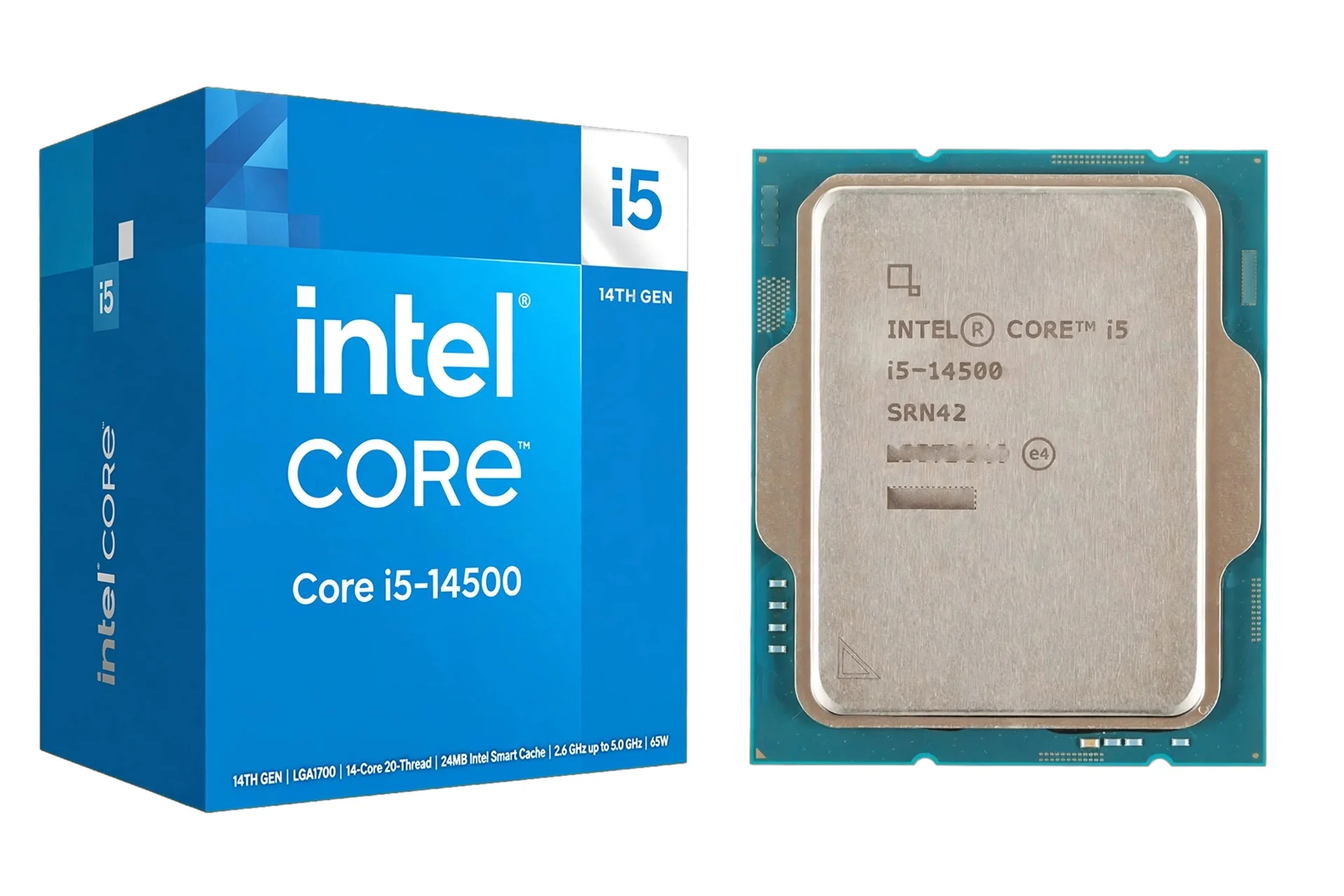
8. Intel Core i5-14500
Official specifications
| Total cores | 14 |
| Performance / efficient cores | 6 P-cores / 8 E-cores |
| Total threads | 20 |
| Maximum turbo frequency | Up to 5.0 GHz |
| L3 cache | 24 MB Intel Smart Cache |
| Processor base power | 65 W |
| Maximum turbo power | 154 W |
| Socket | LGA1700 |
| Official memory support | Up to DDR5-4800 or DDR4-3200, depending on motherboard |
| Integrated graphics | Intel UHD Graphics 770 |
Intel Core i5-14500 Gaming Results
| Game | Output resolution | Graphics settings | Upscaling | Average FPS | 1% percentile FPS |
|---|---|---|---|---|---|
| Anno 1800 | 720p | Ultra; 4× MSAA | FSR Ultra Performance | 61.9 | 50.9 |
| Counter-Strike 2 | 720p | Very High; MSAA off; Reflex on | FSR Performance | 449.4 | 321.4 |
| Cyberpunk 2077: Phantom Liberty | 720p | RT Low; Reflex off | DLSS Ultra Performance | 96.5 | 67.4 |
| Ratchet & Clank | 720p | Maximum; RT Very High; Reflex off | DLSS Ultra Performance | 192.6 | 136.6 |
| Resident Evil 4 Remake | 720p | Maximum; RT enabled | FSR Ultra Performance | 145.7 | 130.3 |
The 14500 has 14 cores and 20 threads, with a 5.0 GHz maximum turbo frequency and a 65 W processor base-power rating. It suits a buyer who wants additional E-cores for everyday multitasking but does not plan to tune an unlocked K processor. Its integrated graphics provide a fallback display connection while troubleshooting a GPU.
The published 154 W maximum turbo power still matters when selecting a cooler; base power is not the highest power the CPU can use. If its price approaches a discounted 14600K or 250K Plus bundle, reevaluate the complete system rather than assuming the locked chip wins. It is rarely the best Intel CPU for gaming when a faster 14600K costs nearly the same after cooling is considered.
Reasons to buy: Flexible DDR4/DDR5 motherboard choices; integrated graphics; solid mixed-use core count. Consider first: Locked multiplier and pricing against faster alternatives.
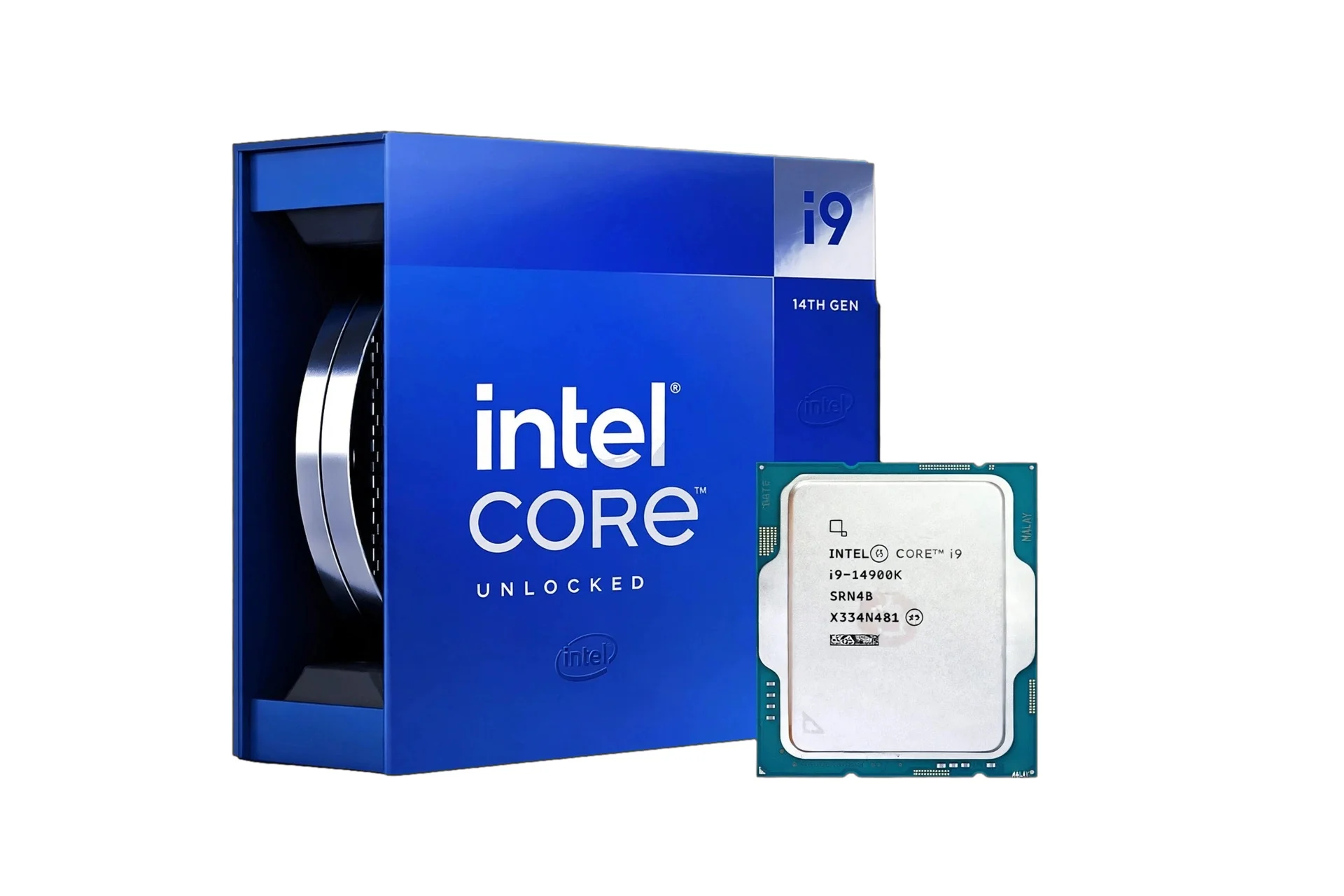
9. Intel Core i9-14900K
Official specifications
| Total cores | 24 |
| Performance / efficient cores | 8 P-cores / 16 E-cores |
| Total threads | 32 |
| Maximum turbo frequency | Up to 6.0 GHz |
| L3 cache | 36 MB Intel Smart Cache |
| Processor base power | 125 W |
| Maximum turbo power | 253 W |
| Socket | LGA1700 |
| Official memory support | Up to DDR5-5600 or DDR4-3200, depending on motherboard |
| Integrated graphics | Intel UHD Graphics 770 |
Core i9-14900K gaming results
| Game | Resolution | Preset | Average FPS | P99 FPS | Test memory |
|---|---|---|---|---|---|
| Anno 117: Pax Romana | 1920 × 1080 | Medium | 175.9 | 77.0 | 32 GB DDR5-5600 |
| Battlefield 6 | 1920 × 1080 | Medium | 283.0 | 213.3 | 32 GB DDR5-5600 |
| Cyberpunk 2077 | 1920 × 1080 | Medium | 181.3 | 144.8 | 32 GB DDR5-5600 |
| DOOM: The Dark Ages | 1920 × 1080 | Medium | 185.4 | 152.7 | 32 GB DDR5-5600 |
| F1 25 | 1920 × 1080 | Medium | 307.0 | 208.3 | 32 GB DDR5-5600 |
The 14900K’s eight performance cores and 16 efficient cores yield 24 cores and 32 threads, with an advertised turbo ceiling of 6.0 GHz under the required conditions. That specification makes it attractive for gaming plus demanding work, but the high price, cooling needs, and 253 W maximum turbo power weaken its case for gaming alone. An existing LGA1700 owner can consider it when a reputable seller offers a good price, and the motherboard and cooler are ready.
For a new system, compare total spending and measured game results with the newer 270K Plus and competing AMD chips. Confirm the applicable warranty and BIOS update before purchase. The best Intel CPU for gaming on paper can lose its appeal when the extra cooling and platform costs are added.
Reasons to buy: High-end thread capacity without replacing an existing LGA1700 board; integrated graphics.
Consider first: Cost, cooling, and the 13th/14th-generation desktop instability history.
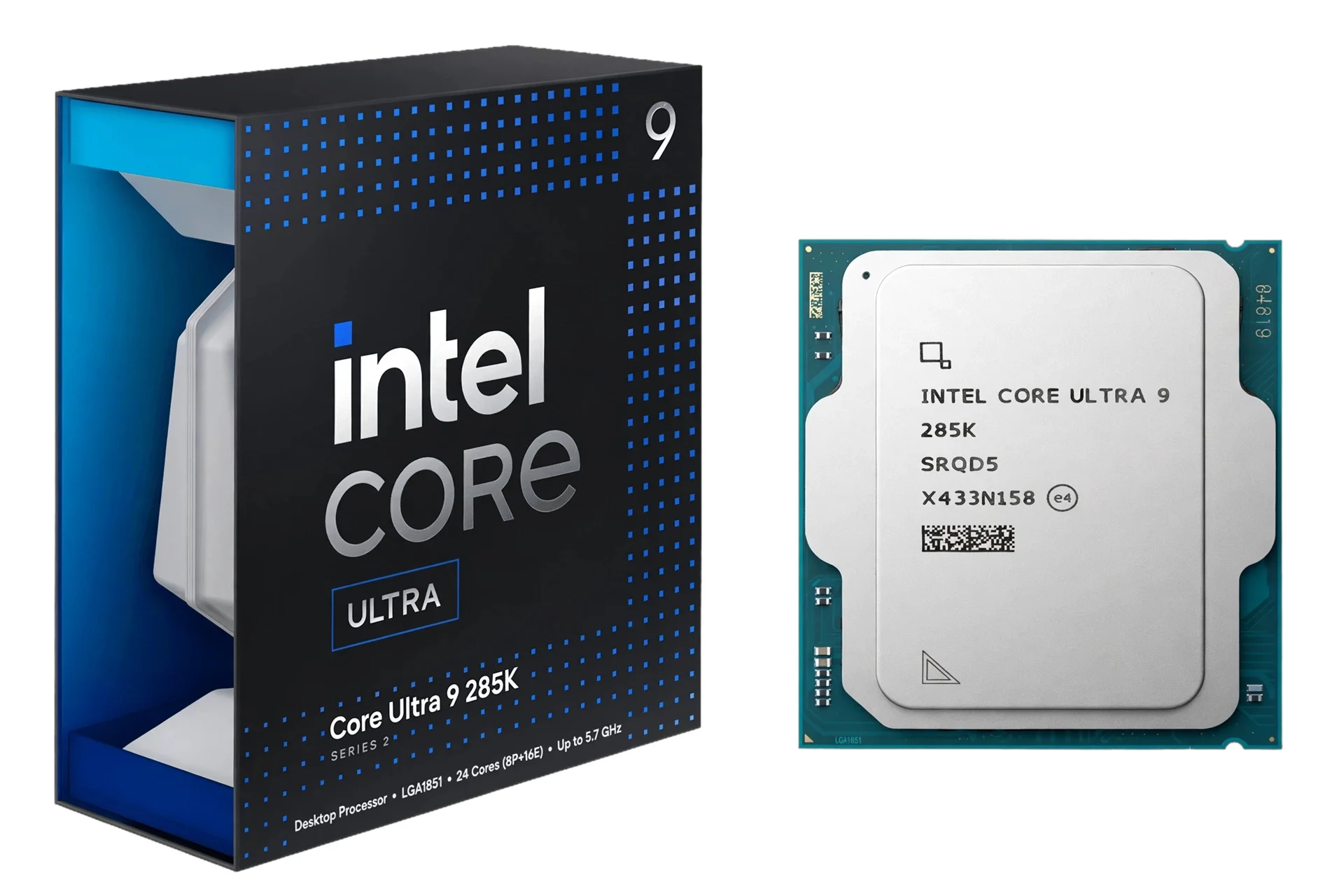
10. Intel Core Ultra 9 285K
Official specifications
| Total cores | 24 |
| Performance / efficient cores | 8 P-cores / 16 E-cores |
| Total threads | 24 |
| Maximum turbo frequency | Up to 5.7 GHz |
| L3 cache | 36 MB Intel Smart Cache |
| Processor base power | 125 W |
| Maximum turbo power | 250 W |
| Socket | LGA1851 |
| Official memory support | Up to DDR5-6400 |
| Integrated graphics | Intel Graphics |
Core Ultra 9 285K gaming results
| Game | Resolution | Preset | Average FPS | P99 FPS | Test memory |
|---|---|---|---|---|---|
| Anno 117: Pax Romana | 1920 × 1080 | Medium | 162.6 | 77.3 | 32 GB DDR5-6400 |
| Battlefield 6 | 1920 × 1080 | Medium | 279.3 | 223.4 | 32 GB DDR5-6400 |
| Cyberpunk 2077 | 1920 × 1080 | Medium | 222.9 | 171.9 | 32 GB DDR5-6400 |
| DOOM: The Dark Ages | 1920 × 1080 | Medium | 191.5 | 162.2 | 32 GB DDR5-6400 |
| F1 25 | 1920 × 1080 | Medium | 302.4 | 201.0 | 32 GB DDR5-6400 |
The 285K has eight performance cores and 16 efficient cores, for 24 cores and 24 threads, and reaches a listed 5.7 GHz maximum turbo frequency. It makes sense when heavy production tasks share the machine with games, and a favorable discount changes the equation.
Its flagship label does not establish that it is the fastest or best-value gaming choice; the newer 270K Plus is generally the more compelling Intel purchase for this brief. Both need an LGA1851 motherboard and DDR5, and Intel lists 250 W maximum turbo power for each. Spend the price difference on a GPU if gaming is the main workload and the 285K carries a premium. For gaming alone, its flagship status does not make it the best Intel CPU for gaming at the checkout.
Reasons to buy: Substantial multi-core resources and integrated graphics; attractive when heavily discounted.
Consider first: Limited gaming value at a flagship price.
How do these Intel CPUs fit the current gaming market?
The best Intel CPU for gaming is a buying decision, not simply the CPU with the highest boost clock. Recent Core Ultra 200S Plus models improved Intel’s position at their intended price points, while older LGA1700 models can remain economical upgrades.
Independent gaming comparisons also show that AMD X3D processors can outperform Intel in many CPU-limited titles. At 1440p or 4K with demanding graphics settings, the GPU may narrow visible differences between capable CPUs; very high refresh rates at 1080p can expose larger CPU differences. Read comparisons that disclose the GPU, game selection, memory, resolution, and BIOS settings.
Value changes with stock and local prices. A 265K or 245K becomes attractive when genuinely discounted; a 14900K is difficult to justify for gaming alone at a premium. Start with the full cost of CPU, motherboard, memory, cooler, and GPU. Then decide whether streaming and production work justify moving from a Core Ultra 5 or Core i5 into a higher tier. That method works more reliably than ranking processors by the number on the box.
Already on AM4? Two AMD alternatives worth checking
The Ryzen 7 5700X3D and Ryzen 7 5800X3D are AM4 alternatives, not Intel CPUs. Both offer eight cores, 16 threads, and 96 MB of L3 cache, which can make them attractive gaming upgrades for owners of compatible AM4 boards and DDR4 memory. The 5800X3D has higher advertised clocks; the 5700X3D may be the better purchase if its actual price is lower. Check motherboard CPU support and BIOS requirements, and do not assume old or scarce stock is good value.
If you already own AM4, compare these with the other processors in our best AM4 CPUs for gaming guide. Moving from AM4 to Intel means buying at least a new motherboard and possibly new memory, so the CPU price alone is not the relevant comparison. AMD’s 5800X3D product specifications document the platform and cache details.
What to check before buying an Intel gaming CPU
- Motherboard and BIOS: Confirm the exact socket, chipset support, and BIOS version on the board maker’s CPU support page. LGA1700 and LGA1851 processors are not interchangeable.
- Memory and full platform price: Core Ultra desktop Series 2 uses DDR5. The listed 14th-generation CPUs can use DDR4 or DDR5 only with a motherboard built for that memory type.
- Graphics and suffix: F and KF models lack integrated graphics. A non-F chip’s integrated graphics are useful for troubleshooting, but they do not replace a suitable dedicated GPU for demanding games.
- Cooling and power: Size the cooler and power delivery for sustained use. Intel’s base-power figure does not describe maximum turbo demand; board power settings also affect heat and performance.
- Gaming target: A 1080p high-refresh setup with a fast GPU can benefit more from a faster CPU than a graphics-bound 4K setup. Check benchmarks for the games and settings you use.
- 13th/14th-generation maintenance: Intel documented a Vmin Shift instability issue for affected desktop processors and issued microcode updates through motherboard BIOS releases. Check the Intel update on microcode 0x12F and the seller’s warranty terms. A BIOS update aims to reduce the conditions that contribute to instability; it does not repair a chip that is already degraded.
Conclusion
For a new Intel desktop, choose the Core Ultra 7 270K Plus if gaming shares the PC with demanding multi-core work, or the Core Ultra 5 250K Plus when the total build budget matters more. For an existing LGA1700 system, price a Core i5-14600K or Core i7-14700K upgrade against the cost of replacing the platform and updating its BIOS. If you already own AM4, check the X3D upgrade options before buying a new motherboard. The best Intel CPU for gaming is the one that meets your frame-rate goal without taking money from a more consequential GPU upgrade.
Affiliate disclosure: This article may contain affiliate links. We may earn a commission from qualifying purchases at no additional cost to you.