Best Low Profile GPU for Compact and Small Form Factor PCs (SFF) 2026
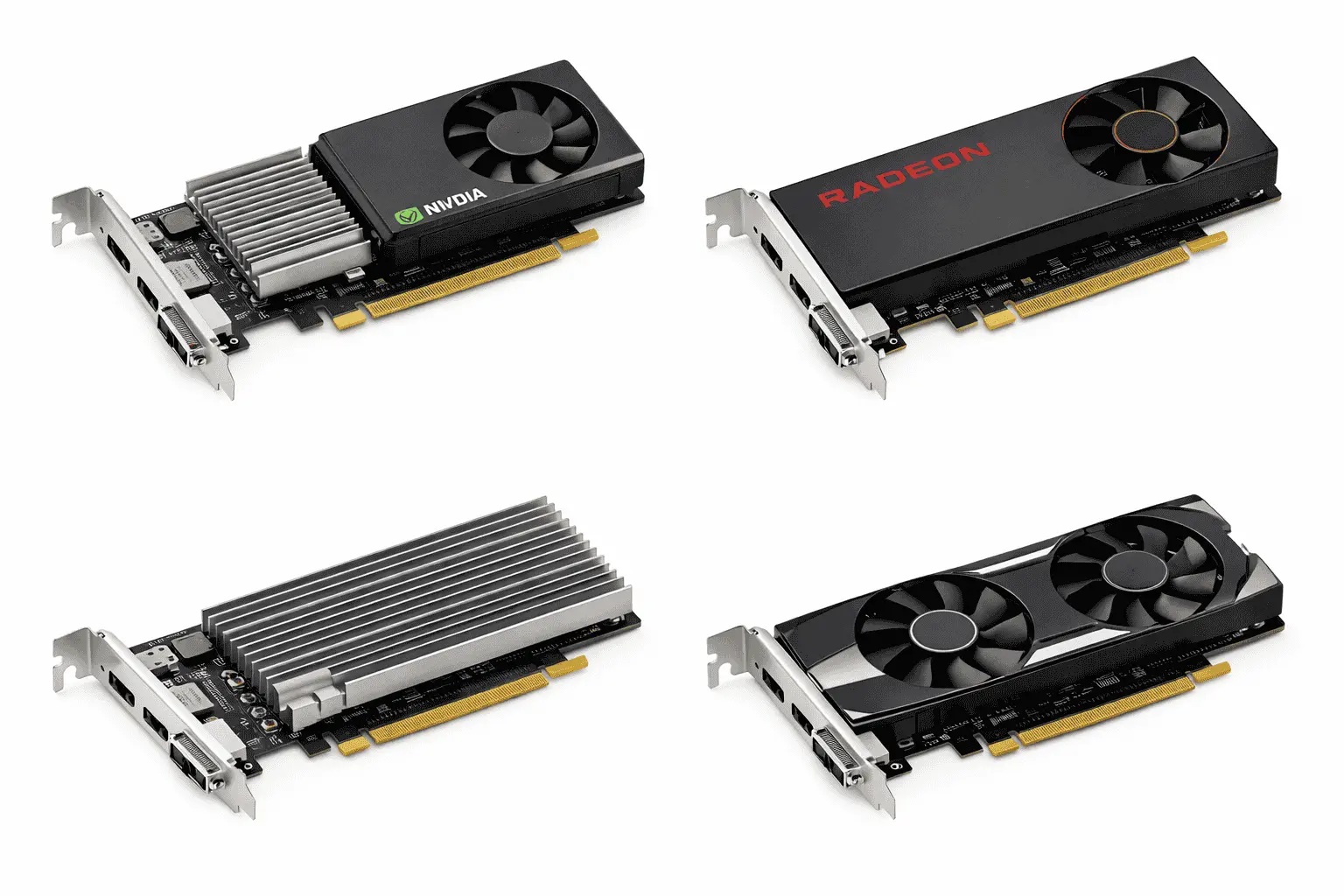
A full-size standard GPU cannot be installed in compact PCs, which is why low profile GPUs are used. LP GPUs are designed to be half-height and are physically much smaller than standard GPUs. Best low profile GPUs for compact PCs or Small Form Factor (SFF) systems, such as Dell OptiPlex, HP EliteDesk, and Lenovo ThinkCentre, which have limited space, power, and airflow. Most of them operate without an external power connector and are designed to maintain thermal stability within slim cases.
Architectures like NVIDIA Blackwell and Intel Battlemage are also considered among the best options for low profile GPUs. These graphics cards support almost every resolution and also offer modern features such as AV1 encoding, DLSS, XeSS, and FSR. This means the low profile GPU category is no longer about compromise; it has become a smart upgrade option.
Top 10 Best Low Profile GPUs For Compact PCs
| Model Name | View on Amazon | VRAM | TDP |
|---|---|---|---|
| GIGABYTE RTX 5060 OC LP | Check Latest Price | 8GB GDDR7 | 145W |
| ASUS RTX 5060 LP BRK OC | Check Latest Price | 8GB GDDR7 | 145W |
| Intel Arc B580 LP | Check Latest Price | 12GB GDDR6 | 190W |
| GIGABYTE RTX 4060 OC LP | Check Latest Price | 8GB GDDR6 | 115W |
| AMD RX 6400 LP | Check Latest Price | 4GB GDDR6 | 53W |
| Sparkle Intel Arc A310 ECO | Check Latest Price | 4GB GDDR6 | 50W |
| MSI RTX 3050 LP 6G OC | Check Latest Price | 6GB GDDR6 | 70W |
| AMD RX 6500 XT LP | Check Latest Price | 4GB GDDR6 | 107W |
| MSI GTX 1650 LP GDDR6 | Check Latest Price | 4GB GDDR6 | 75W |
| Maxsun RX 550 | Check Latest Price | 4GB GDDR5 | 50W |
1. GIGABYTE GeForce RTX 5060 OC LP
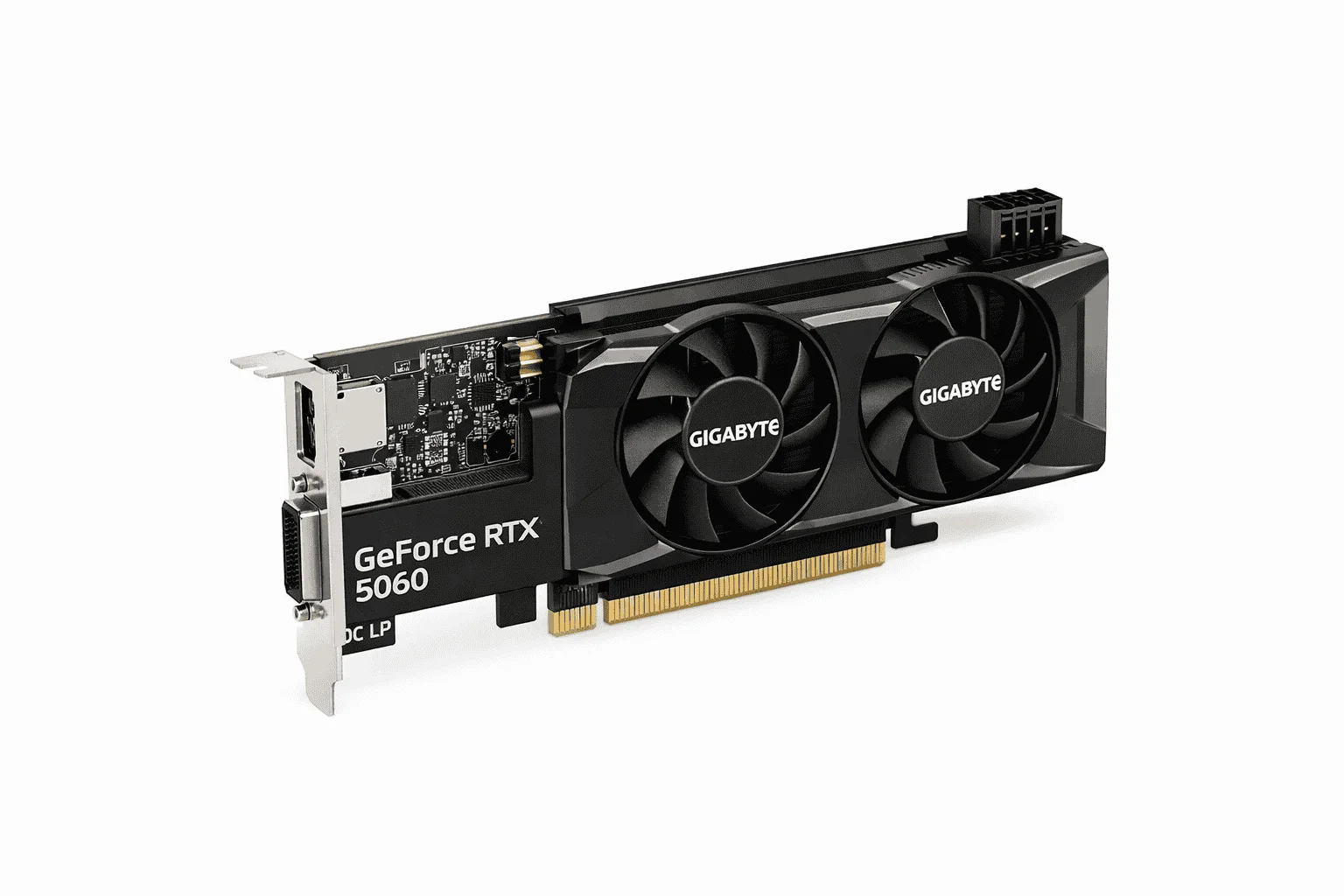
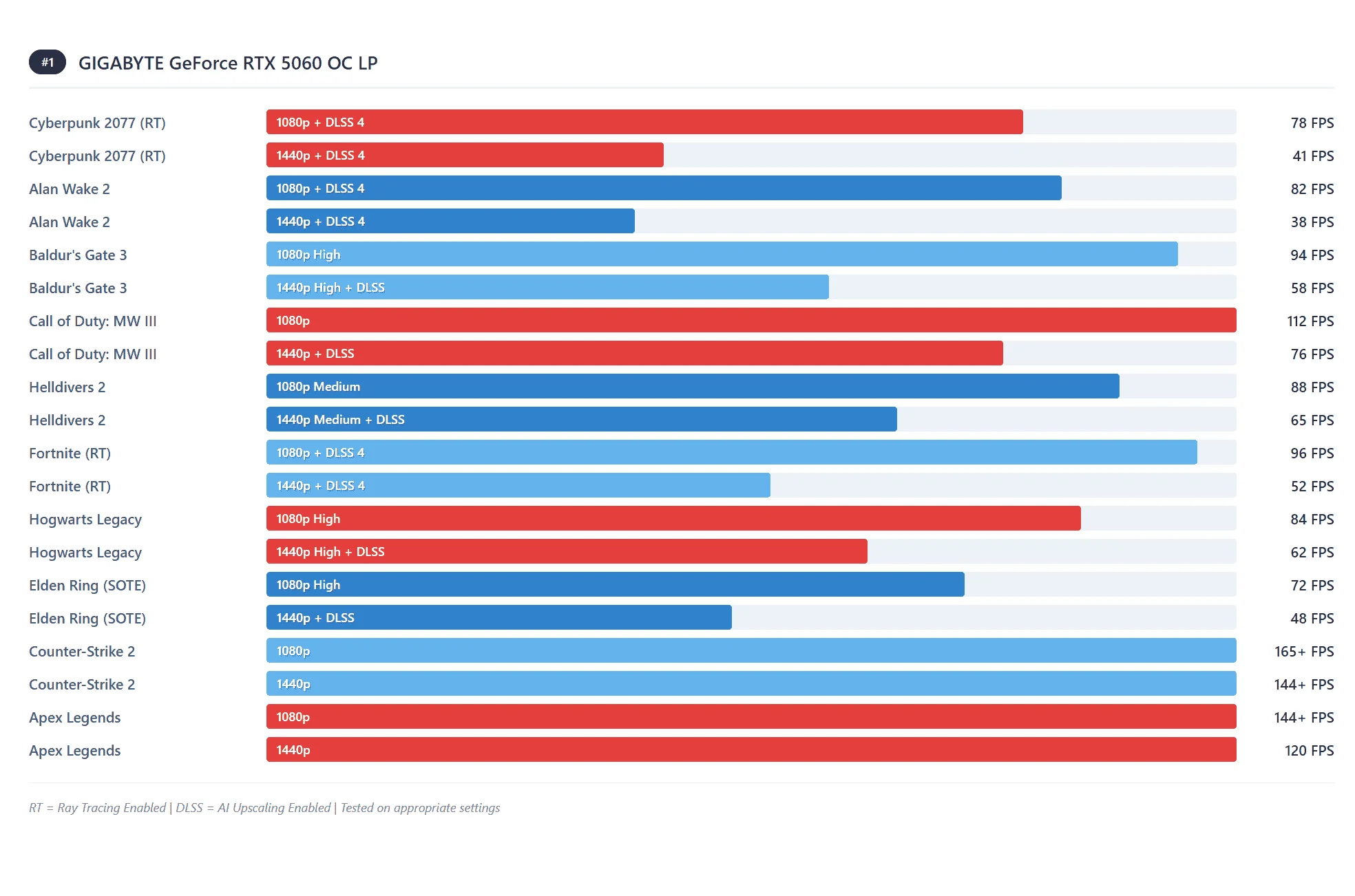
GIGABYTE RTX 5060 OC LP is the best low profile gpu and my top choice for modern compact builds. Its Blackwell architecture and 8GB GDDR7 VRAM provide balanced performance with a 145W TDP, ensuring stable operation in small form factor systems.
The card fits easily in SFF cases and uses an 8-pin power connector for reliable power delivery. DLSS 4 enhances 1080p gaming performance, and medium settings allow playable ray-traced visuals. Its cooling design keeps temperatures below 80°C even during extended gaming sessions.
2. ASUS GeForce RTX 5060 LP BRK OC
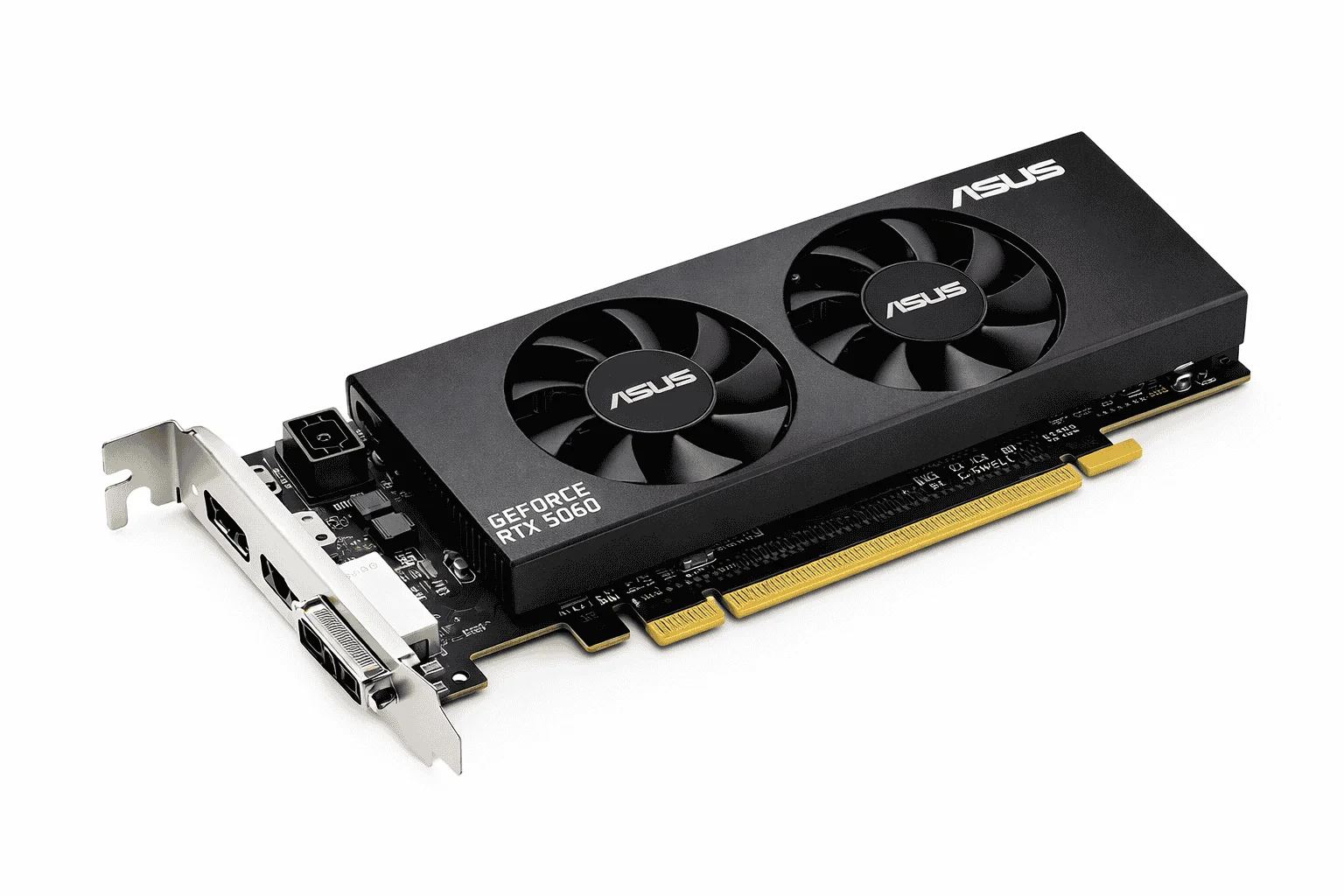
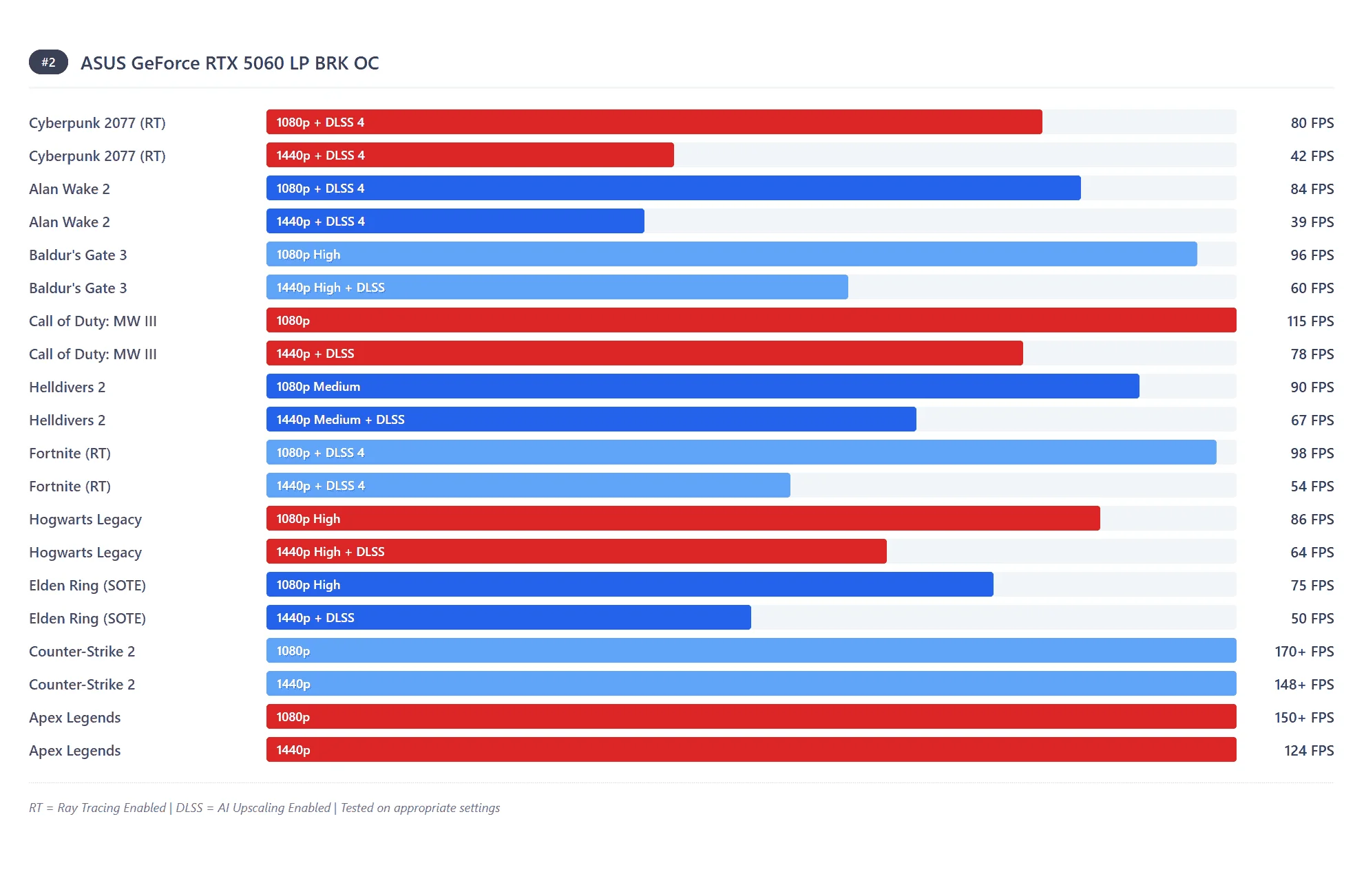
The ASUS RTX 5060 LP BRK OC offers improved overclock stability and better thermal control within the same low-profile category. It comes with 8GB of GDDR7 memory, which helps handle modern games, creative software, and AI-based workloads more smoothly by providing faster data access and higher bandwidth.
PCIe 5.0 support ensures better compatibility with newer platforms, allowing the card to communicate more efficiently with the system. The dual-fan cooling design enhances airflow in compact cases, allowing the GPU to maintain stable temperatures during extended gaming or work sessions without throttling. These features make it the best low profile gpu for all time.
3. Intel Arc B580 Low-Profile Variant
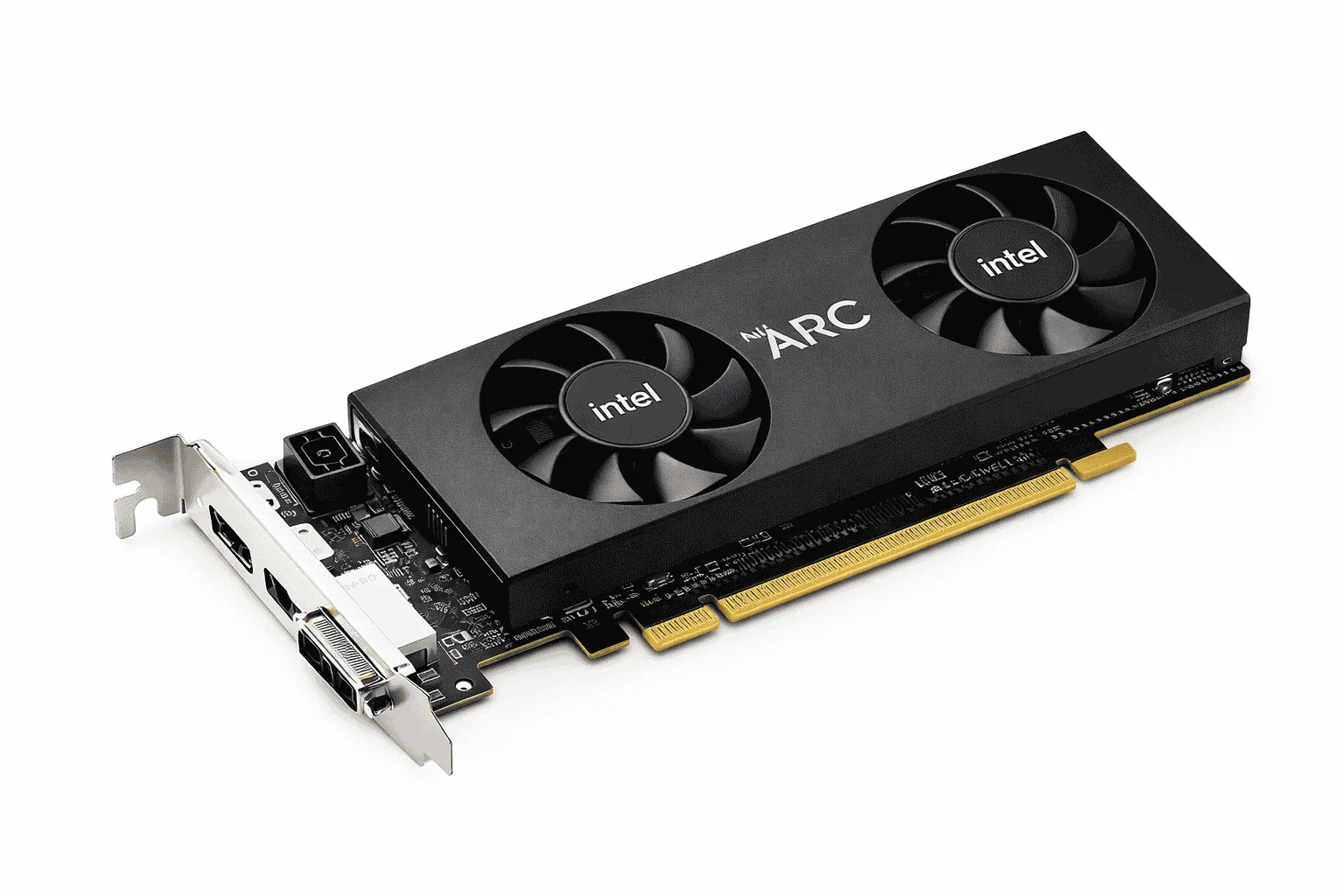
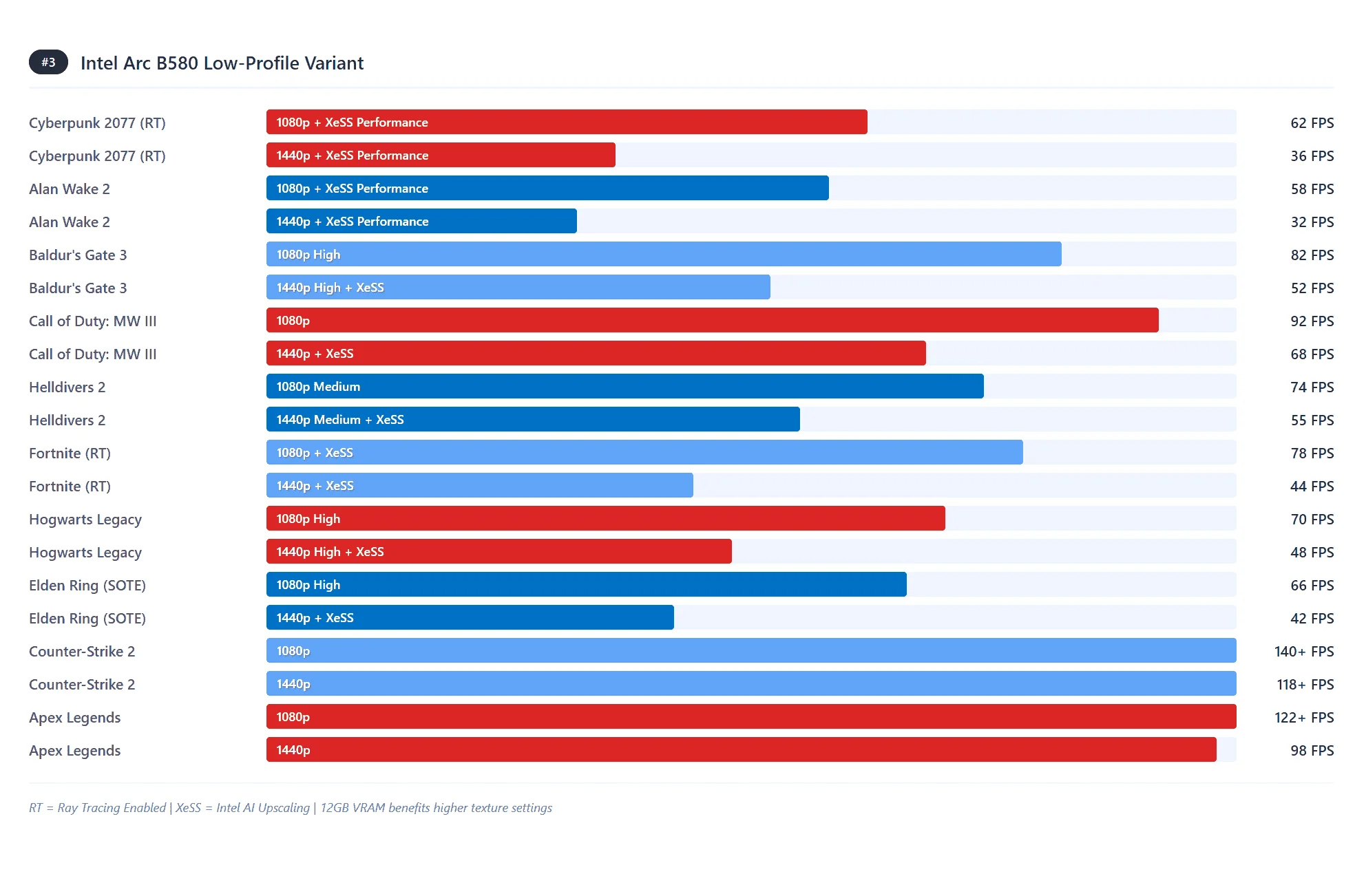
The Intel Arc B580 LP features 12GB of GDDR6 VRAM, making it well-suited for media work and video encoding tasks, where higher memory helps with timelines and processing large files. It supports AV1 hardware encoding, allowing more efficient video compression for streaming and editing with lower CPU load.
For gaming, XeSS upscaling enhances performance and enables 1440p gameplay in supported titles by rendering at a lower resolution and scaling the image. The card has a higher power draw of around 190W, so checking power supply capacity and connectors is important before installation to ensure stable operation.
4. GIGABYTE GeForce RTX 4060 OC LP
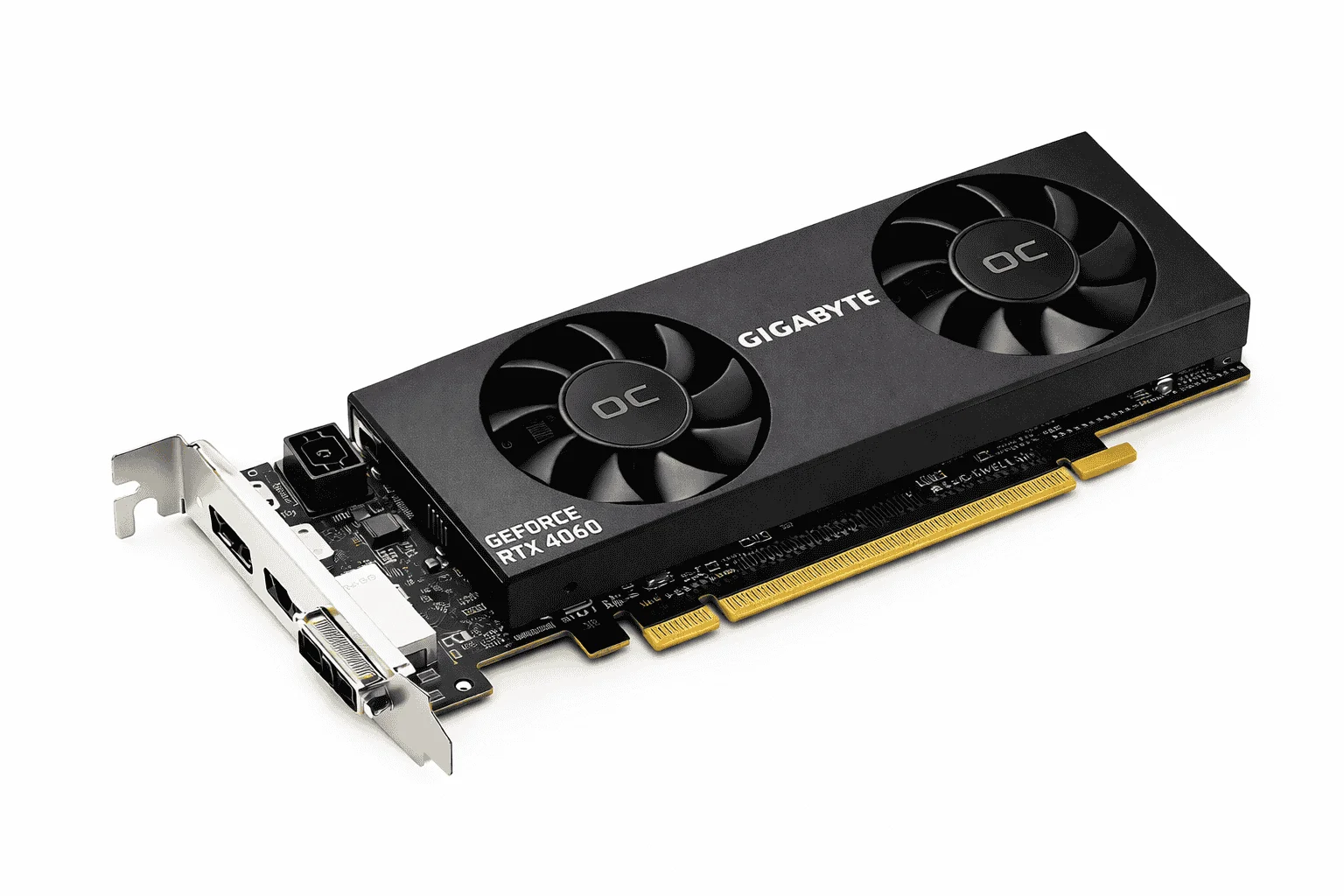
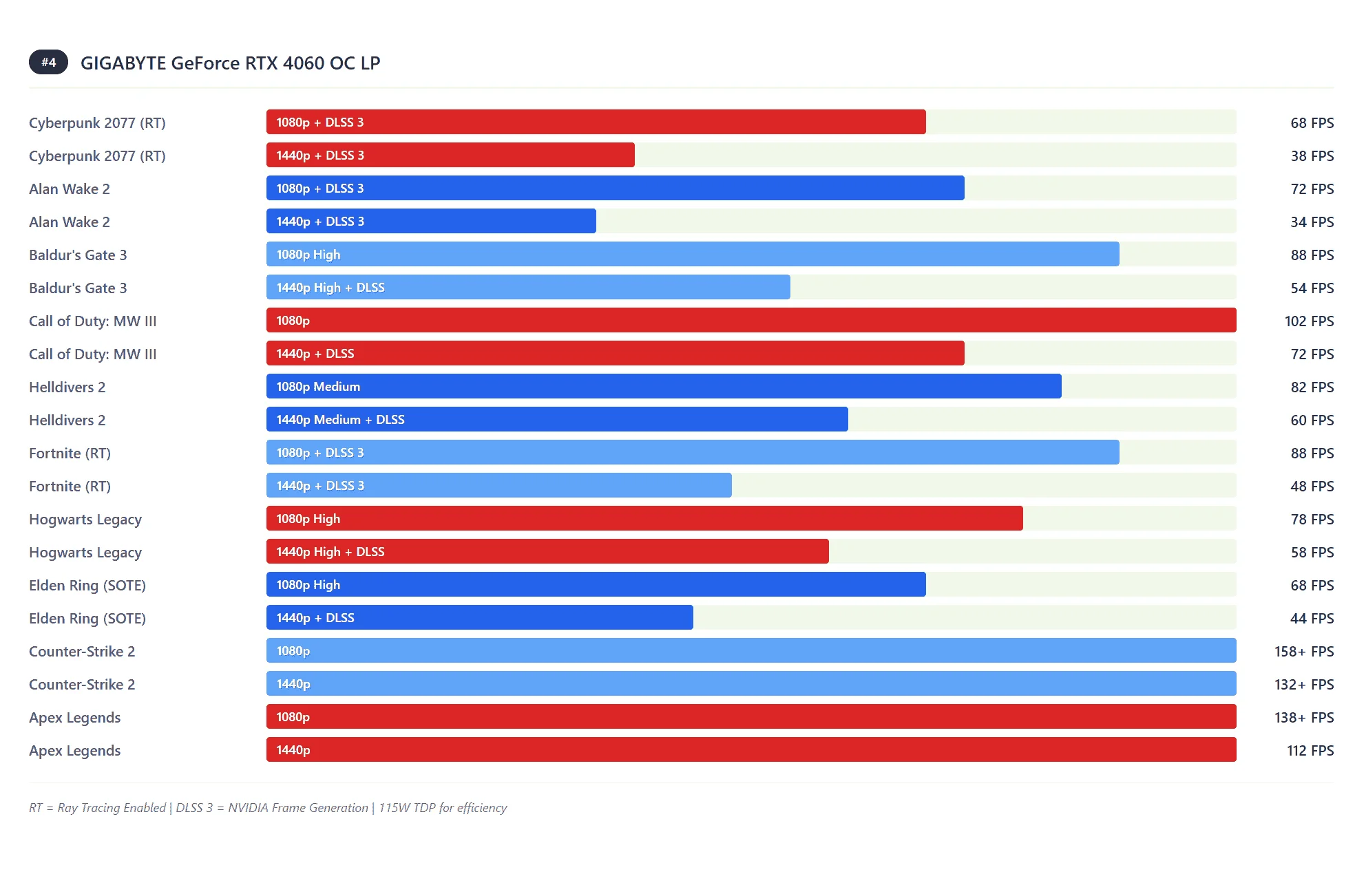
The RTX 4060 OC is the best low profile gpu and a good option for users who want smooth 1080p gaming on high or ultra settings, especially in esports titles. It includes 8GB of GDDR6 memory, which helps handle modern games without frequent memory limits. DLSS 3 improves frame rates by using AI-based frame generation, making gameplay smoother while keeping power use efficient.
Because this is a low-profile card, case airflow is important, as temperatures can rise in very tight enclosures. The power requirement is moderate, but it should still be checked carefully when installing in OEM or small form factor desktops to avoid stability issues.
5. AMD Radeon RX 6400 LP
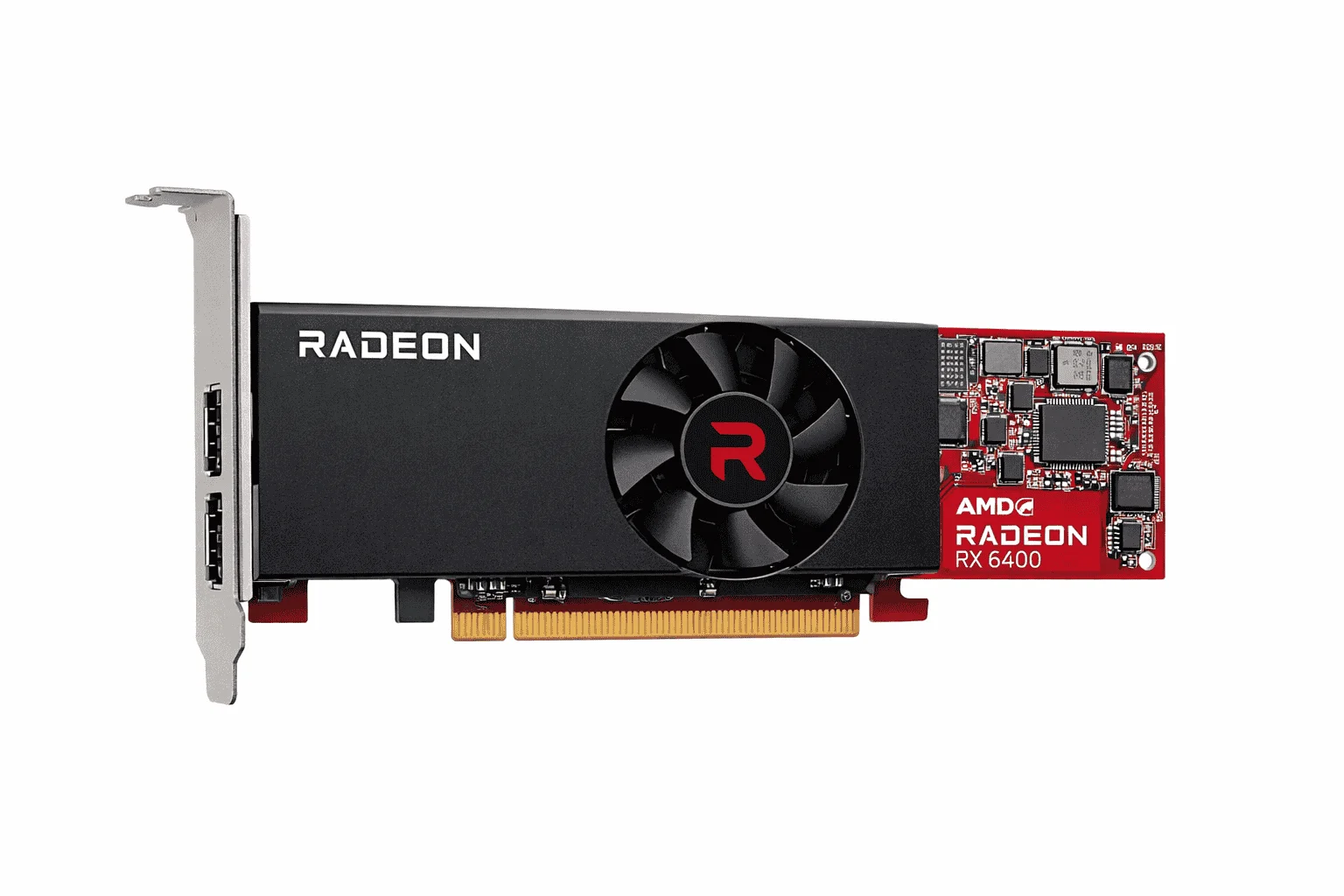
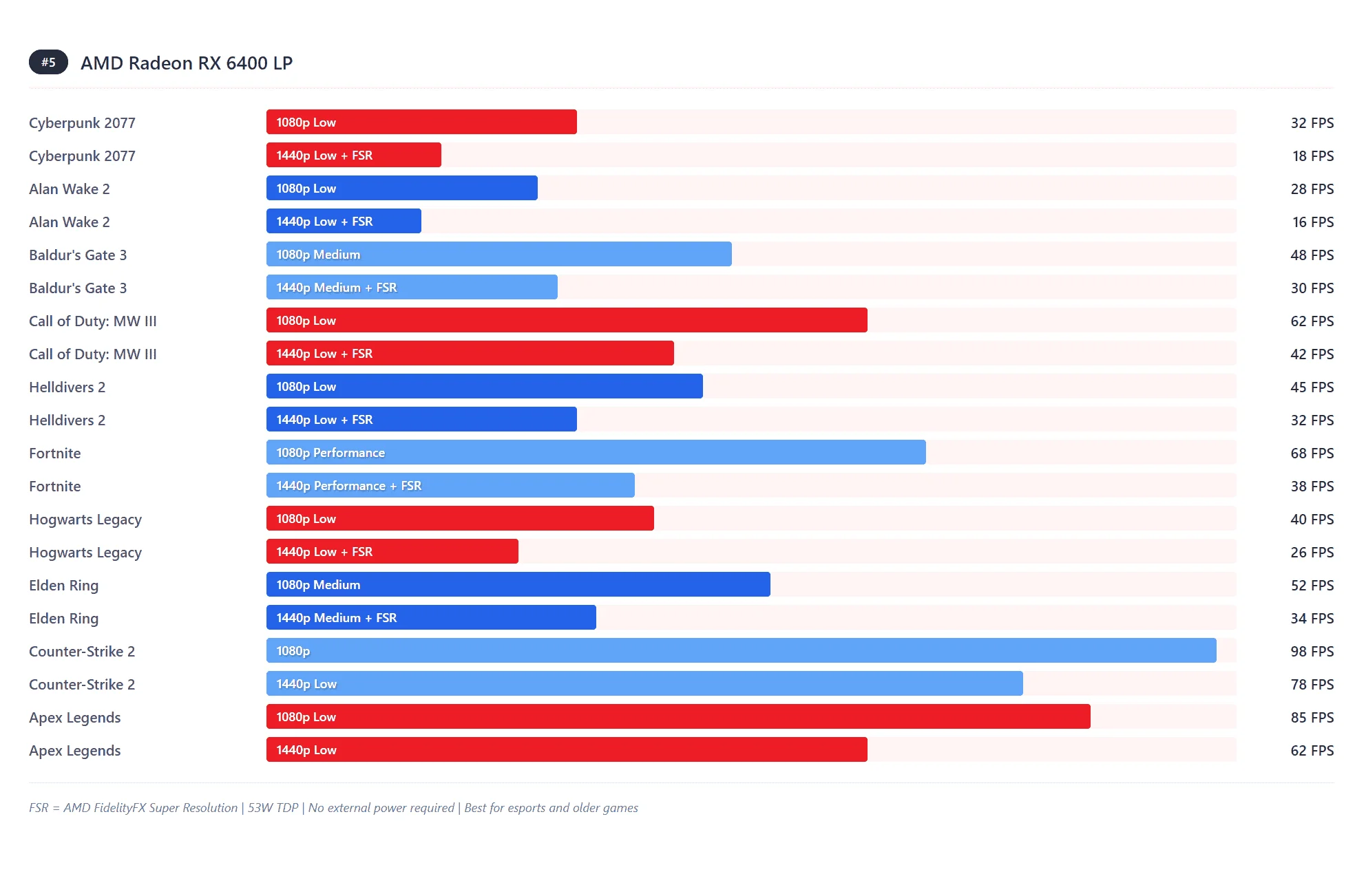
The RX 6400 LP sits in the budget category and focuses on low power usage and efficiency. It uses 4GB of GDDR6 memory, which is enough for older games, esports titles, and everyday graphical tasks. With a power draw of around 53W, the card runs directly from the PCIe slot and does not need any external power connector, making it suitable for small OEM systems.
This GPU is a clear upgrade over integrated graphics, delivering higher frame rates and more stable performance at 1080p on low to medium settings. FSR support helps improve smoothness by boosting frame rates without increasing power consumption. Due to architectural limits, ray tracing performance is very limited, so this feature is best left disabled.
6. Sparkle Intel Arc A310 ECO
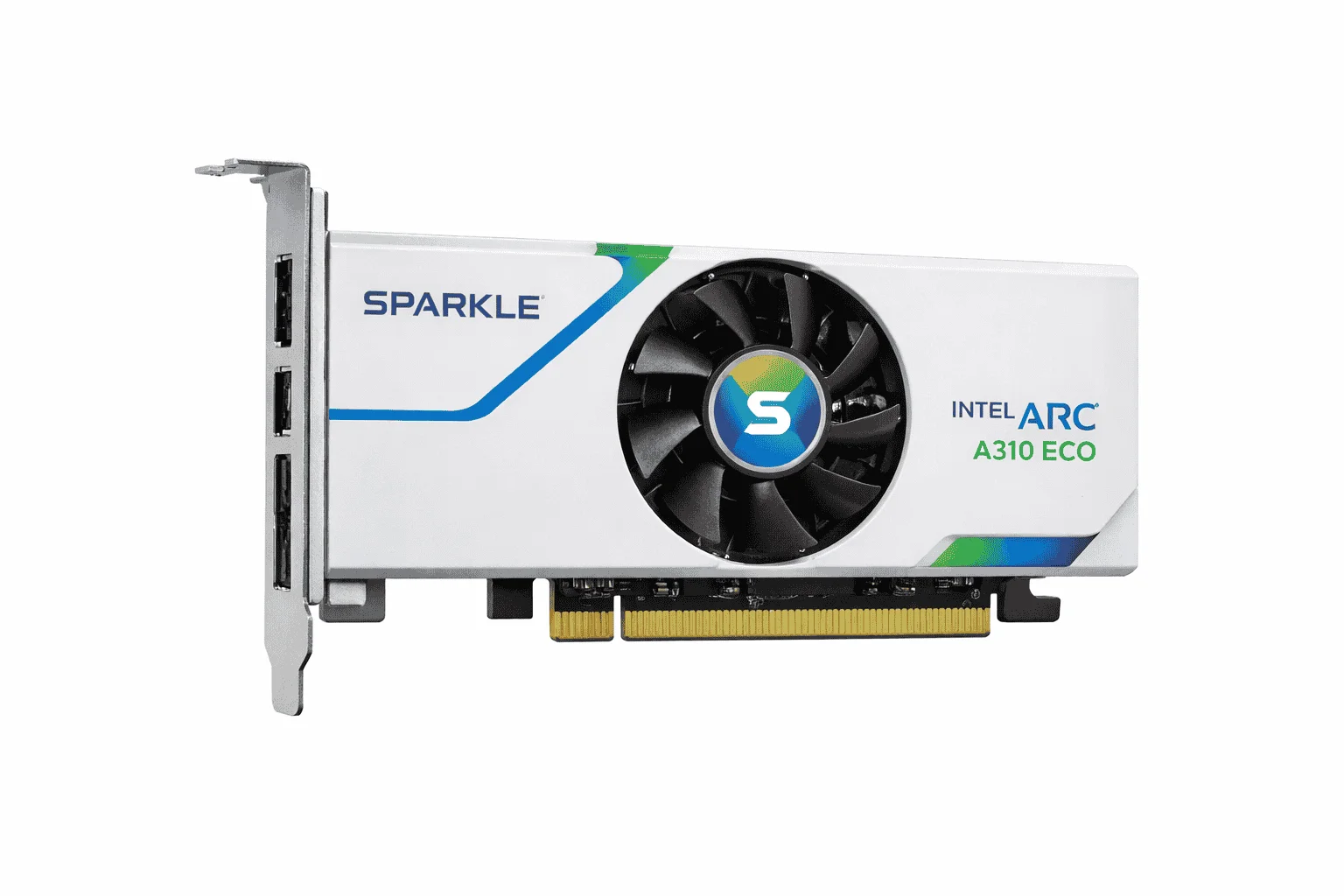
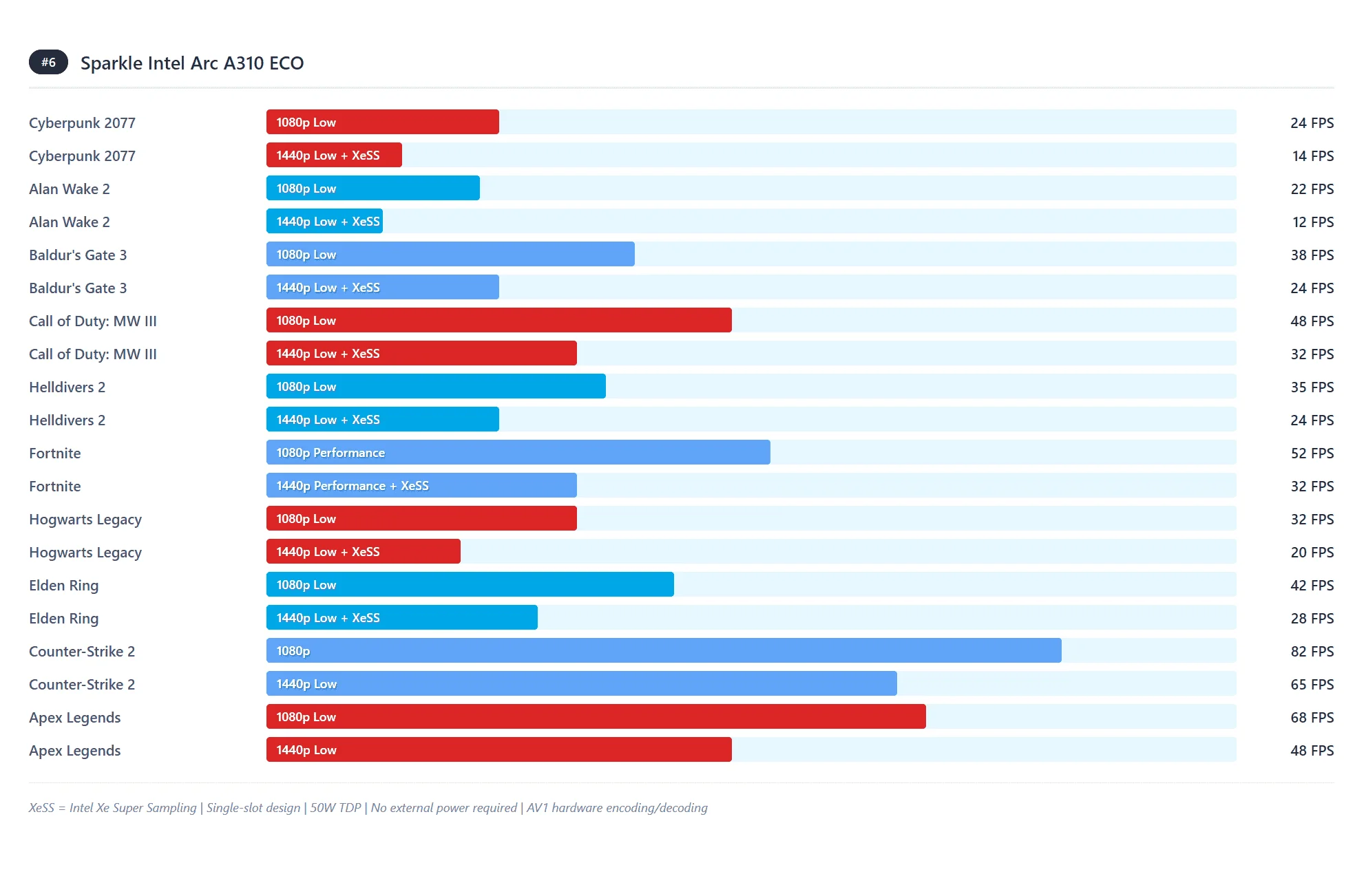
The Intel Arc A310 ECO is a single-slot graphics card designed for very small systems. It comes with 4GB of GDDR6 memory, which is suitable for media playback, transcoding, and light graphical workloads. With a power draw of around 50W, the card runs entirely from the PCIe slot and does not require an external power connector, making it easy to install in compact or OEM builds.
The GPU supports AV1 hardware decoding and encoding, which improves efficiency for video streaming, recording, and media server tasks by reducing CPU usage. Its single-slot cooling design helps maintain stable temperatures in tight cases without blocking adjacent expansion slots. The Arc A310 also offers solid Linux driver support, which makes it a practical choice for home servers and compact media systems.
7. MSI GeForce RTX 3050 LP 6G OC
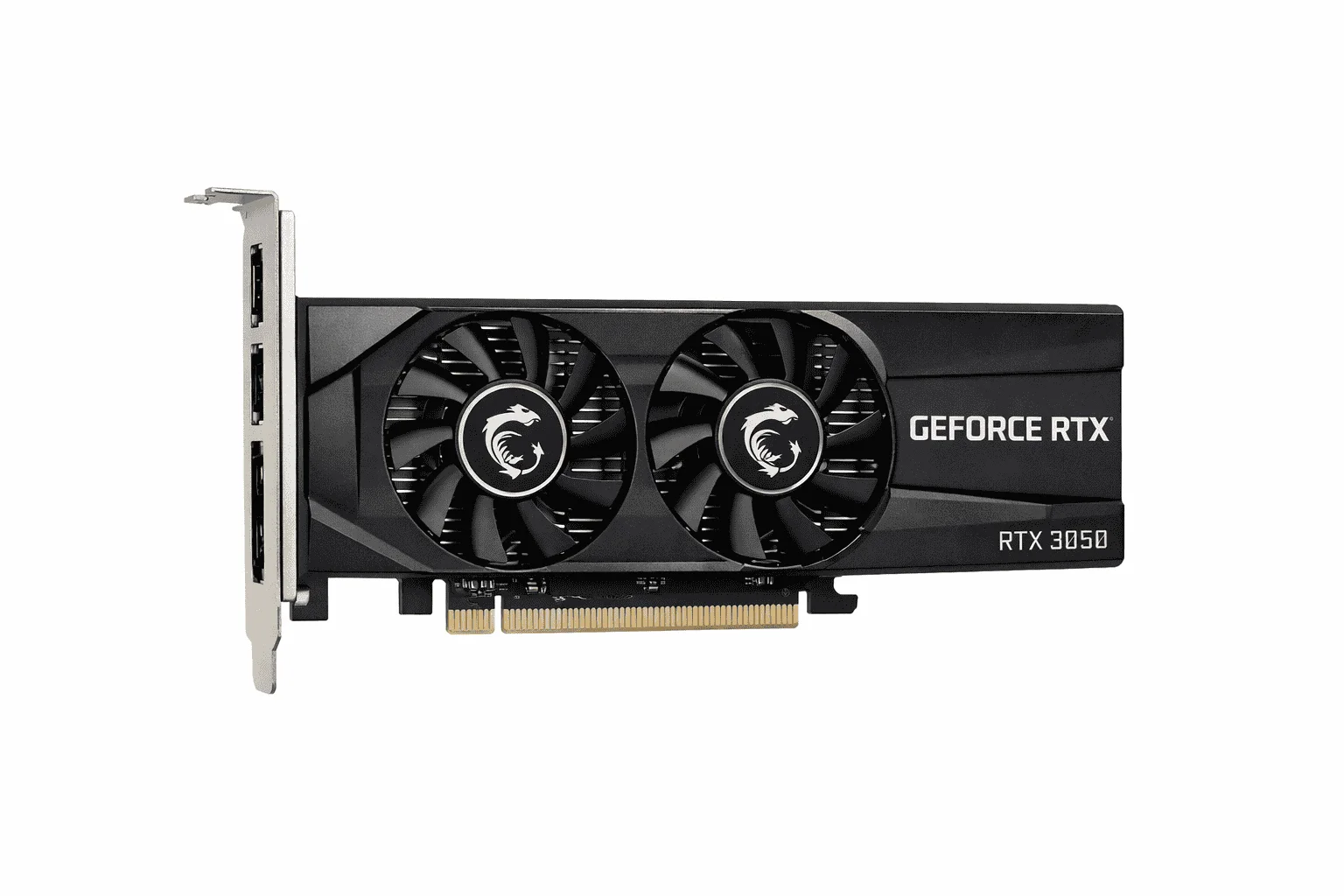
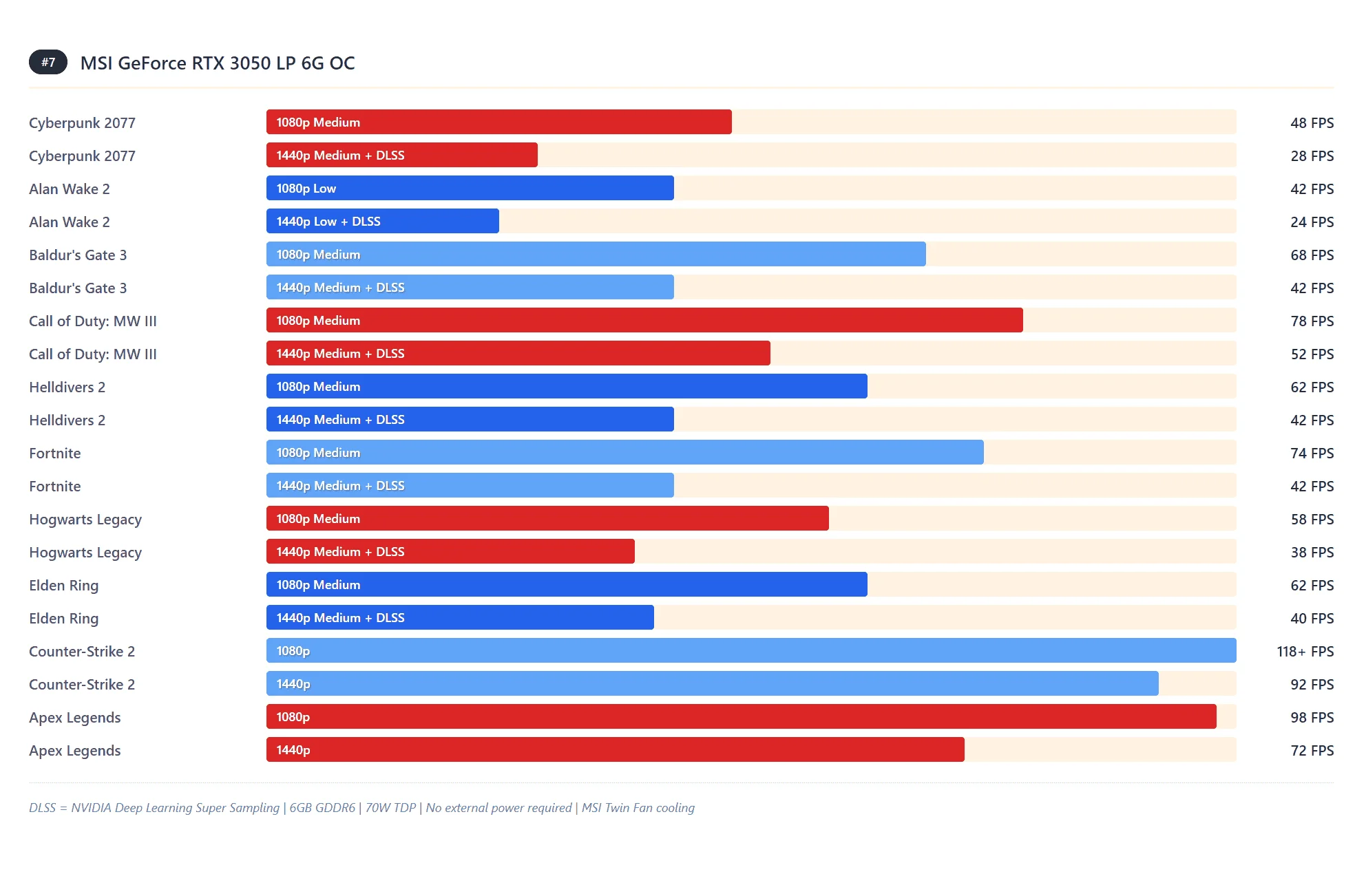
The RTX 3050 LP 6G OC is a dependable entry-level to mid-range graphics card, especially for upgrading compact systems like Dell OptiPlex. It utilizes 6GB of GDDR6 memory, which enables it to handle modern games and applications more effectively than older, lower-VRAM cards. The GPU supports DLSS, enabling it to deliver smoother frame rates at 1080p by reducing the rendering load on older CPUs and systems with limited resources.
Its low-profile design and moderate power draw make it suitable for OEM desktops that have limited PSU capacity and no extra power connectors. The cooling solution is functional for everyday use, but in tight cases with restricted airflow, temperatures can rise during long sessions, so proper case ventilation matters.
8. AMD Radeon RX 6500 XT LP
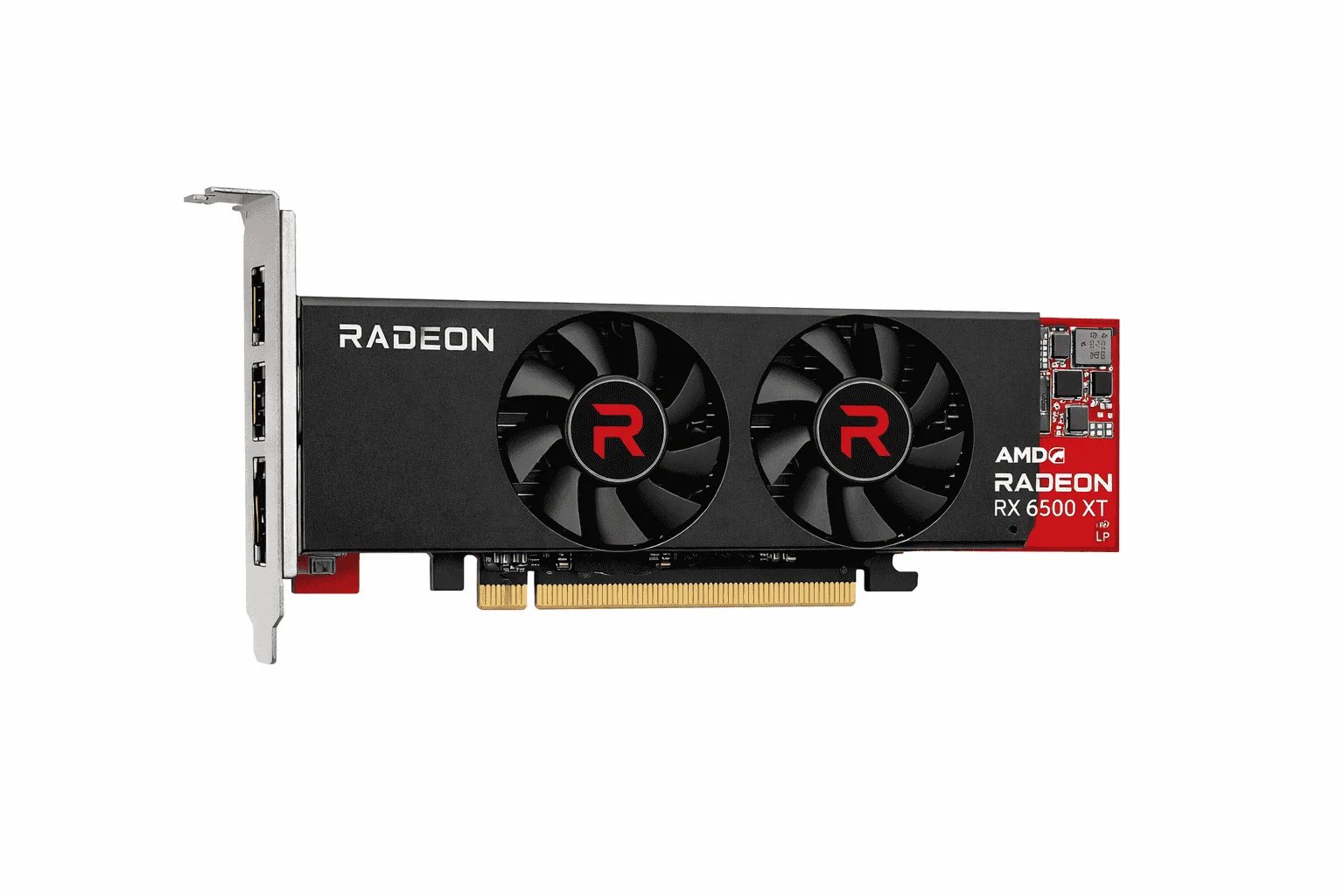
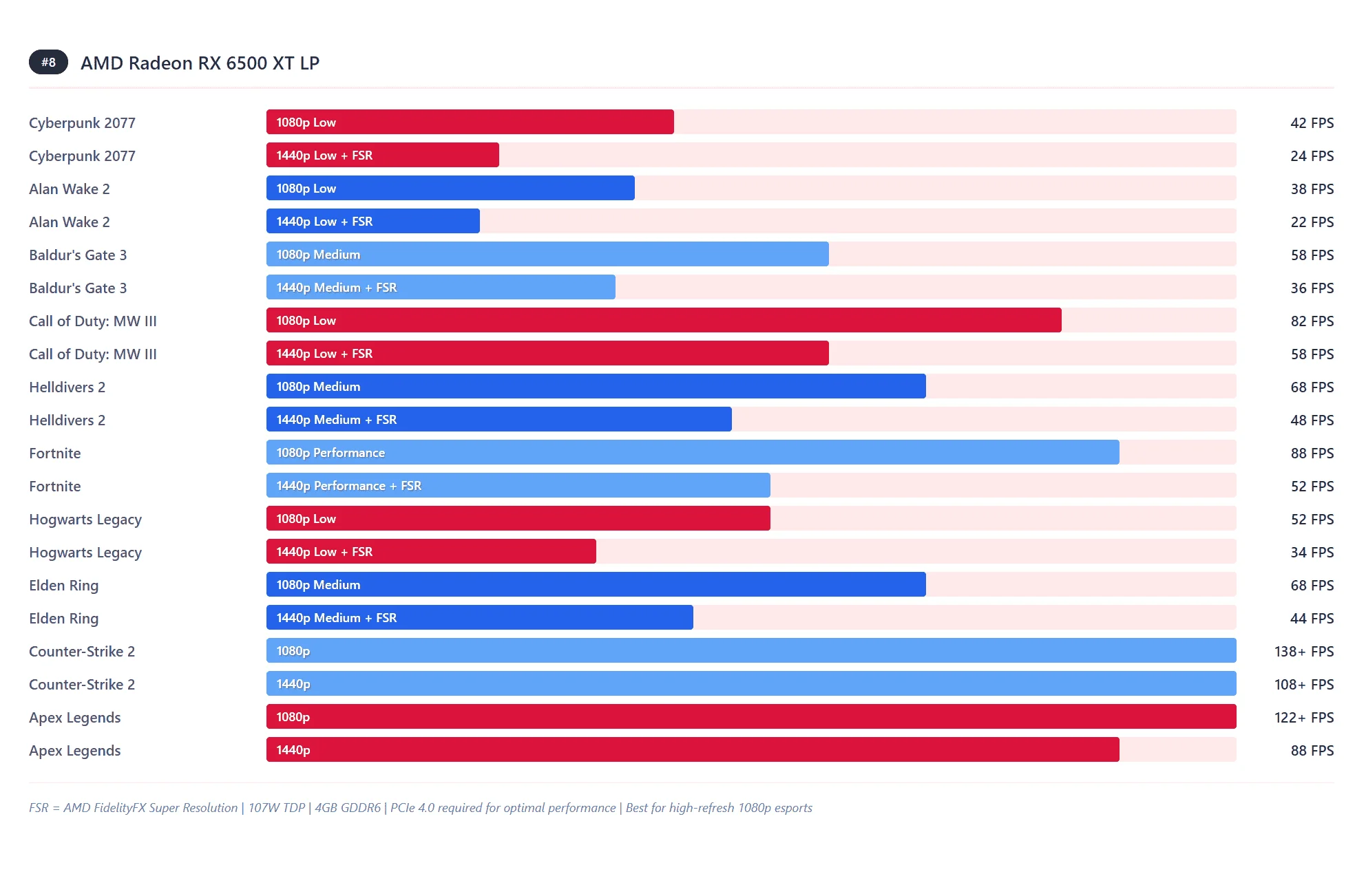
The RX 6500 XT Low Profile is built mainly for esports-focused gaming. Competitive titles like CS2 and Valorant run smoothly at 1080p, making it a solid choice for fast-paced gameplay where high frame rates take precedence over visual extras.
This best low profile gpu comes with 4GB of GDDR6 memory and around 107W power draw, which gives it stable performance in compact systems without pushing power limits too hard. The limited VRAM can become a bottleneck in newer or heavier games, especially at higher settings, but it works well for its intended use case.
9. MSI GeForce GTX 1650 LP GDDR6
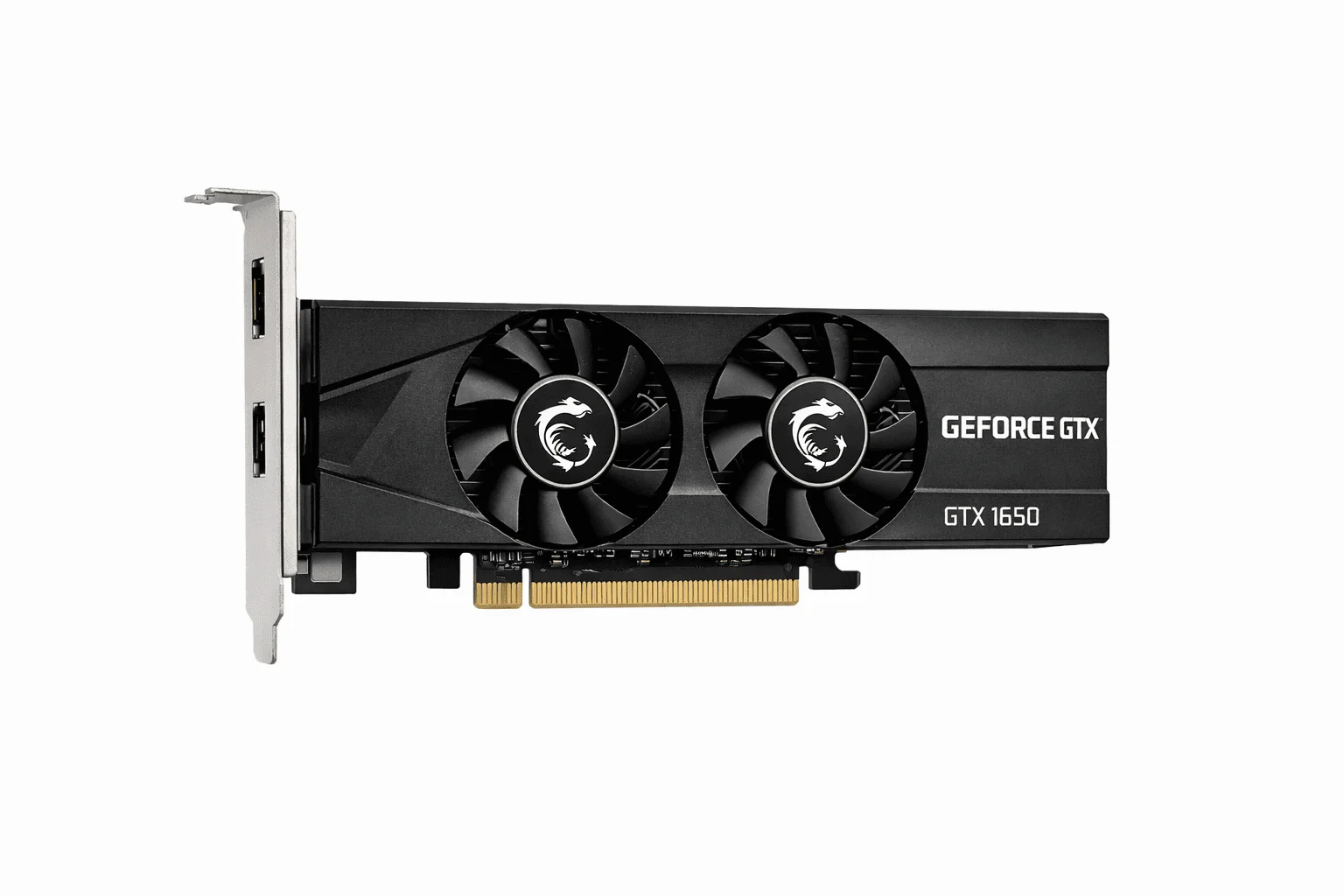
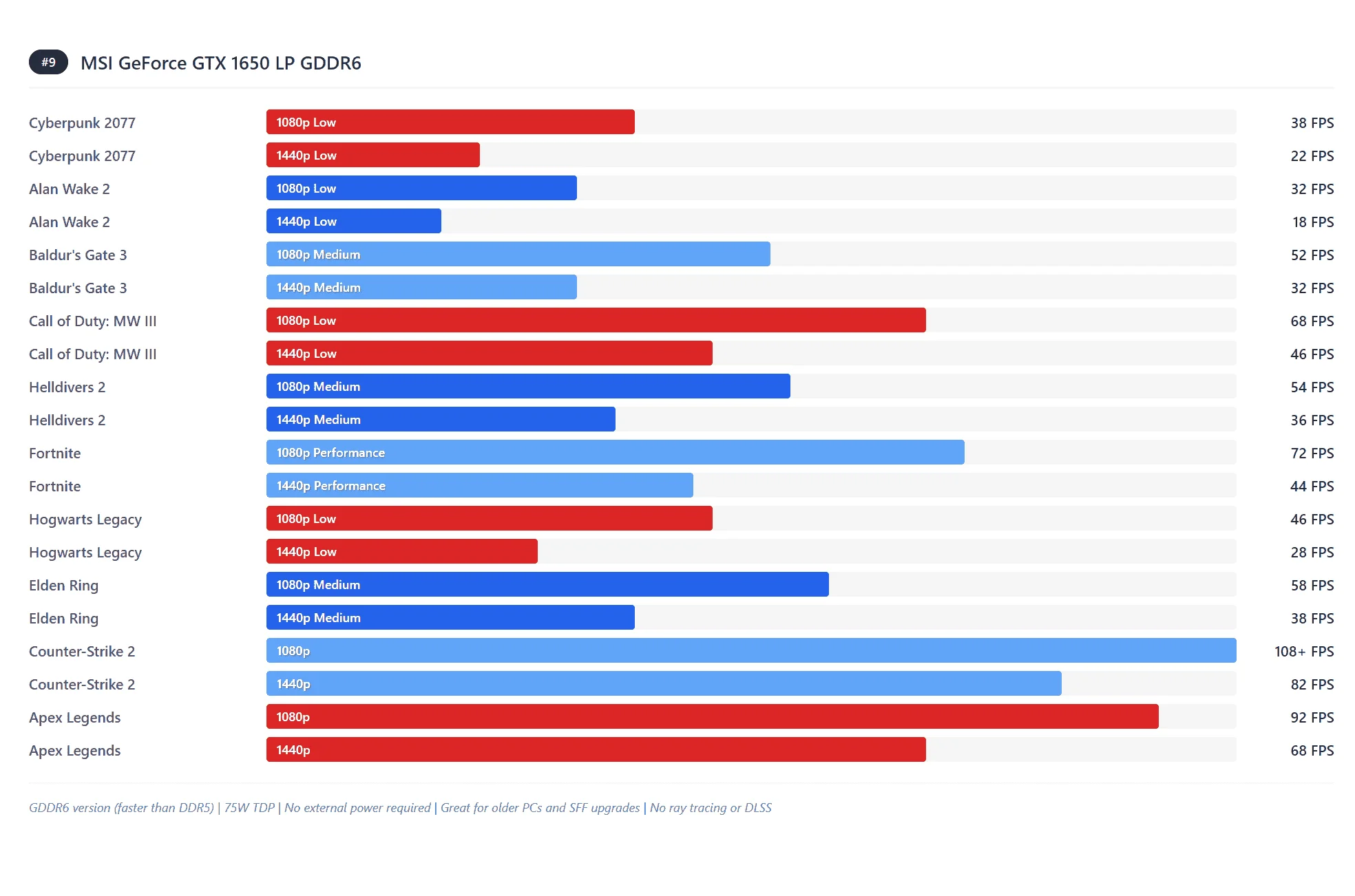
The GTX 1650 is also the best Low Profile gpu and remains a dependable option for older small form factor PCs that need a simple graphics upgrade. It uses 4GB of GDDR6 memory, which helps handle modern games better than older DDR-based cards.
With a 75W power draw, it runs directly from the PCIe slot, making it compatible with legacy systems that lack extra power connectors. At 1080p on medium settings, many popular and older titles run smoothly without stressing the system.
10. Maxsun AMD Radeon RX 550
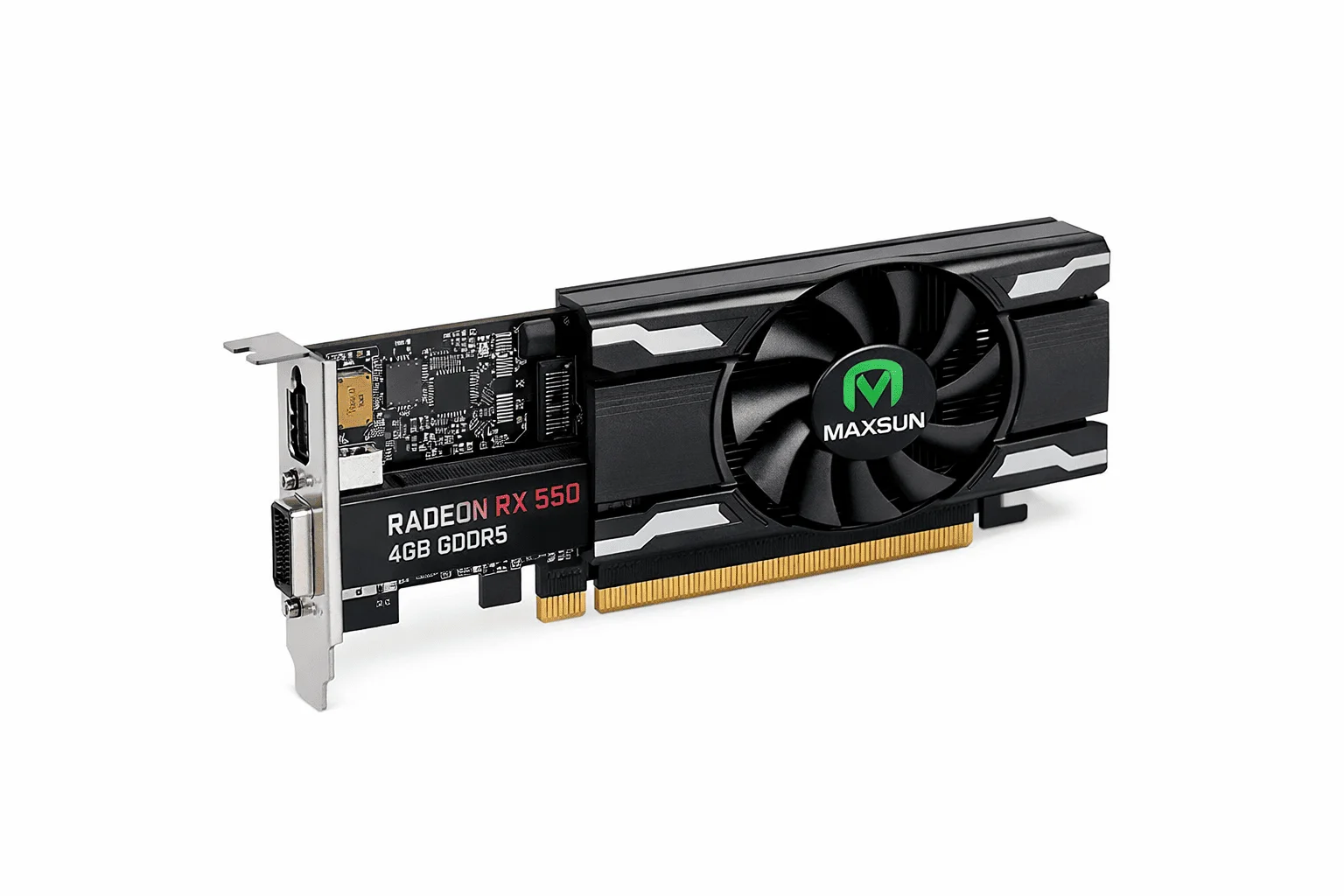
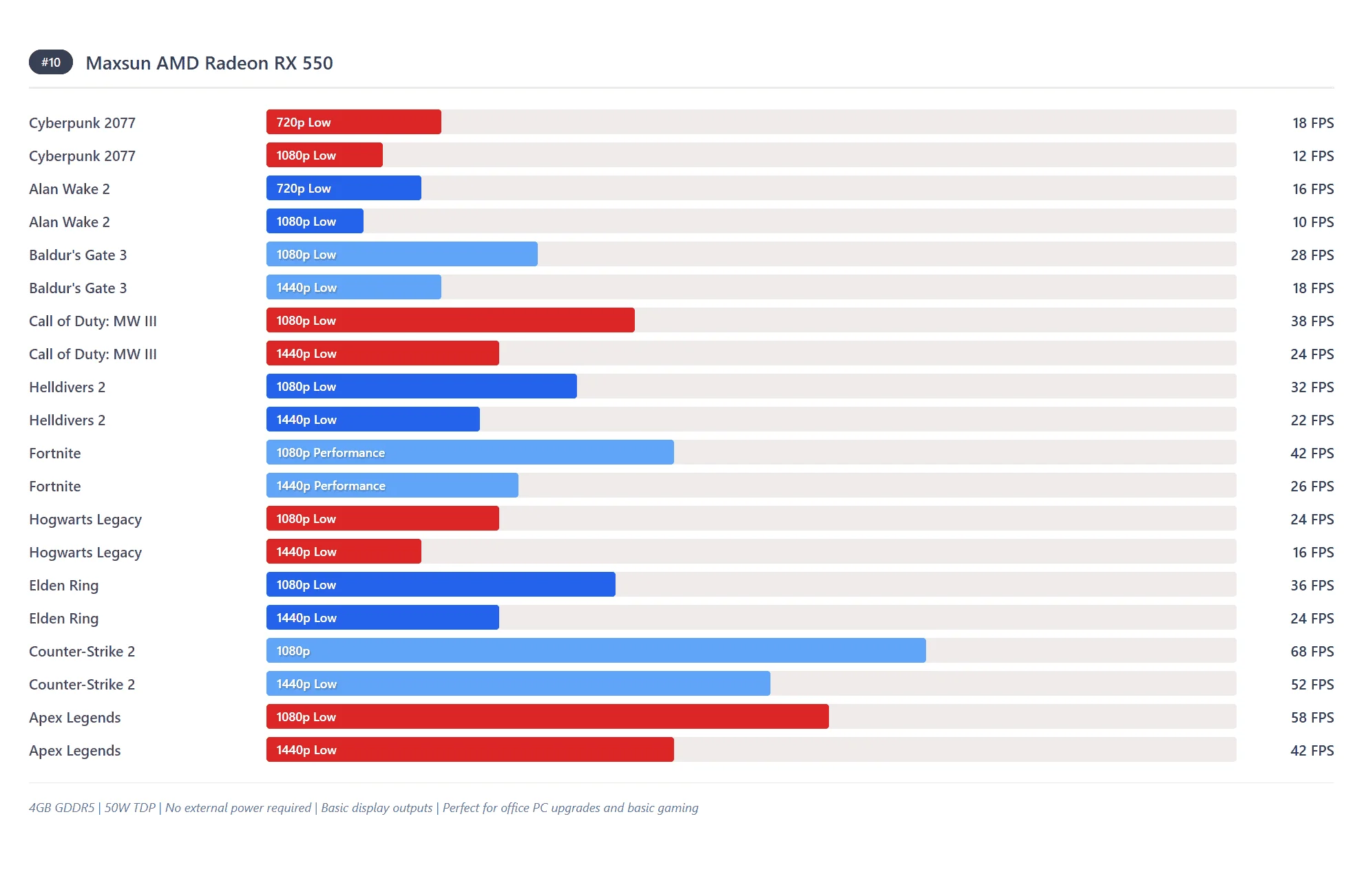
The RX 550 Low Profile fits well in the entry-level segment and works best in compact systems. It comes with 4GB of GDDR5 memory, which is enough for light gaming, basic graphics tasks, and everyday GPU acceleration.
This card is commonly used in HTPC setups and productivity builds, where low power usage and quiet operation matter more than raw performance. It handles daily workloads smoothly while staying cool and efficient inside small cases.
Single-Slot vs Dual-Slot Low Profile GPUs
Best low profile Single-slot GPU use only one PCIe slot width, which means they take up very little space inside the case. These cards are best for very tight builds and OEM systems where the next slot is already blocked. Cooling is limited because the heatsink and fan are small, so they are mainly suited for light tasks and basic graphics work.
Dual-slot low profile GPUs use two slot widths while still keeping the low-profile height. The extra space allows for a larger heatsink and better fan setup, which improves cooling and helps maintain stable clock speeds. These cards are a better choice for esports and moderate gaming, especially when the system runs under load for longer periods.
Below, you can use the toggle to switch between single and dual-slot low profile GPUs and view only the cards with their specs that match your selection.
Best Low Profile GPU Size, Power, and Cooling Basics
A standard full-height GPU has a bracket height of around 120 mm, while the best low profile GPU uses a bracket of about 79 mm. This difference is the main reason why low profile cards fit into systems where a normal GPU’s bracket would physically stick out of the case.
Best Low profile GPU operates within the 75W power provided by the PCIe x16 slot, because slim OEM systems usually do not have any extra 6-pin or 8-pin power connectors. Yes, newer models like the RTX 5060 Low Profile are exceptions that use an 8-pin connector, but even these come with a controlled TDP so compact PSUs can handle them safely.
When it comes to the cooling mechanism, the height is limited, so manufacturers use slim heatsinks along with multiple small fans to avoid a thermal bottleneck. This helps control heat by increasing surface area and using more fans instead of larger cooling components.
Common Mistakes to Avoid Before Buying
Conclusion
The best low profile GPU is the one that fits your space, runs within your power limits, and delivers stable performance for your daily use. They may struggle at Ultra 4K on high settings, but they comfortably support all resolutions and modern features. Some competitive and professional users even use the low profile GPU for stable performance in compact setups.
Once you understand slot size, cooling design, and gaming performance, the decision becomes simple because now you know how modern LP cards handle games, thermals, and power in compact systems. Low profile GPUs are a practical solution for anyone using compact or SFF PCs. They allow you to upgrade performance without changing your entire system.
This article may contain affiliate links. If you click on one of these links and make a purchase, we may earn a small commission at no additional cost to you. We only recommend products, services, and tools that we believe provide value and may be relevant to our audience. Your support through these affiliate links is greatly appreciated.